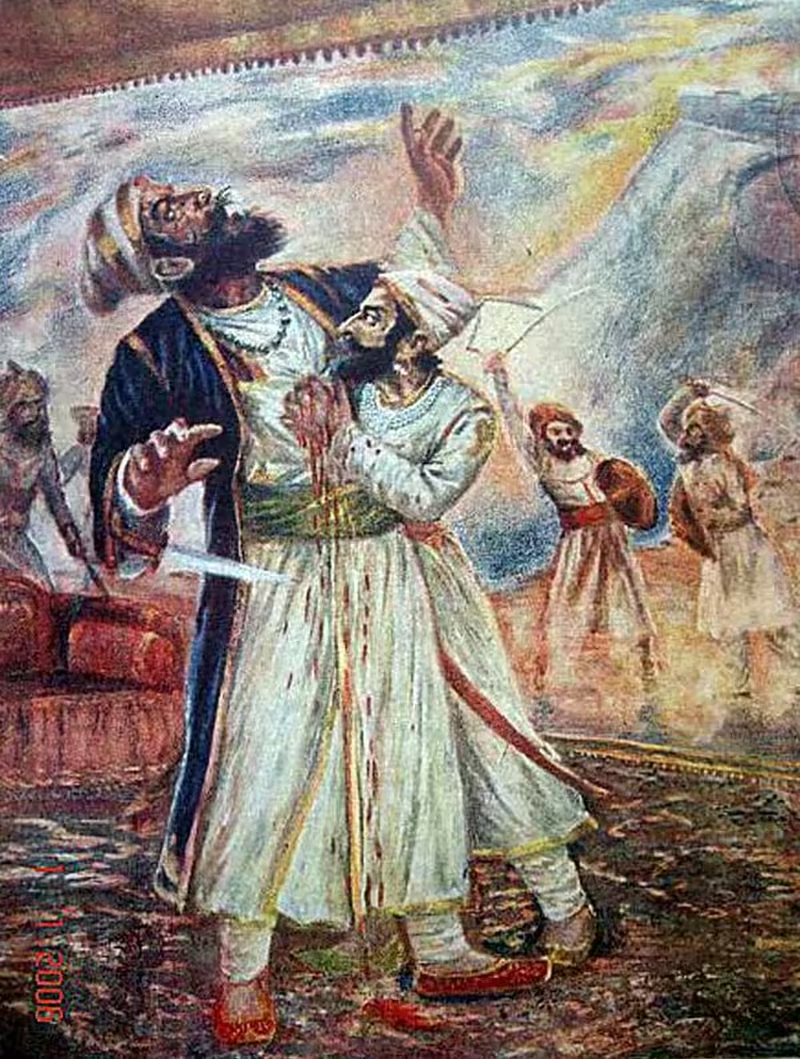

Jiva Mahala: The Bodyguard Who Caught a Sword Meant for Shivaji
In the annals of Maratha history, grand narratives often overshadow individual acts of valor. We remember the Battle of Pratapgad for Shivaji's strategic brilliance and the defeat of the formidable Afzal Khan. But behind that pivotal moment on 10 November 1659 stood a man whose split-second decision changed everything—Jiva Mahala, the bodyguard who caught a sword with his bare hand.
The Gathering Storm
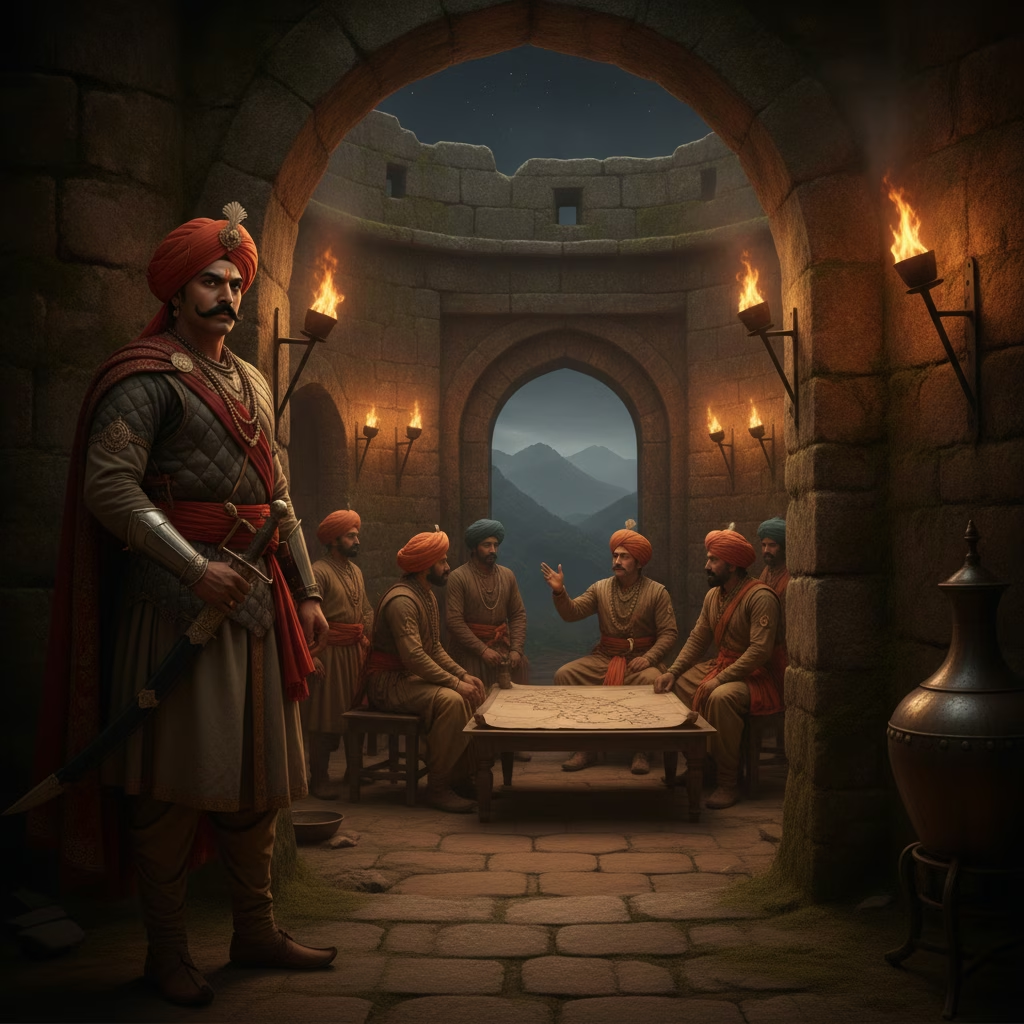
As autumn descended upon the Sahyadri mountains in 1659, Pratapgad fort had become the nerve center of Maratha resistance. Jiva Mahala, one of Shivaji's most trusted bodyguards, watched the preparations with a soldier's practiced eye. The stone corridors echoed with urgent footsteps as commanders received their orders.
The threat was unprecedented. Ali Adil Shah II, ruler of the Bijapur Sultanate, had dispatched his most formidable general—Afzal Khan—with 10,000 cavalry to eliminate the Maratha upstart. According to the Tarikh-e-Ali, the official chronicle of Ali Adil Shah's reign, the Sultan's orders were unambiguous: Shivaji was to be eliminated as a threat to Islam itself.
Afzal Khan was no ordinary commander. His reputation preceded him—a seasoned warrior who had volunteered for this mission when other generals hesitated. As he marched toward Wai in May 1659, he made his intentions clear through calculated acts of desecration, destroying the idols at Tuljapur and Pandharpur. These weren't mere military tactics; they were personal affronts designed to provoke and humiliate Shivaji.
For Jiva Mahala and his fellow guards, the message was clear: this would be a fight to the death. Shivaji had ordered Netaji Palkar, his cavalry commander, to lay waste to enemy territory while he himself led infantry forces to Jawali. The chess pieces were moving into position.
The Diplomatic Dance
By October 1659, an unexpected development occurred. After weeks of skirmishes and territorial incursions, Afzal Khan dispatched his envoy, Krishna Rao, to Pratapgad. The message: the general was willing to meet Shivaji personally to negotiate.
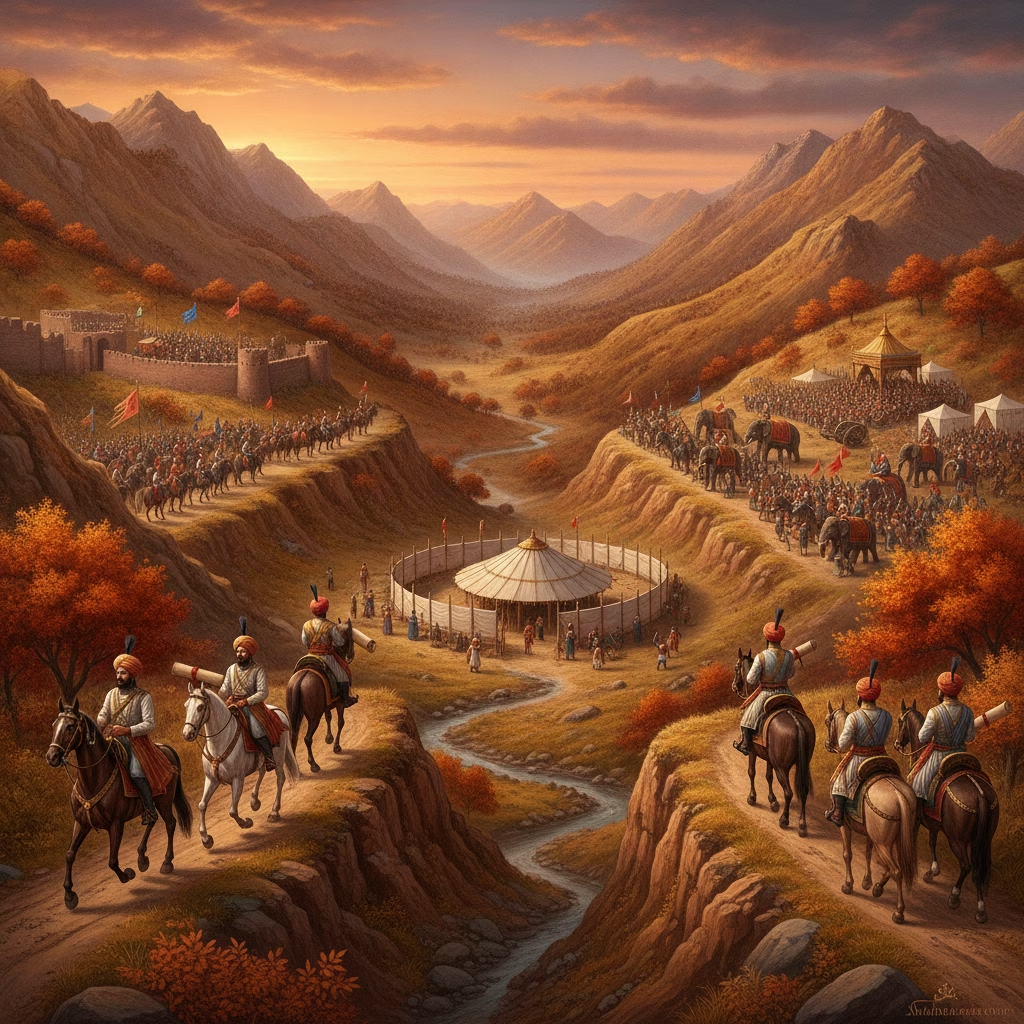
Jiva Mahala observed the envoys coming and going, their horses kicking up dust on the mountain paths. Both armies watched from opposing hillsides as workers erected a pavilion in the valley below Pratapgad—a neutral ground for what was being presented as diplomatic talks.
The proposal seemed straightforward: both leaders would meet with minimal armed escorts to discuss terms. But those close to Shivaji, including Jiva Mahala, knew better. Afzal Khan's recent actions—the temple desecrations, the brutal raids into Maratha territories at Supe, Shirwal, and Saswad—spoke louder than any diplomatic overtures.
According to Wikipedia's account of the Battle of Pratapgad, this meeting would prove pivotal in Maratha history. But at the time, it appeared to be walking into a trap. Afzal Khan's advisors reportedly objected to the meeting, sensing danger. Yet the general, confident in his martial prowess and perhaps underestimating his opponent, decided to proceed.
He left part of his army and provisions at Wai before advancing to Jawali. This decision—whether born of overconfidence or strategic calculation—would prove fateful.
Preparing for Treachery
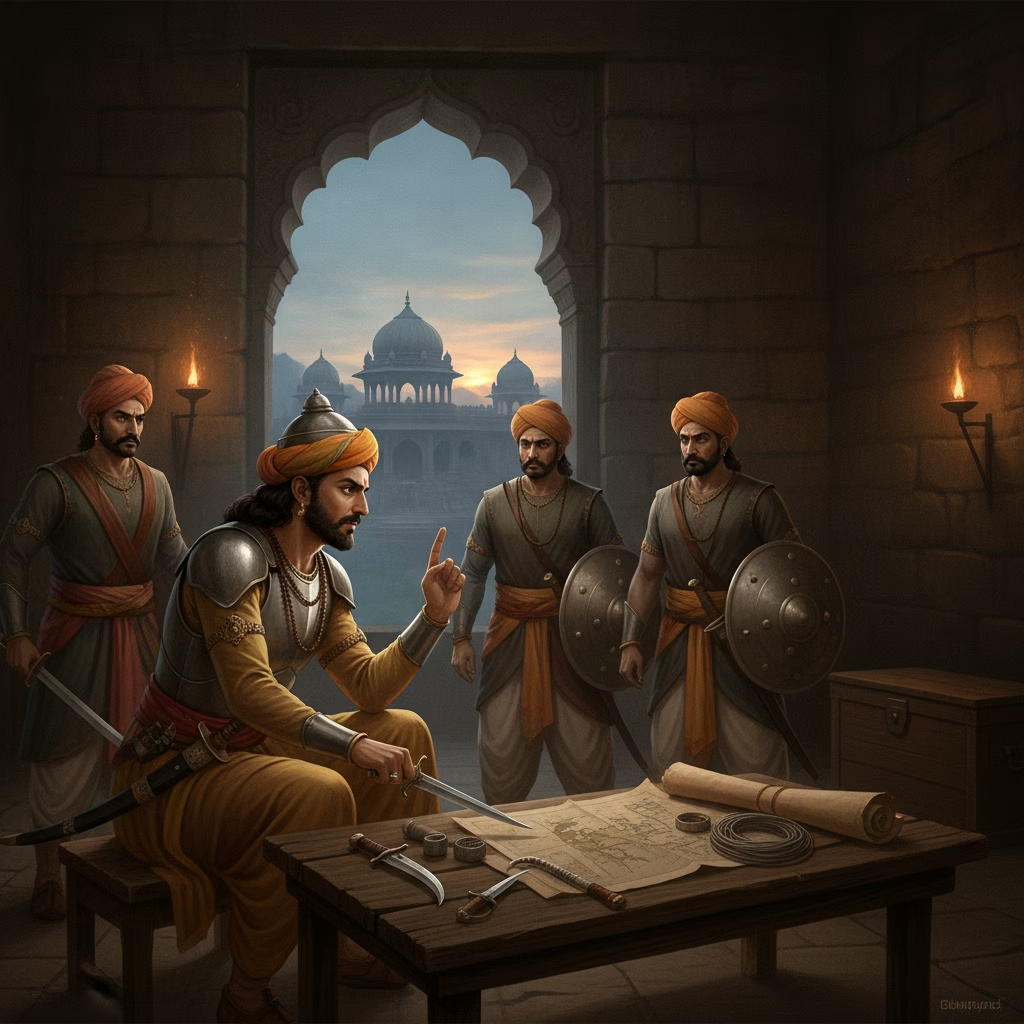
In a private chamber at Pratapgad, Jiva Mahala received instructions that confirmed his worst suspicions. Shivaji was preparing for the meeting, but not as a naive diplomat. The Maratha leader knew exactly what kind of man he was dealing with.
The Tarikh-e-Ali had made clear Ali Adilshah's orders: eliminate Shivaji. No capture, no ransom—elimination. Afzal Khan had accepted this mission enthusiastically, and his subsequent actions showed a man intent on provocation rather than peace.
Shivaji demonstrated concealed weapons to his inner circle—the bagh nakh (tiger claws) hidden beneath clothing, the bichhwa dagger that could be drawn in an instant. But personal weapons weren't enough. He needed human shields, men willing to throw themselves between danger and their commander.
Jiva Mahala and the other bodyguards reviewed hand signals and positioning. They would accompany Shivaji to the pavilion but remain concealed, ready to intervene at the slightest sign of treachery. Shivaji's infantry commanders received similar orders: be prepared to engage if negotiations failed.
Through the arched window, the meeting pavilion was visible in the distance, its silk curtains billowing in the mountain breeze. It looked peaceful, diplomatic. But Jiva Mahala's hand instinctively moved to his sword hilt. In his gut, he knew: this pavilion would see blood before sunset.
The Split-Second Decision
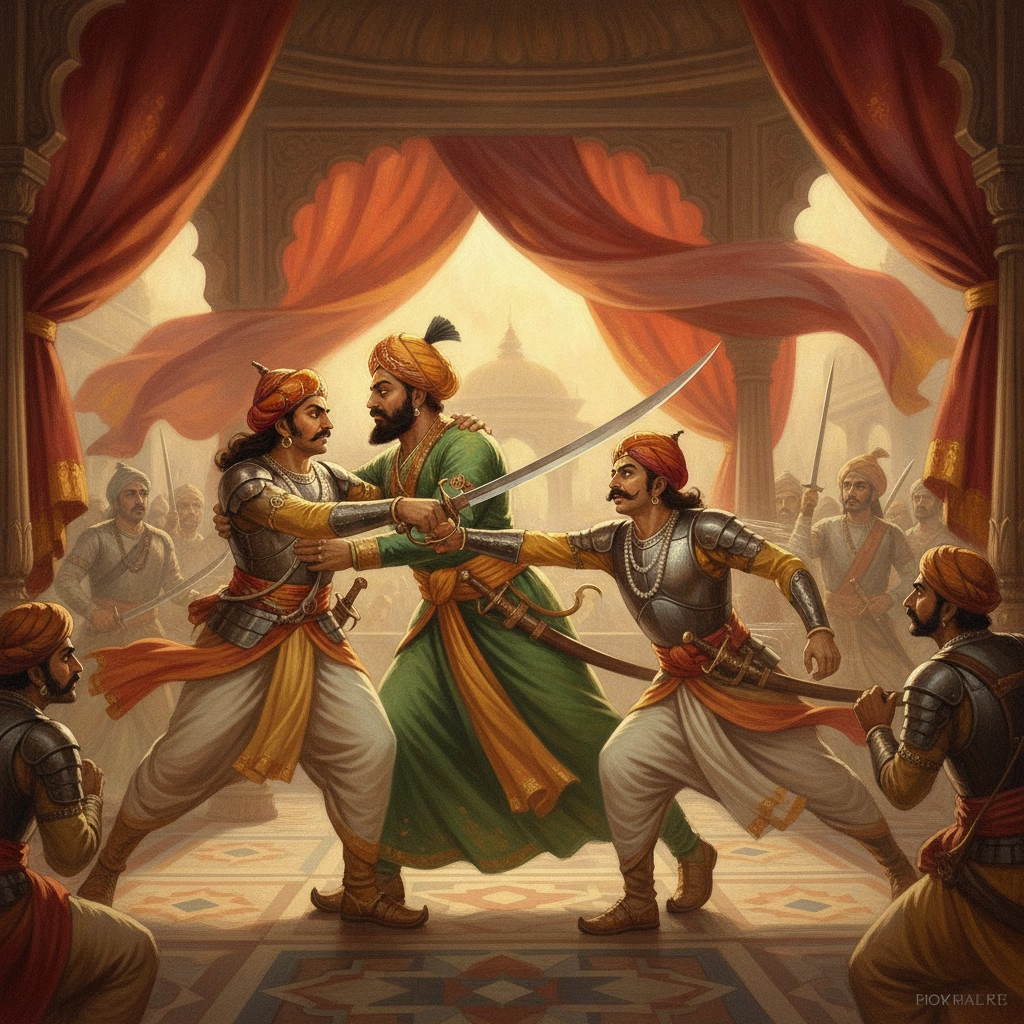
The moment arrived on 10 November 1659. Inside the pavilion, the two leaders faced each other—Shivaji, the rising Maratha power, and Afzal Khan, the Sultan's champion. Jiva Mahala positioned himself carefully, close enough to intervene but attempting to remain unobtrusive.
The meeting began with formal courtesies. Then Afzal Khan moved forward, arms extended as if for an embrace—a traditional greeting between nobles. But Jiva Mahala's eyes caught what others might have missed: the subtle shift in the general's weight, the tension in his shoulders, the glint of steel emerging from concealment.
In that fraction of a second, training and loyalty overrode self-preservation. As Afzal Khan's hidden sword arced toward Shivaji, Jiva Mahala lunged forward. There was no time to draw his own weapon, no time for anything but the most primal response.
He caught the descending blade with his bare hand.
The pain must have been instantaneous and overwhelming—steel cutting through flesh and bone, fingers separating from palm. But Jiva Mahala's grip held just long enough. The sword's deadly trajectory was interrupted, its momentum broken. The blow meant to kill Shivaji instead carved through the bodyguard's hand.
Chaos and Consequence
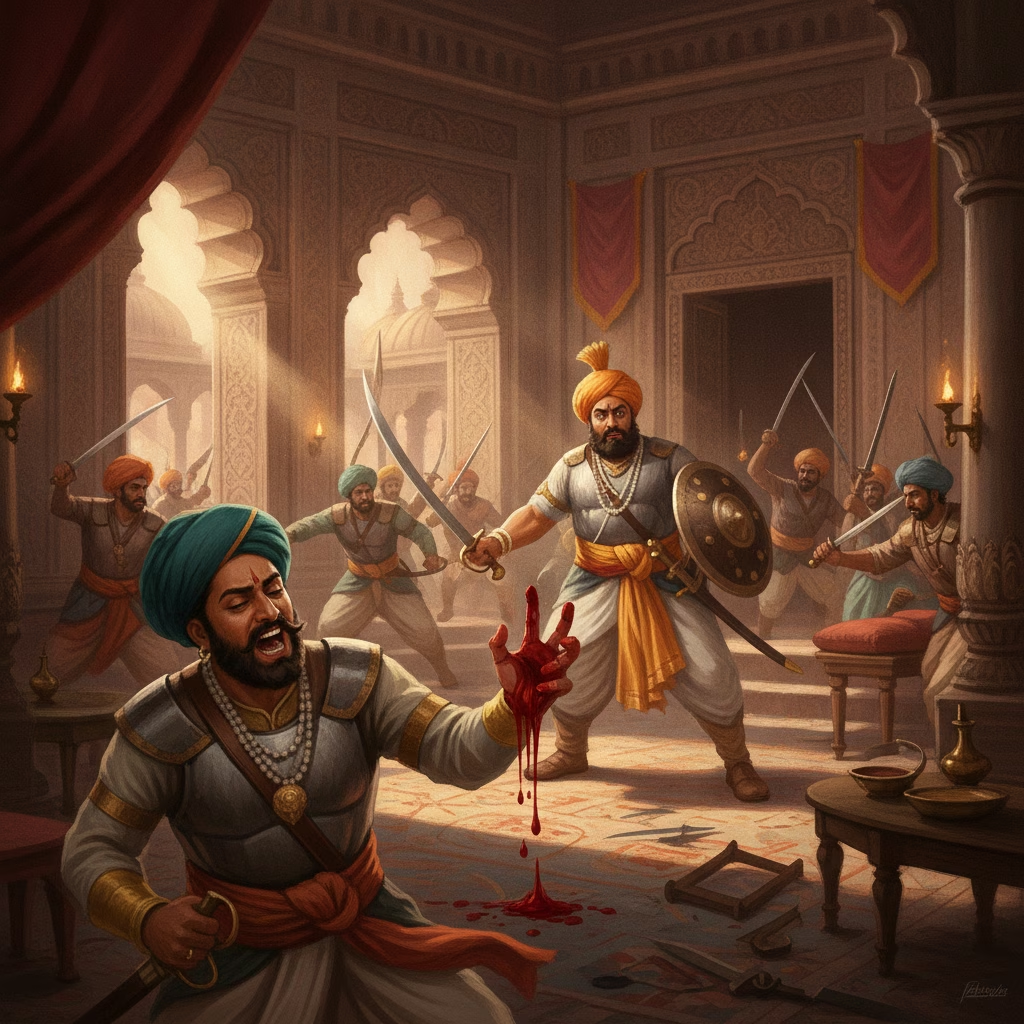
The pavilion erupted into violence. Shivaji, given that crucial extra second by Jiva Mahala's sacrifice, deployed his own concealed weapons. The bagh nakh found its mark. Other bodyguards rushed forward from their positions. Afzal Khan, wounded and realizing his assassination attempt had failed, stumbled backward toward his palanquin.
Jiva Mahala clutched his mangled hand, blood streaming between what remained of his fingers. The pain would have been excruciating, but he had succeeded in his primary duty: Shivaji lived.
What followed transformed Maratha history. Afzal Khan's attempted treachery had failed, and the general himself would not survive the day. Shivaji's forces, prepared for exactly this scenario, engaged the Bijapur troops. The Battle of Pratapgad became the Marathas' first major military victory against a regional power.
According to Wikipedia, the aftermath was decisive: Shivaji captured 65 elephants, 4,000 horses, 1,200 camels, and 1,000,000 rupees in cash and jewellery. The Bijapur Sultanate's aura of invincibility was shattered. The Maratha confederacy, which would eventually challenge Mughal supremacy across India, announced itself on the stage of history.
The Price of Loyalty
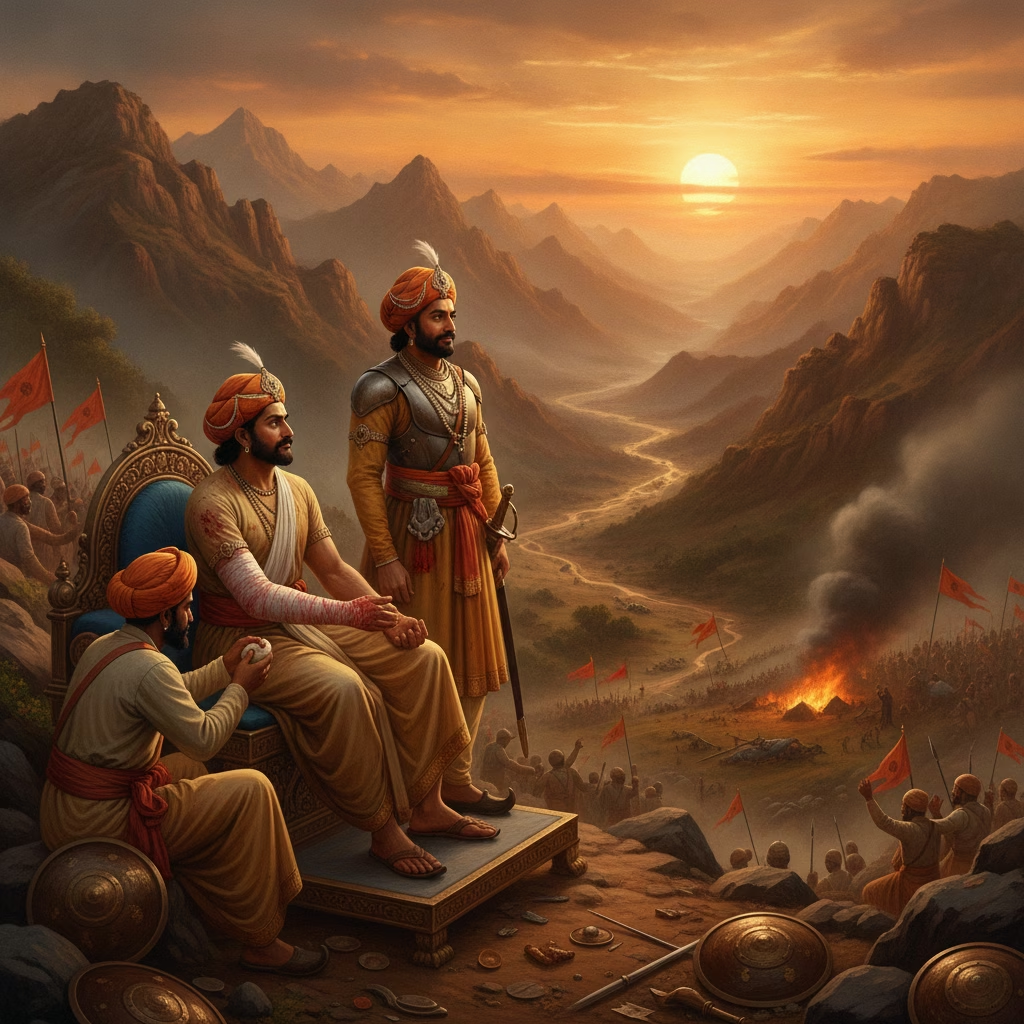
As battle raged in the valley below Pratapgad, attendants tended to Jiva Mahala's wounds. The severed fingers could not be reattached—medieval medicine had its limits. He would carry the marks of that moment for the rest of his life, his hand a permanent reminder of the day he caught a sword meant for his commander.
Shivaji, according to Maratha oral traditions, stood beside his wounded bodyguard as the sun set over the Sahyadri mountains. The respect between them needed no words. In a culture that valued martial valor above almost all else, Jiva Mahala had demonstrated the highest form of loyalty—willingness to sacrifice his own body for his leader's life.
History often focuses on leaders and their decisions, on strategies and grand outcomes. The Battle of Pratapgad is remembered for Shivaji's cunning and courage, for the defeat of Afzal Khan, for the beginning of Maratha ascendancy. These narratives are important and true.
But they rest on moments like Jiva Mahala's split-second decision. Without that intervention, without those lost fingers, the sword would have found its intended target. Shivaji would have died in that pavilion, and the course of Indian history would have flowed in an entirely different direction.
Legacy in Blood and Bone
Jiva Mahala's sacrifice represents something fundamental about the bonds that held the Maratha confederacy together. This wasn't an army held together merely by pay or fear, but by personal loyalty, by relationships forged in shared danger, by the knowledge that your comrades would literally catch swords for you.
The bodyguard's mutilated hand became, in its own way, as significant as any captured elephant or seized treasure. It was physical proof of the loyalty Shivaji inspired, of the willingness of ordinary soldiers to make extraordinary sacrifices.
We don't know how long Jiva Mahala lived after Pratapgad, or what role he played in subsequent Maratha campaigns. The historical record, focused on kings and generals, rarely tracks the fates of individual soldiers. But his moment—that fraction of a second when flesh met steel—echoes through centuries.
Today, when we discuss the Battle of Pratapgad and its significance in establishing Maratha power, we should remember the man who caught a sword. His lost fingers were the price of a dynasty, the cost of a movement that would reshape the subcontinent.
Jiva Mahala's legacy is written not in chronicles or official histories, but in the very existence of the Maratha empire that followed. Every victory Shivaji achieved after 10 November 1659, every fort captured and every battle won, carried within it the echo of that bodyguard's sacrifice.
In the grand narrative of Indian history, some acts of valor involve leading armies or conquering kingdoms. Others involve simply being in the right place, at the right moment, willing to catch a sword with your bare hand. Both kinds of courage built the India we know today.