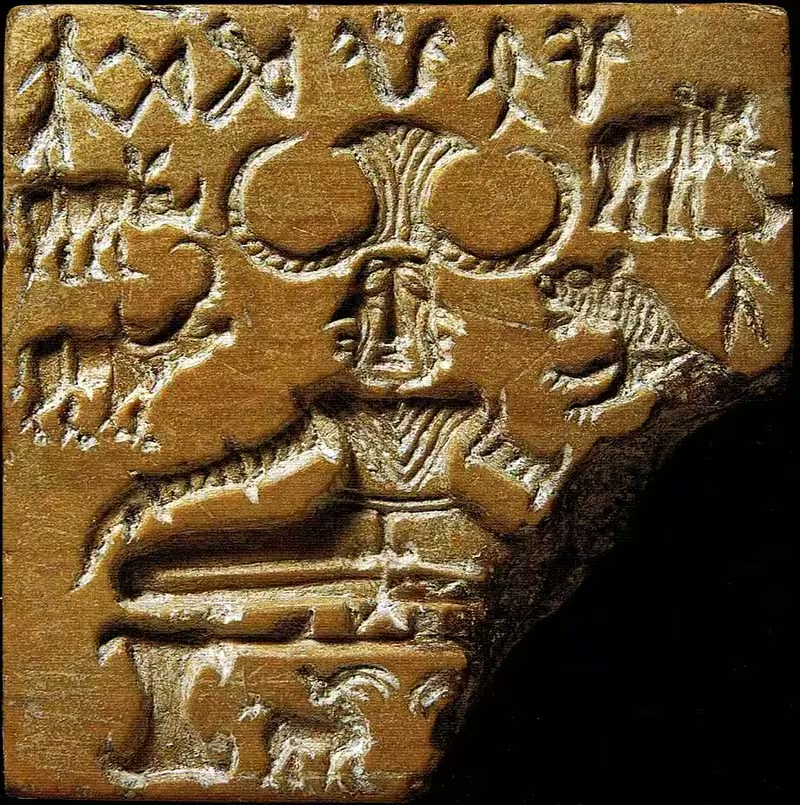

The conservation lab of the National Museum of India maintains a temperature of exactly 21 degrees Celsius. Dr. Priya Sharma had worked in this controlled environment for twelve years, photographing artifacts that had survived millennia. On a Tuesday morning in March, she placed a small square of carved steatite on the photography platform—object number 420, better known as the Pashupati seal.
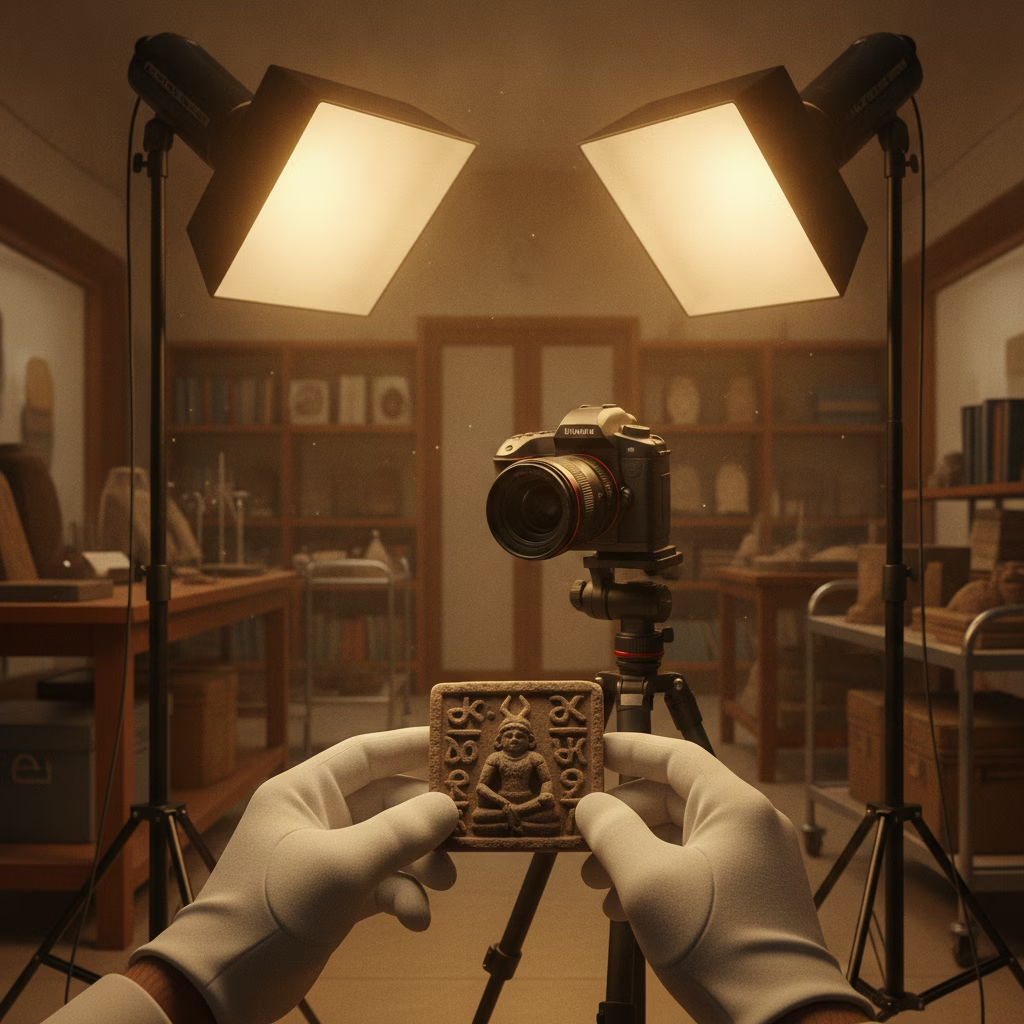
The seal measured just 3.56 centimeters by 3.53 centimeters, barely larger than a postage stamp, yet it contained one of the most debated images in Indian archaeology. Carved sometime between 2350 and 2000 BCE, it had been excavated from Mohenjo-daro in 1928 or 1929, pulled from 3.9 meters below the surface of what had once been a thriving Indus Valley city. Now it rested under Priya's photography lights, a seated figure with a horned headdress surrounded by four wild animals—an elephant, a tiger, a water buffalo, and a rhinoceros.
She had photographed this seal dozens of times before. It was part of routine documentation, updating the museum's digital archive with higher resolution images as technology improved. The figure sat in a yogic position, arms resting on knees, wearing what appeared to be necklaces and bangles—eight small ones and three large ones on each arm, according to the excavation reports. Above the figure, seven Indus script symbols remained undeciphered after nearly a century of study.
Priya adjusted the standard lighting array, positioning the LED panels at the angles specified in the photography protocol. Through her camera's viewfinder, the seal looked exactly as it always had. One face. One figure. One mystery frozen in stone.
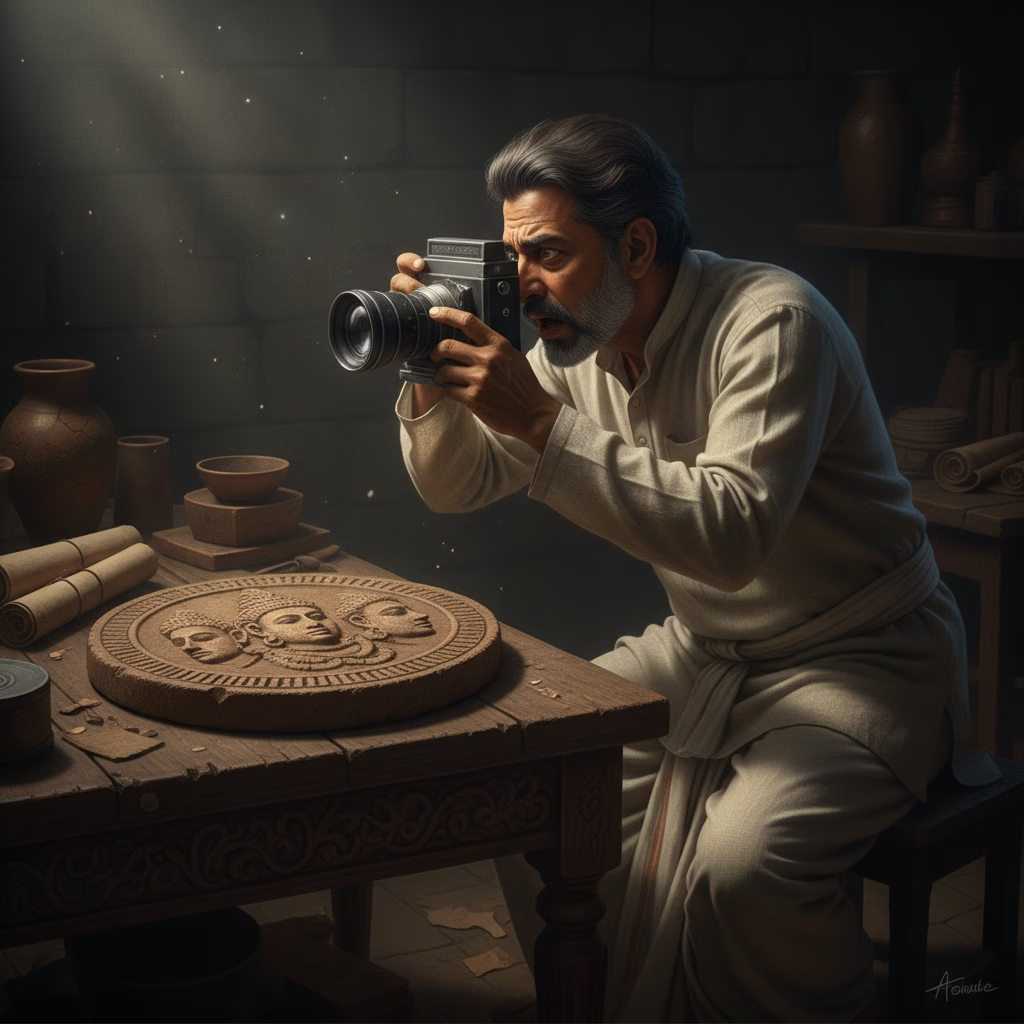
The accident happened when she reached for her light meter. Her elbow caught the edge of the right-side LED panel, knocking it nearly horizontal. The light raked across the seal's surface at an extreme angle, catching every microscopic ridge and valley in the carved steatite.
Priya glanced through the viewfinder to check the disrupted composition—and froze.
The figure had three faces.
Not one face viewed from the front, but three distinct profiles emerging from the carved surface. The central face looked forward as always, but now two additional faces appeared in perfect profile on either side, their features sharply defined by the shadows cast by the raking light. The noses, the lips, the chins—all clearly delineated, all clearly intentional.
She pulled back from the camera, blinking. Under the normal overhead lighting, she saw only the familiar single-faced figure. She looked through the viewfinder again. Three faces stared back at her through the lens.
Her hands trembled slightly as she reached for the light panel, carefully noting its exact angle—approximately 15 degrees above horizontal, positioned 23 centimeters from the seal's surface. She took seventeen photographs without moving anything, then slowly adjusted the light upward by increments of two degrees.
At 20 degrees, the left profile began to fade. At 25 degrees, only the central face remained clearly visible. She moved the light back down to 15 degrees. Three faces. Unmistakable.
Priya sat back in her chair, staring at the small square of stone that had been studied, analyzed, and debated by scholars for 95 years. John Marshall, who had overseen the Mohenjo-daro excavations, had described the figure as "possibly tricephalic" in his 1928-29 reports. The term meant "three-headed," but most subsequent scholars had treated this as speculation, an interpretation of ambiguous iconography rather than a literal description.
But there was nothing ambiguous about what appeared in her viewfinder. The Indus Valley artisans had carved three distinct faces into this seal, positioned so precisely that they only became simultaneously visible under specific lighting conditions.

For the next six days, Priya arrived at the lab before dawn and left after dark. She tested every angle, every distance, every intensity of light. She used LEDs, tungsten bulbs, and natural sunlight filtered through the lab's northern window. She photographed the seal with macro lenses, with UV light, with infrared.
The three faces appeared only under raking light positioned between 13 and 18 degrees above horizontal, from either the left or right side. The angle had to be precise within two degrees. Too shallow, and the shadows became confused, merging the profiles into illegibility. Too steep, and the faces disappeared entirely, leaving only the familiar frontal view.
She examined the seal under magnification, tracing the tool marks left by the ancient carver. The steatite had been cut with extraordinary precision, each surface angled to catch or deflect light in specific ways. The headdress—that elaborate structure with its central fan-shaped element flanked by striated horns—served as a kind of visual anchor, its symmetry helping the eye resolve the three faces from what could otherwise appear as mere texture.
When she showed her findings to Dr. Rajesh Kumar, the museum's senior archaeologist, he studied the photographs for a long moment.
"Shadow play," he said finally. "You're seeing patterns that aren't really there. Pareidolia. The human brain is wired to see faces."
"Look at the nose of the left profile," Priya insisted, pointing to a high-resolution print. "See how the carving creates a distinct ridge? And here, the chin—it's a separate plane, deliberately angled to catch the light."

Rajesh remained unconvinced, but he agreed to bring in two other curators. They gathered in the lab on a Friday afternoon, watching as Priya demonstrated the lighting setup. Under normal illumination: one face. Under raking light at 15 degrees: three faces.
"It's suggestive," admitted Dr. Meena Patel, who specialized in Indus Valley artifacts. "But we need to be careful about over-interpreting. These seals were carved 4,000 years ago. We don't know the artisans' intentions."
"There's another seal," Priya said quietly. "Find number DK 12050, also from Mohenjo-daro. It's in Islamabad now, but I found photographs in the archive. It shows a three-faced horned deity seated on a throne. No ambiguity there—the three faces are clearly visible under normal lighting."
She pulled up the reference image on her computer. The Islamabad seal showed a nude figure with three distinct faces, wearing bangles on its arms, seated in a yogic position.
"If they could carve three faces obviously," Priya continued, "why would they carve them subtly on this seal? Unless the subtlety itself was the point. Unless revealing the three faces only under specific conditions was intentional."
The room fell silent. Rajesh picked up the Pashupati seal, turning it slowly under the raking light, watching the faces appear and disappear.
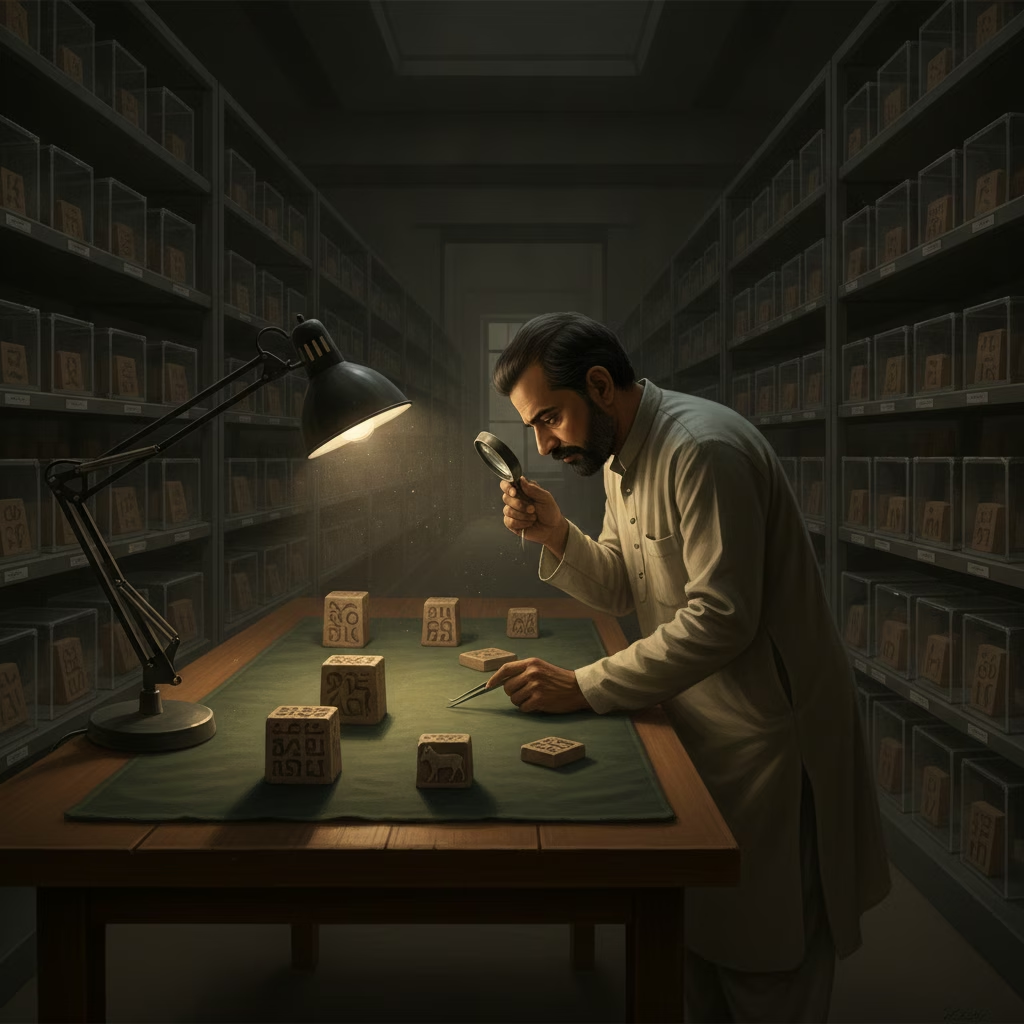
Priya spent the following weeks examining every Indus Valley seal in the museum's collection—more than three hundred artifacts. She found two others with similar properties: figures that revealed additional details only under raking light. Not faces, but patterns in clothing, or additional animals hidden in the background, or script symbols that became legible only when shadows emphasized their shallow carving.
The Indus Valley civilization had no monumental architecture like Egypt's pyramids or Mesopotamia's ziggurats. Their legacy existed in small objects: seals, pottery, jewelry, tools. But these objects demonstrated a level of technical sophistication that scholars were still discovering. The seals themselves were carved in reverse, so they would print correctly when pressed into clay. The Indus script, still undeciphered, suggested a complex administrative system. The cities showed evidence of advanced urban planning, with sophisticated drainage systems and standardized brick sizes.
Why wouldn't their artisans encode additional information in their most important religious iconography? Why wouldn't they create images that revealed their full meaning only to those who knew how to look?
Priya wrote to Dr. Jonathan Mark Kenoyer at the University of Wisconsin-Madison, one of the world's leading experts on the Indus Valley Civilization. She sent him her photographs, her measurements, her documentation of the precise angles required to reveal the three faces.
His response arrived three weeks later: "I need to see this in person."
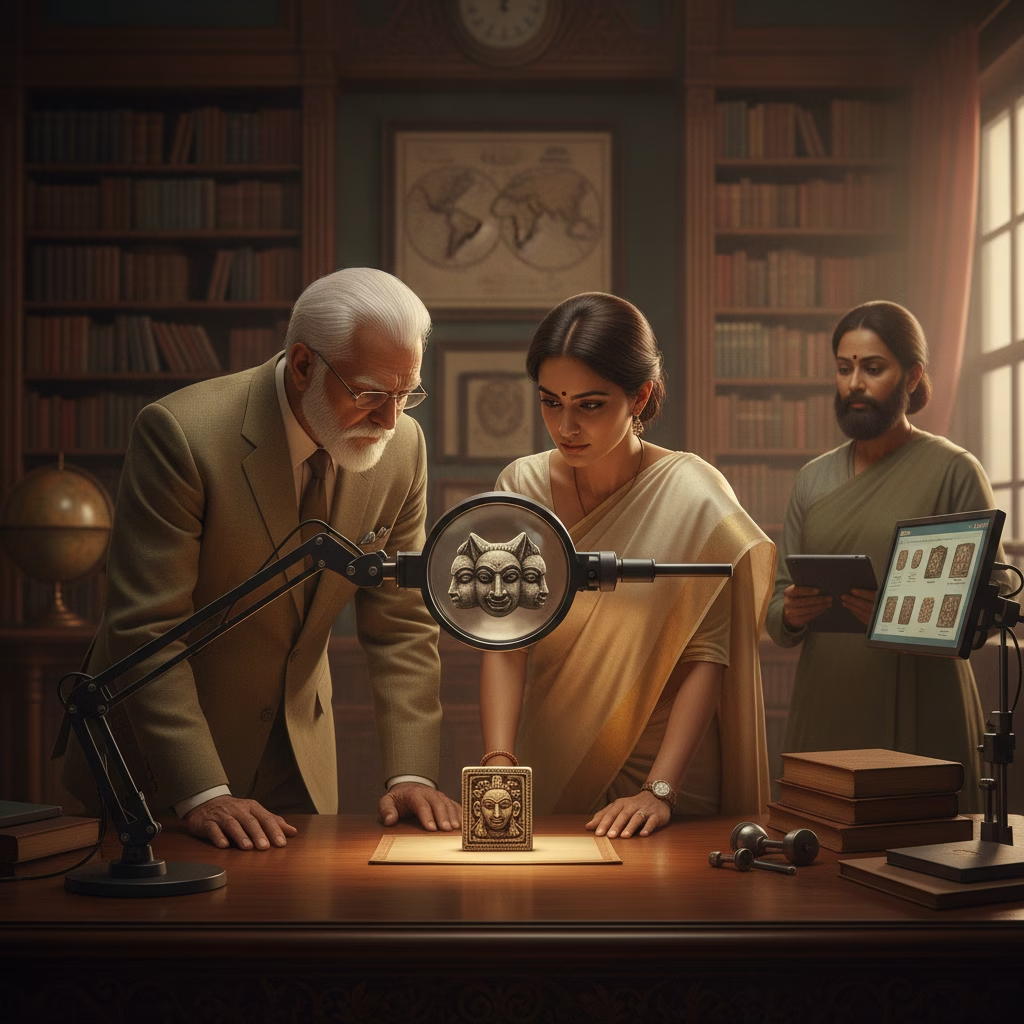
Dr. Kenoyer arrived in Delhi in October, bringing with him a portable RTI system—Reflectance Transformation Imaging—that could capture how an object's surface responded to light from multiple angles. Over two days in the conservation lab, they photographed the Pashupati seal under 76 different lighting positions, creating a digital model that could be manipulated on a computer screen.
The RTI data confirmed what Priya had discovered through trial and error. The seal's surface contained three distinct facial profiles, carved at angles that only became visible under raking light. The precision required to create this effect with Bronze Age tools was remarkable.
"Marshall was right," Kenoyer said, studying the digital model. "He called it tricephalic in his first report, but later scholars dismissed that interpretation. We've been looking at this seal wrong for nearly a century."
He rotated the digital model, watching the faces emerge and disappear as the virtual light source moved. "The question is: why? Why carve three faces that can only be seen under specific lighting? What were they trying to communicate?"
Priya had been thinking about this question for months. "Maybe it was devotional," she suggested. "Maybe the three faces were meant to be revealed during specific rituals, under torchlight or firelight positioned at precise angles. The revelation itself might have been part of the religious experience."
"Or it was a test," Kenoyer added. "A way to verify that someone possessed certain knowledge—that they knew how to position the light to reveal the seal's full meaning."
They would never know for certain. The Indus Valley civilization had left no decoded texts, no explanatory inscriptions, no Rosetta Stone to unlock their intentions. But the three faces were undeniable now, captured in high-resolution images and RTI data.
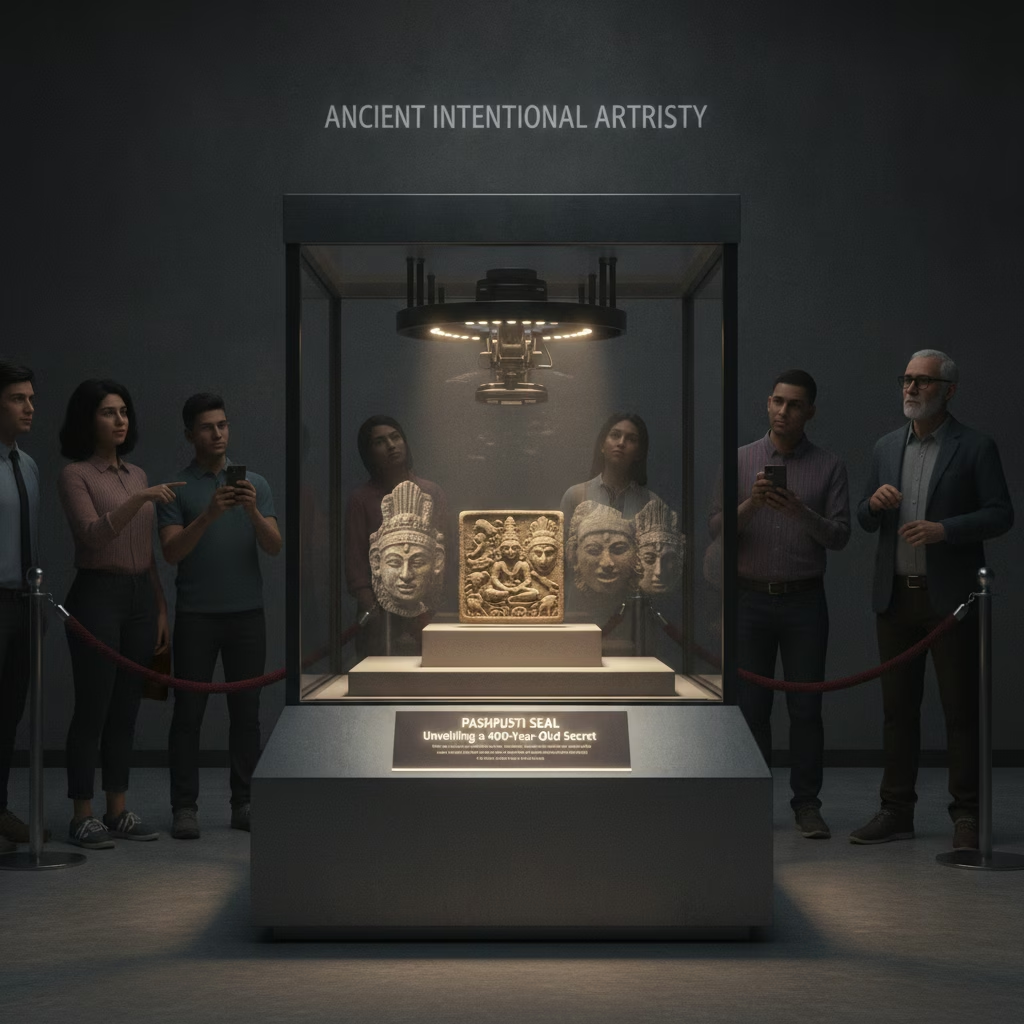
The National Museum of India installed a new display for the Pashupati seal in December. The artifact rested in a climate-controlled case fitted with a specialized lighting system. Every three minutes, a raking light would slowly traverse across the seal's surface, and visitors would watch as three faces emerged from the stone, held for a moment in perfect clarity, then faded back into a single frontal view.
Priya stood near the display on opening day, watching people's reactions. Children pressed close to the glass, counting the faces as they appeared. Adults read the new label text, which now acknowledged the seal's "tricephalic figure, visible under raking illumination."
An elderly woman stood before the case for several minutes, watching the light cycle through its pattern three times. Finally, she turned to Priya—recognizing the curator's badge—and asked, "Did they know we would eventually see this? The people who made it?"
Priya considered the question. The seal had been carved around 2350 BCE, pressed into clay for perhaps a century or two, then buried in the ruins of Mohenjo-daro when the city was abandoned around 1900 BCE. It had remained underground for nearly four thousand years, excavated in 1928, studied by dozens of scholars, photographed hundreds of times.
And only now, only through the accident of a misplaced light, had someone seen what the ancient artisan had encoded in the stone.
"I think," Priya said slowly, "they knew that anyone who looked carefully enough, with the right light and the right patience, would eventually see the truth. They made it possible for us to discover. They just didn't make it easy."
The light cycled again. One face became three, then three became one. The Pashupati figure sat in its eternal yogic pose, surrounded by its four guardian animals, keeping its secrets and revealing them in the same patient rhythm—waiting, as it had waited for four millennia, for someone to look at it from exactly the right angle.