
The Seventeen-Hundred-Mile War: How Rajaram Fought an Empire with Outdated Intelligence
On 12 March 1689, Rajaram Bhonsale was informally crowned Chhatrapati of the Maratha Kingdom at Raigad Fort. His brother Sambhaji had been captured and executed by the Mughals just days earlier. Rajaram was now the third king of the empire his father Shivaji had founded, inheriting a war against the most powerful ruler in India: Emperor Aurangzeb.
But Rajaram would never fight that war from Maharashtra.
Within weeks of his coronation, Mughal forces under Itikad Khan (later known as Zulfikar Khan) began laying siege to Raigad on 25 March 1689. The new Chhatrapati faced an impossible choice: remain at the capital and risk capture like his brother, or flee to safety and command the resistance from exile.
He chose exile. What he couldn't have known was that his destination—the fortress of Jinji in present-day Tamil Nadu—would become both his sanctuary and his prison, a command post so remote that every order he issued would be obsolete before it arrived.
The Impossible Distance
The journey from Raigad to Jinji in 1689 was not measured in miles but in impossibilities.
Rajaram's escape, documented in the Rajaramacharita by his court priest Keshav Pandit, reads like an adventure novel. A 300-strong Maratha contingent fought a rearguard action while the young king slipped through the Mughal siege lines. He traveled via Pratapgad and Vishalgad forts, moving through hostile territory where Aurangzeb's armies controlled most major routes.
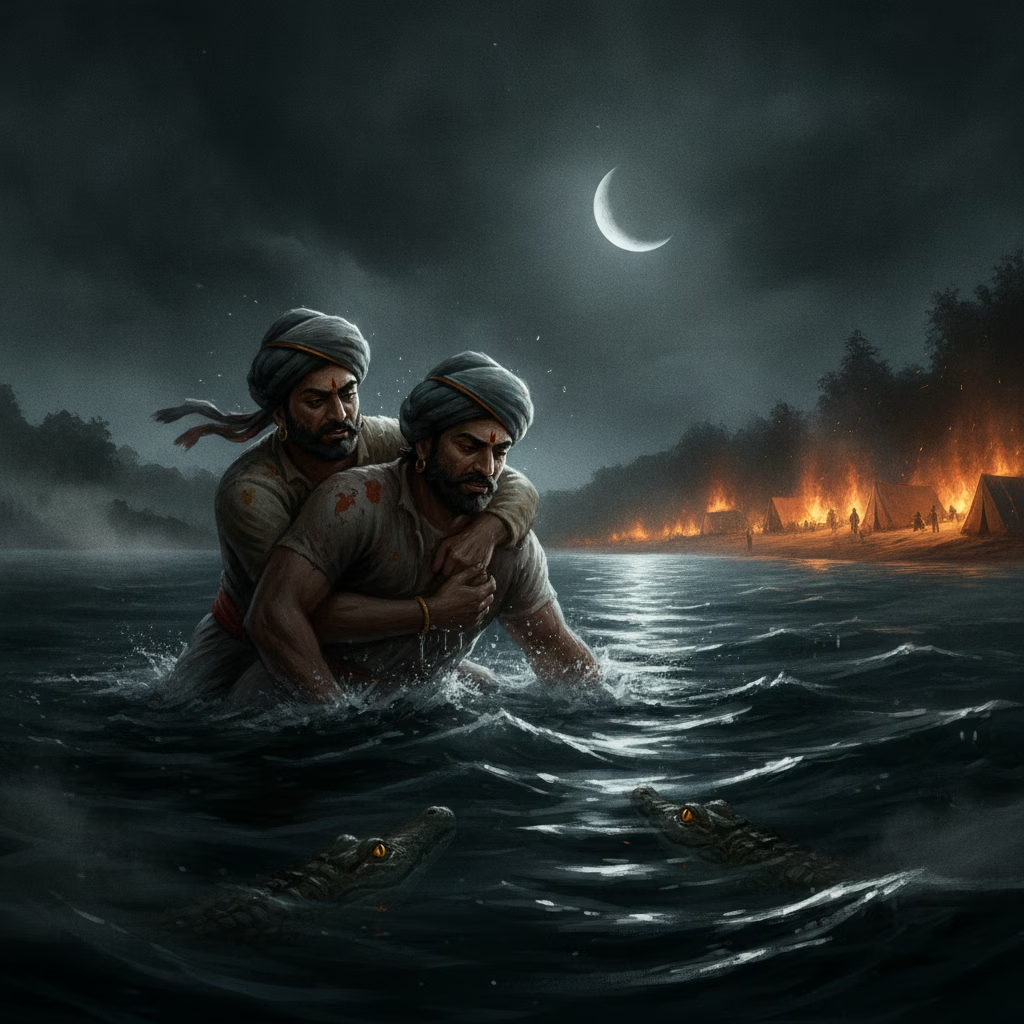
The most perilous moment came at the Tungabhadra river. Swollen and infested with crocodiles, it represented a natural barrier that should have ended Rajaram's flight. Instead, according to historical accounts, his bodyguard Bahirji Ghorpade swam across with the king clinging to his back, navigating through darkness while crocodiles circled in the water.
They entered the territory of Kasim Khan in disguise, where discovery meant certain death. Their salvation came from an unexpected quarter: Queen Chennamma of Keladi, who provided safe passage through her domains. As per the Keladinṛipavijaya of Linganna, Chennamma kept Mughal forces engaged to ensure Rajaram's escape—a decision that would cost her dearly. Aurangzeb dispatched three generals to punish her, capturing several of her forts and besieging Bednur.
Rajaram reached Jinji on 1 November 1689, a month and a half after leaving Raigad.
That journey time—forty-five days under ideal conditions, with the Chhatrapati traveling light and fast—would define the central problem of his reign. If the king himself required six weeks to cover the distance, how long would it take for messages to travel back and forth? How could he coordinate a guerrilla war against the Mughal Empire when every dispatch from his generals was weeks or months old by the time he read it?
Fighting Blind from Jinji
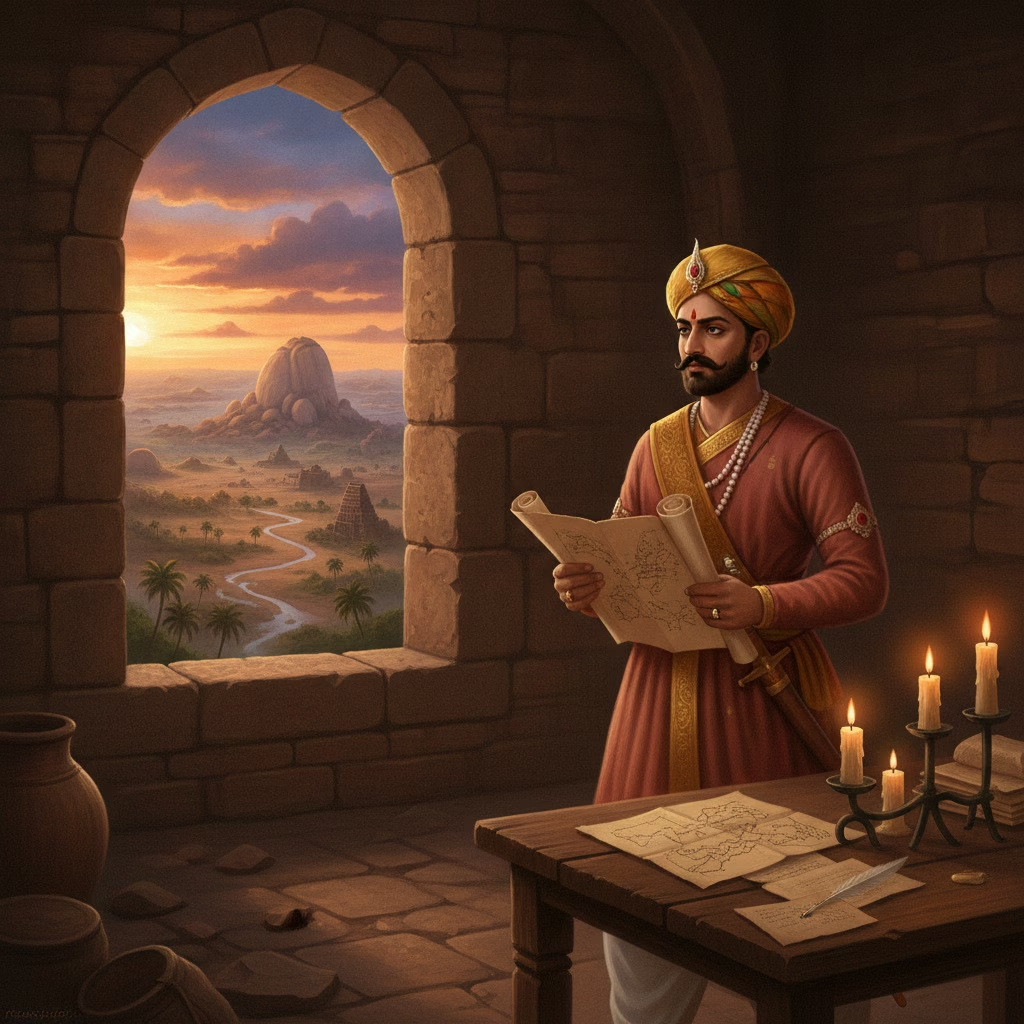
Jinji was an impressive fortress. Perched on rocky hills in Tamil Nadu, it had natural defenses that made it nearly impregnable. It was also over 500 miles from Maharashtra, where the war against the Mughals was actually being fought.
When Rajaram occupied Jinji on 11 November 1689, according to Wikipedia, "there was virtually no money in his treasury and no practical centralised Maratha army." Raigad, the capital of the Maratha Kingdom, had fallen into Aurangzeb's hands. The administrative apparatus of the state was shattered.
From this isolated outpost, Rajaram attempted to coordinate a resistance movement across a subcontinent.
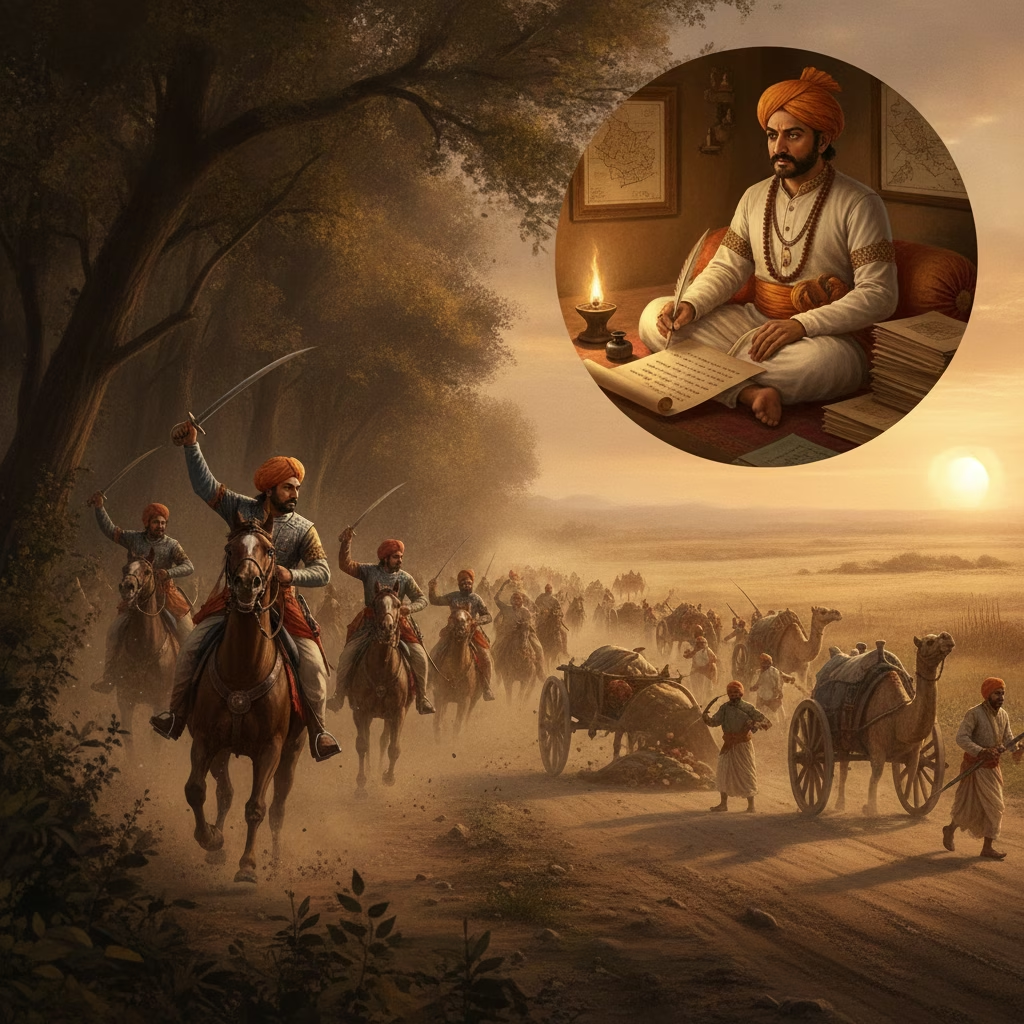
The logistics were staggering. Messages from his generals Santaji Ghorpade and Dhanaji Jadhav—the two commanders actually fighting the Mughals in Maharashtra—had to travel the same treacherous route Rajaram had taken. Messengers on horseback, moving through hostile territory, required weeks or months to complete the journey.
By the time intelligence reached Jinji, it was obsolete. A report about Mughal troop movements written in January might arrive in March, describing positions the enemy had abandoned weeks earlier. Rajaram's responses, traveling back along the same slow routes, were equally outdated by the time they reached his generals.
This wasn't just an inconvenience. It was a fundamental strategic disadvantage that shaped every decision of the war.
In 1691, according to historical records, Rajaram issued bounties to generals for capturing Mughal cities—a taunt to Mughal encroachment and an attempt to maintain morale. But these proclamations took months to reach their intended audience. By the time a general received authorization to attack a particular target, the strategic situation had often changed completely.
Rajaram's government also "deliberately tried to wean away Maratha chiefs who had accepted Mughal service," according to Wikipedia. But this diplomatic offensive was hamstrung by distance. How do you negotiate with a wavering chieftain when your offers arrive months late?
The Communication War
Aurangzeb understood the power of immediacy.
The Mughal emperor, commanding from camps in the Deccan, could respond to defections and loyalty shifts in real time. When a Maratha sardar showed signs of wavering, Aurangzeb could "profusely offer lands, titles and rewards as inducements" immediately, according to historical accounts.
Rajaram, by contrast, was always playing catch-up.
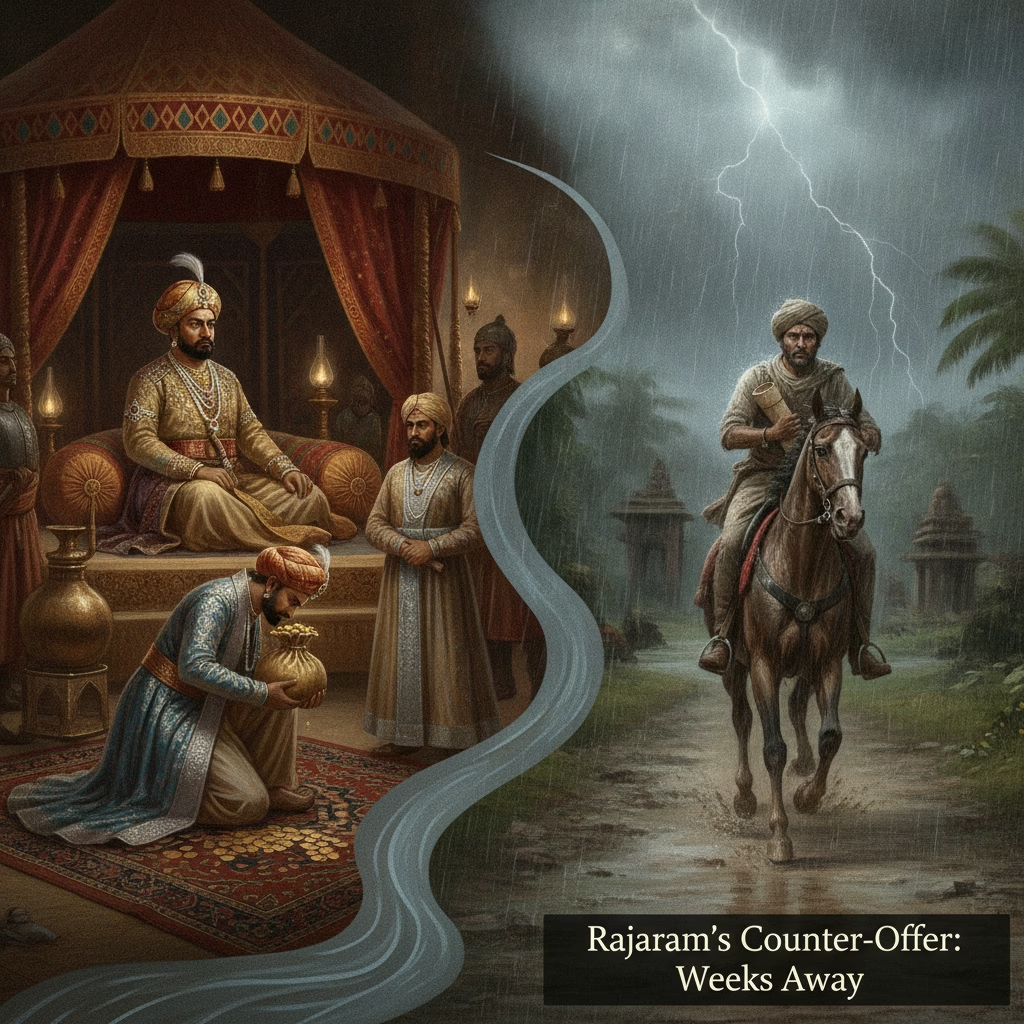
The "Maratha Government adopted the same methods for counteraction," Wikipedia notes, "but was hampered" by the vast distance. A Maratha chief considering defection might receive a generous offer from Aurangzeb today, with titles and lands granted immediately. Rajaram's counter-offer would arrive two months later—by which time the chief had already accepted Mughal service and received his rewards.
This temporal asymmetry transformed loyalty into a commodity that favored the side with faster communication. Aurangzeb could outbid Rajaram not because he offered more, but because he offered it now.
Rajaram and his advisers adapted as best they could. They were "compelled to offer inducements of feudal estates to helpers to retain their services"—essentially pre-paying loyalty with land grants to prevent defections before Mughal offers could arrive. But this strategy drained the treasury and created its own problems, distributing power to regional leaders who might not remain loyal once they held their estates.
The siege of Jinji by Zulfiqar Khan began in September 1690, adding another layer of isolation. Now Rajaram wasn't just distant from the main theaters of war—he was under siege, with communication lines even more precarious. Messages had to be smuggled through enemy lines before beginning their long journey north.
The siege "dragged on through 1694 and 1695," according to Wikipedia, yet during this entire period, Rajaram continued attempting to coordinate Maratha resistance across India. It was command by prophecy: he had to guess what situations his generals would face months in the future and issue orders accordingly.
The Generals' War
The communication lag forced a radical decentralization of Maratha military strategy.
Santaji Ghorpade and Dhanaji Jadhav, the two principal Maratha generals, couldn't wait for orders from Jinji. They had to make tactical decisions based on immediate battlefield conditions, knowing that any guidance from their king would be obsolete by the time it arrived.
This created a paradox: Rajaram was nominally the supreme commander, but his generals fought an almost independent war. They raided Mughal supply lines, ambushed enemy columns, and defended fortresses based on their own judgment. Rajaram's role became less about tactical command and more about strategic vision and legitimacy—he was the symbol of Maratha resistance, the authority that justified continued fighting, even if he couldn't direct specific operations.
Santaji's daring raid on Aurangzeb's camp at Tulapur, where he nearly killed the emperor by collapsing his pavilion, happened with this operational independence. According to Wikipedia, "Santaji's plan was for the Maratha army to entrench itself at Phaltan and from that base draw the attention of Mughal generals while Santaji and a small cavalry contingent would raid the main Mughal camp." This was exactly the kind of opportunistic, time-sensitive operation that couldn't wait for approval from Jinji.
The system worked, after a fashion. Maratha forces continued to resist despite the fall of Raigad. They won battles, captured Mughal war elephants, and kept Aurangzeb's armies tied down in the Deccan for years. But it worked despite the communication lag, not because of it.
Every Maratha victory raised the same question: had Rajaram's distant orders contributed to the success, or had his generals simply ignored obsolete instructions and acted on their own initiative?
The Messenger's Burden
History rarely records the names of messengers, but they were the unsung infrastructure of Rajaram's resistance.
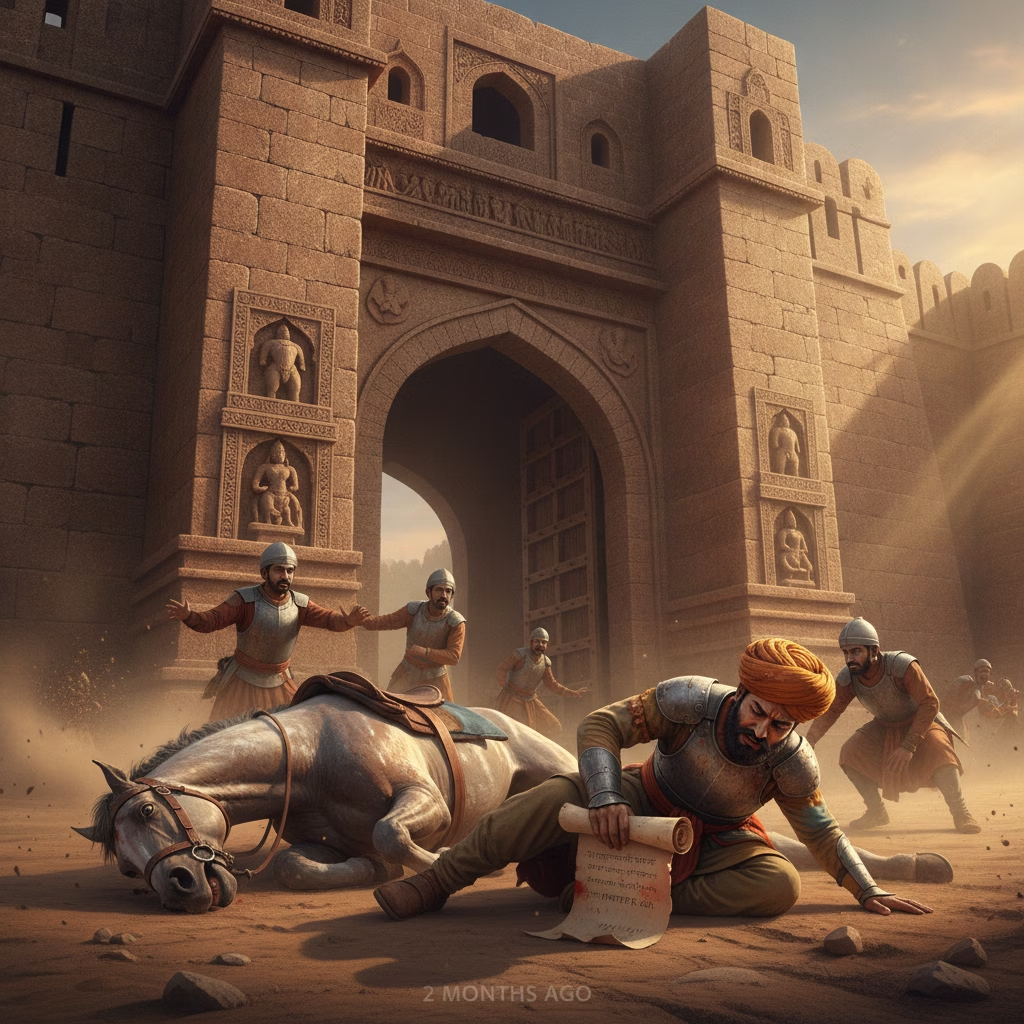
These riders carried dispatches through hundreds of miles of hostile territory. They forded rivers, evaded Mughal patrols, and navigated mountain passes. Some were captured and tortured for intelligence. Others died of exhaustion or disease on the road. Many simply disappeared, their messages lost forever, leaving Rajaram and his generals wondering whether orders had been received or ignored.
The physical toll was immense. Horses could only travel so far before requiring rest. Monsoon rains made roads impassable for months. Summer heat killed men and animals alike. Each message required multiple riders in relay, with safe houses and loyal contacts along the route.
And every messenger carried the weight of obsolescence. They knew that the urgent dispatch they carried—the one they'd risked their lives to deliver quickly—might be worthless by the time it arrived. The battle it described might be over. The opportunity it outlined might be lost. The intelligence it contained might be contradicted by events that occurred during transit.
This created a psychological burden beyond the physical dangers. Messengers were the connective tissue of the Maratha state, yet they also embodied its fundamental dysfunction. They were simultaneously essential and insufficient.
The Siege Within the Siege
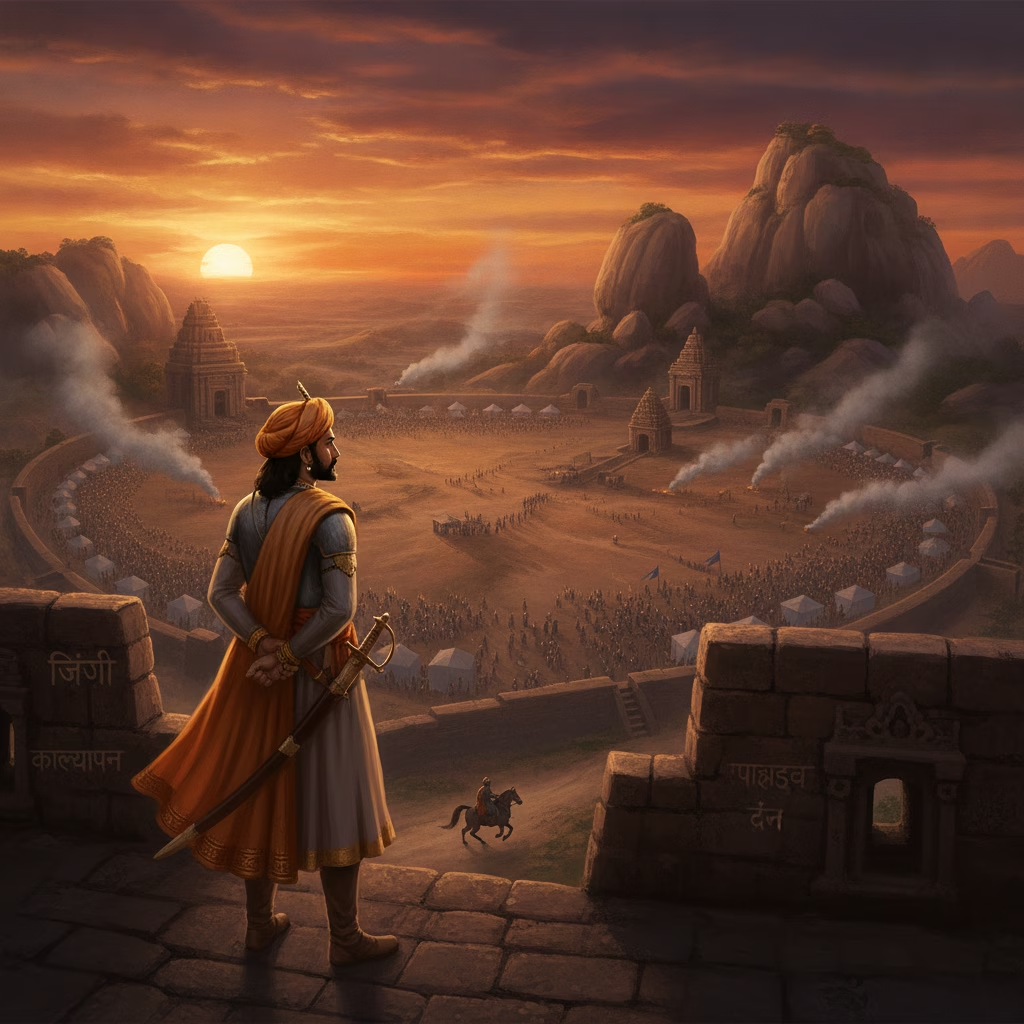
By 1693, Rajaram faced a bitter irony: he was besieged in Jinji while trying to coordinate relief operations for other besieged Maratha fortresses hundreds of miles away.
The Mughal siege of Jinji was methodical and patient. Zulfiqar Khan, learning from earlier failed assaults on Maratha fortifications, settled in for a long blockade. He knew that time favored the Mughals. Every month that Rajaram remained trapped in Jinji was another month of communication paralysis for the Maratha resistance.
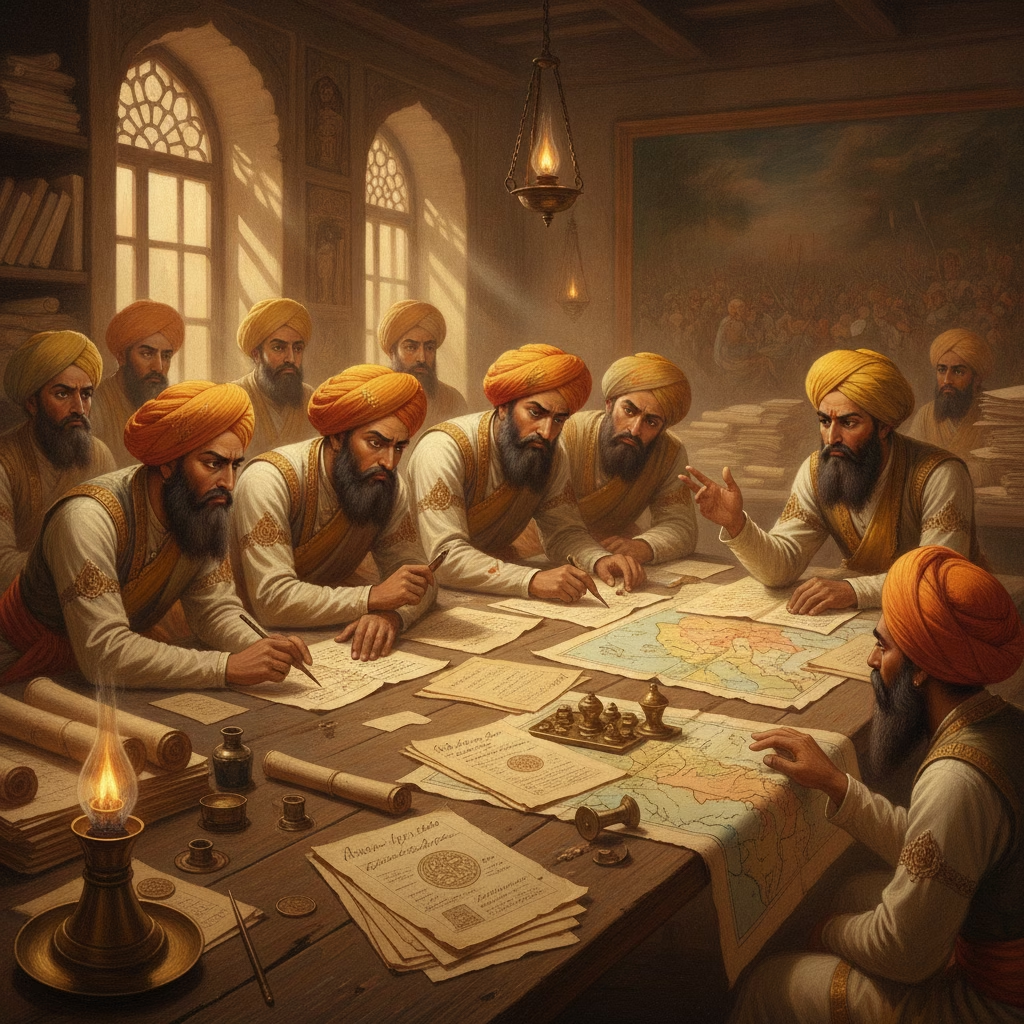
From inside the besieged fortress, Rajaram's strategic vision became increasingly abstract. He received reports of battles fought months ago. He issued orders for situations that no longer existed. He granted titles and lands to generals based on achievements he'd learned about long after they occurred.
The siege also revealed the limitations of his southern refuge. Jinji was safe, but safety had become its own trap. The fortress that protected Rajaram from capture also isolated him from effective command. He was simultaneously the legitimate Chhatrapati and a king in exile, commanding an empire he couldn't see or touch.
Yet the Maratha resistance continued. This was perhaps the most remarkable aspect of Rajaram's reign: despite the communication breakdown, despite the obsolete intelligence, despite the months-long delays, the war against the Mughals went on. Santaji and Dhanaji kept fighting. Minor chiefs kept resisting. The Maratha cause survived.
The Intelligence That Never Arrives
In February 1698, Rajaram finally escaped from Jinji and returned to Maharashtra. The siege had lasted nearly eight years. By the time he reached Satara and re-established his government closer to the main theaters of war, the strategic situation had transformed.
But the fundamental problem of his reign—the impossibility of commanding a guerrilla war from a remote fortress with months-long communication delays—had already shaped the conflict's trajectory. The Maratha resistance had learned to function without immediate royal direction. Generals had learned to act independently. The movement had decentralized by necessity.
Rajaram died in 1700, succeeded by his infant son Shivaji II under the regentship of his wife Maharani Tarabai. His eleven-year reign had been, according to Wikipedia, "marked with a constant struggle against the Mughals." But it had also been marked by a constant struggle against distance, against time, against the tyranny of obsolete information.
Modern military historians study the Maratha resistance as an early example of guerrilla warfare against conventional forces. They analyze Santaji's raids, Dhanaji's defensive strategies, and the Maratha's ability to tie down Aurangzeb's vastly superior armies for decades. These analyses often focus on tactics, logistics, and battlefield decisions.
But they sometimes overlook the most fundamental challenge Rajaram faced: he was fighting a war using intelligence that was always outdated, issuing orders that were obsolete before they arrived, and coordinating operations he couldn't observe or adjust in real time.
In Jinji's stone chambers, surrounded by months-old dispatches and incomplete reports, Rajaram commanded not the war as it was, but the war as it had been weeks or months earlier. He was a king perpetually living in the past, trying to shape a future he could only glimpse through the distorted lens of delayed information.
That he sustained Maratha resistance at all under these conditions speaks not just to his strategic vision, but to the resilience of a movement that could function despite—and eventually because of—the absence of centralized, real-time command.
The seventeen-hundred-mile war was won not through superior intelligence, but through a system that could survive without it.