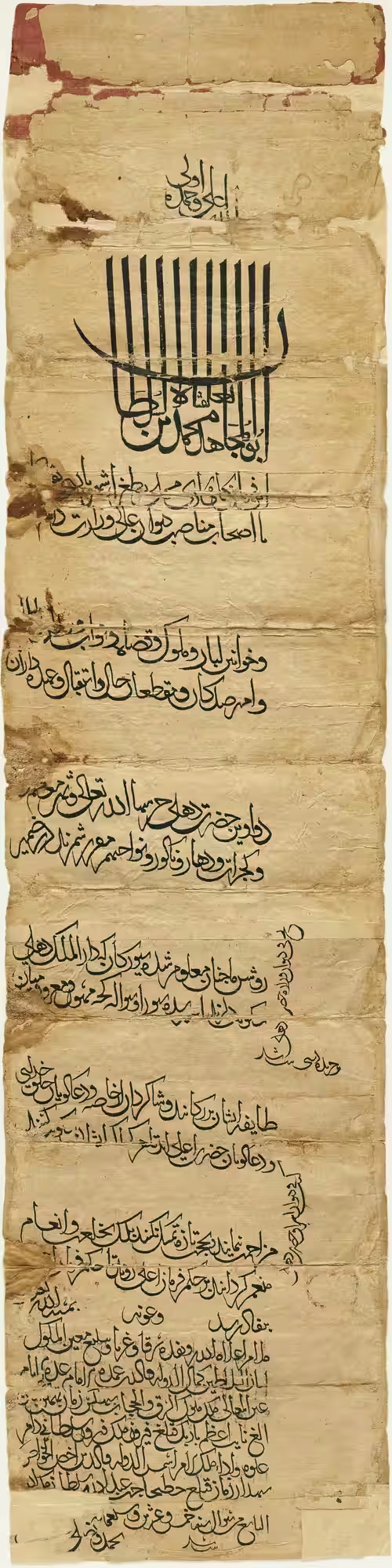

The year was 1325, and Delhi had a new sultan. Muhammad bin Tughluq—known to history by the paradoxical epithet "The Wisest Fool"—ascended to the throne of the Delhi Sultanate on February 4th, three days after his father Ghiyasuddin's death. Unlike many rulers of his time, Muhammad was no mere warrior-king. He was a polyglot scholar who moved fluently between Persian, Hindavi, Arabic, Sanskrit, and Turkic. He studied medicine. He debated theology with Jain monks and participated in Hindu festivals—a remarkable display of religious tolerance in the 14th century.
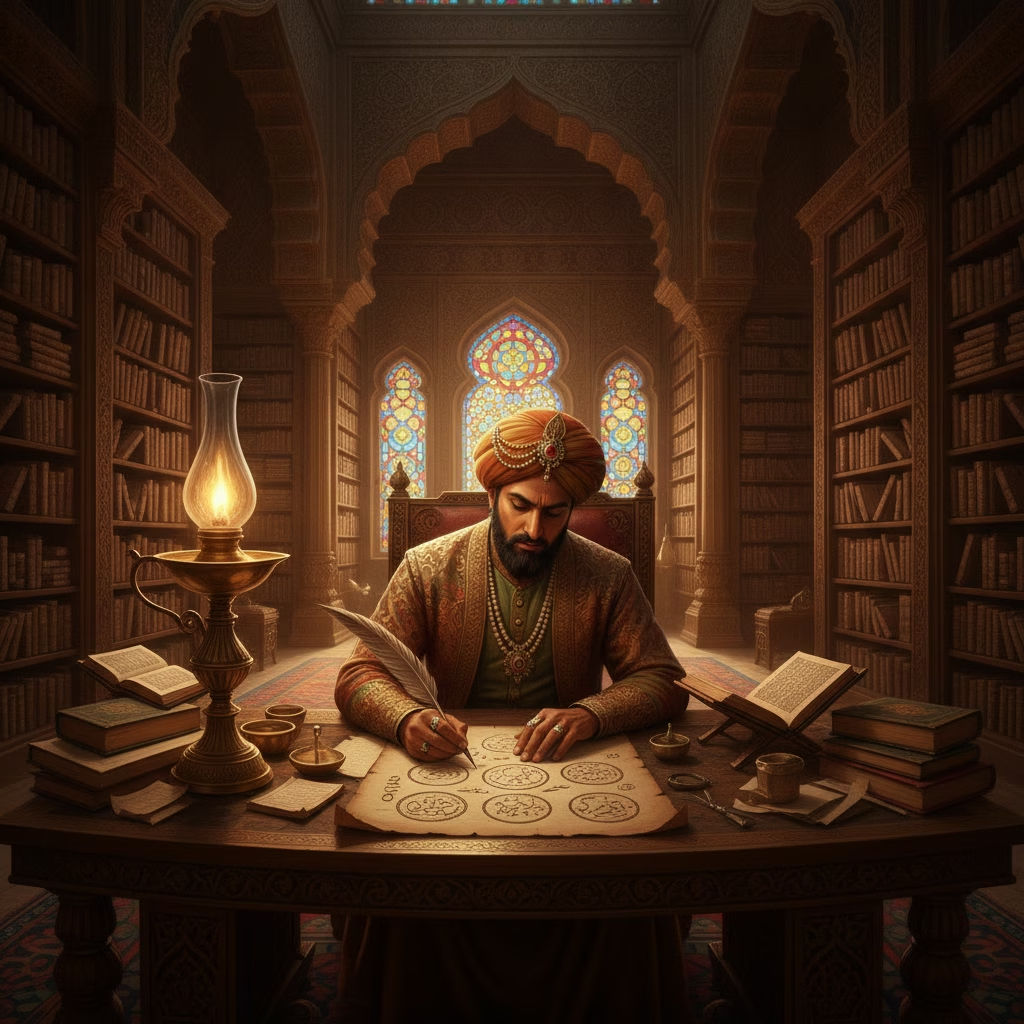
The Moroccan traveler Ibn Battuta, who would later document his time at the Sultan's court, found Muhammad to be brilliant, unpredictable, and utterly fascinating. Here was a ruler who could recite poetry in five languages, who understood the complexities of governance across his vast empire—stretching from Delhi south to conquered territories in Warangal, Ma'abar, and Madurai—and who possessed an insatiable appetite for ambitious experiments.
It was this appetite for innovation that would lead Muhammad to one of history's most spectacular economic disasters.
By the late 1320s, Muhammad's military campaigns had drained the royal treasury. Gold and silver were increasingly scarce, yet commerce demanded currency. The Sultan, ever the visionary, conceived what he believed to be an elegant solution: token currency. If the state decreed that copper tokens held the same value as gold and silver coins, wouldn't they function just as well? After all, currency was merely a symbol of value, guaranteed by the sovereign's authority.
In theory, it was brilliant. In practice, it would become a cautionary tale told for centuries.
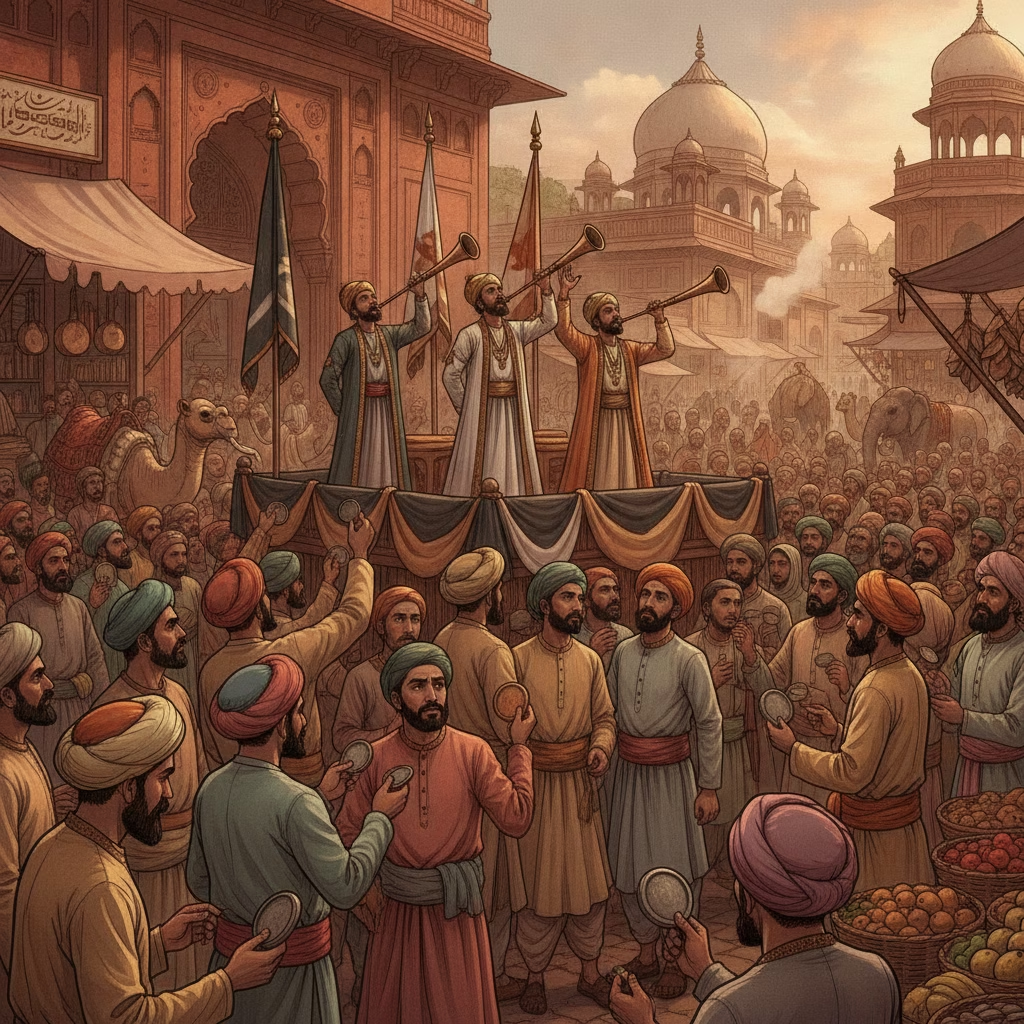
The decree went forth across the Sultanate. Royal heralds stood in marketplaces from Delhi to the Deccan, proclaiming the new monetary policy. Copper tokens—simple discs stamped with the Sultan's seal—would now be legal tender, equal in value to precious metal coins. Any merchant who refused them would face the Sultan's wrath. Any subject who counterfeited them would be punished with death.
Muhammad had established an elaborate administrative system across his empire. He had created new revenue officials to assess the financial aspects of conquered territories. He had set up postal services connecting Delhi to distant Daulatabad. Surely this same efficient machinery could enforce his currency reform.
The merchants of Delhi examined the copper tokens with barely concealed skepticism. These simple discs, worth perhaps a fraction of a silver coin in metal value, were now supposedly equivalent to gold? The Sultan's word made it so, the heralds insisted. The full weight of imperial authority—embodied in Muhammad's magnificent title: Al-Sultān al-Ā'dil al-Abd al-Rāji Rahmat Allāh al-Wāthiq Bi-ta'yīd al-Rahmān al-Mujāhid fī-Sabīl Allāh Abu'l-Mujāhid Fakhr al-Dunyā wa'l-Dīn Muhammad bin Tug͟hluq Shāh al-Sultān—stood behind each copper disc.
But authority, as Muhammad would soon discover, could not overcome simple arithmetic and human nature.

The problem revealed itself within weeks. A potter in one of Delhi's mohallas—the city's segregated quarters for different professions and classes—made a discovery. The copper tokens were remarkably simple. No intricate designs, no sophisticated minting techniques that couldn't be replicated with basic tools. Just copper, stamped with a seal.
And copper was everywhere.
The whisper spread through Delhi like wildfire. Why trade your precious metals for the Sultan's copper tokens when you could make your own? Copper pots could be melted down. Old utensils could be reforged. Any household with a small furnace and a hammer could become a mint.
What began as isolated incidents soon became an epidemic. In kitchens across Delhi—in the quarters of soldiers, poets, judges, even nobles—families gathered around makeshift forges. Fathers hammered copper while children stamped crude approximations of the royal seal. The glow of illicit minting fires lit up the night. Clay bowls filled with cooling tokens, each one theoretically worth its weight in gold or silver, simply because the Sultan had declared it so.
The counterfeiting crossed all social boundaries. Rich and poor alike recognized the opportunity. Why shouldn't they? The Sultan himself had declared that copper equaled gold. They were simply taking him at his word, minting their own "official" currency.
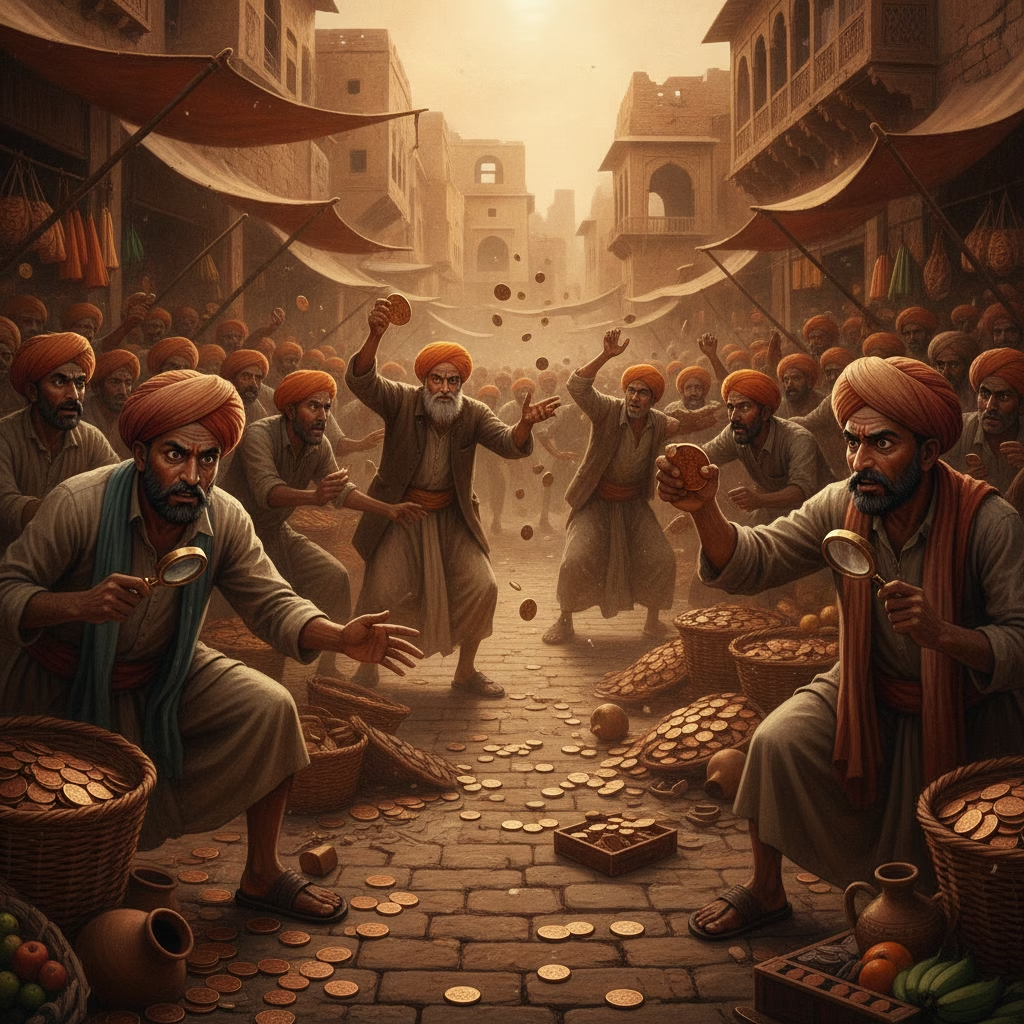
Within months, the markets of Delhi descended into chaos. Merchants arrived with baskets overflowing with copper tokens. Some genuine, most counterfeit, all supposedly equal in value. How could anyone tell the difference? The Sultan's mints produced simple tokens; so did every kitchen in Delhi. The metal was the same. The stamps were similar enough.
Traders began refusing copper entirely, demanding payment in the old gold and silver coins—the very currency Muhammad had tried to replace. But those who still possessed precious metals hoarded them carefully. Why spend gold when you could spend copper? Why accept copper when everyone knew it was worthless?
The Sultan's revenue officials, that elaborate administrative machinery he had established across his empire, found themselves drowning in worthless metal. Tax collectors returned from their rounds with cartloads of copper tokens. Were they genuine? Were they counterfeit? Did it matter? The treasury filled with copper while the actual wealth of the empire—the gold and silver that could purchase goods abroad, that could pay soldiers, that held intrinsic value—vanished into private hoards.
Muhammad, the scholar-sultan who spoke five languages and understood medicine, who had successfully conquered the Deccan and established infrastructure across vast territories, watched his brilliant economic experiment collapse into farce.
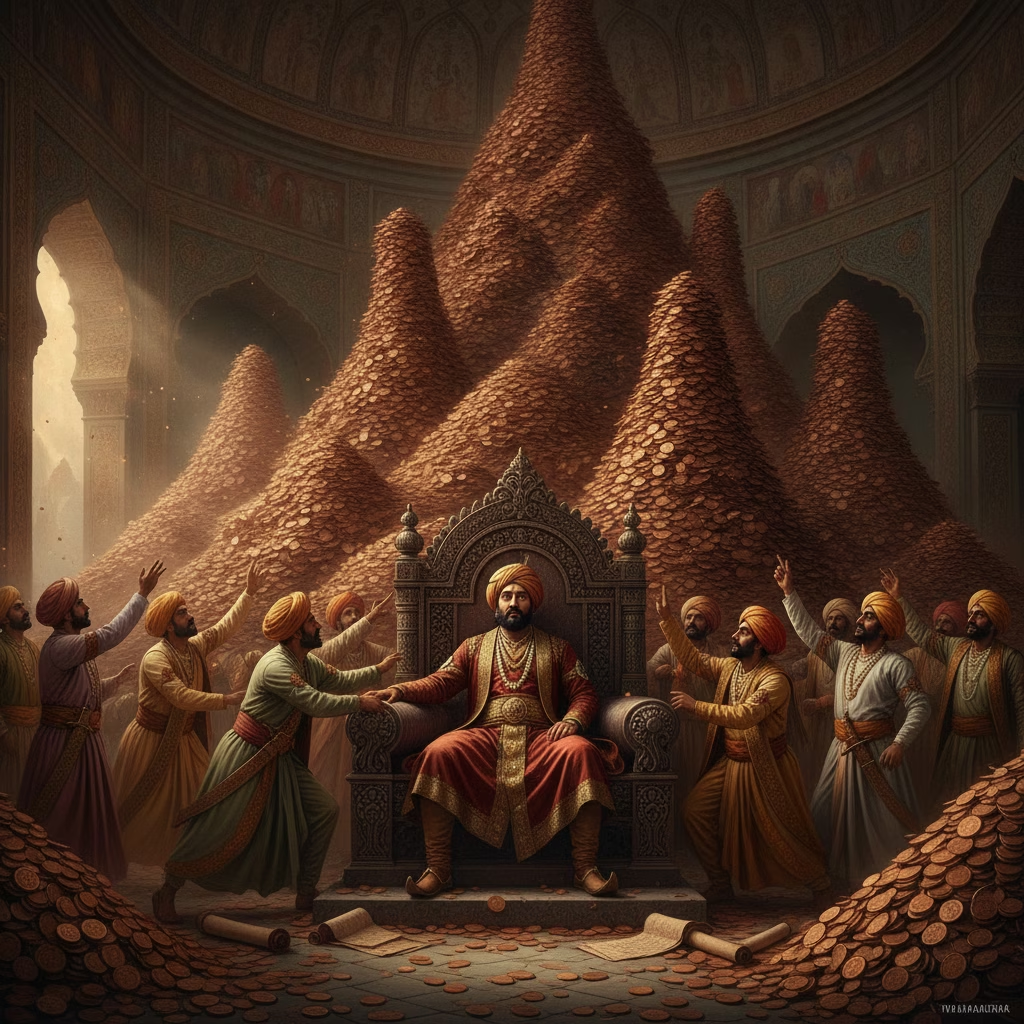
The man they called "The Wisest Fool" was wise enough to recognize failure. According to historical accounts, Muhammad eventually acknowledged that his token currency had become worthless. The counterfeiting was too widespread, too easy, too profitable to stop. Executing counterfeiters would mean executing half of Delhi. The paranoid traits that historians would later attribute to him might well have been exacerbated by this betrayal—not by enemies or rivals, but by ordinary subjects who had simply followed economic logic to its inevitable conclusion.
Muhammad made a final, desperate attempt to salvage something from the disaster. He announced that the treasury would exchange copper tokens for gold and silver coins at the original declared rate. It was an admission of defeat, but perhaps it would restore some faith in royal authority.
The result was predictable. Every household that had been minting copper tokens in their kitchens now brought them to the treasury. Genuine and counterfeit alike, the copper flooded in. The Sultan, true to his word, exchanged them for precious metals from the rapidly depleting royal reserves. Ibn Battuta would later write about the piles of copper tokens that accumulated, mountains of worthless metal that had briefly been declared equal to gold.
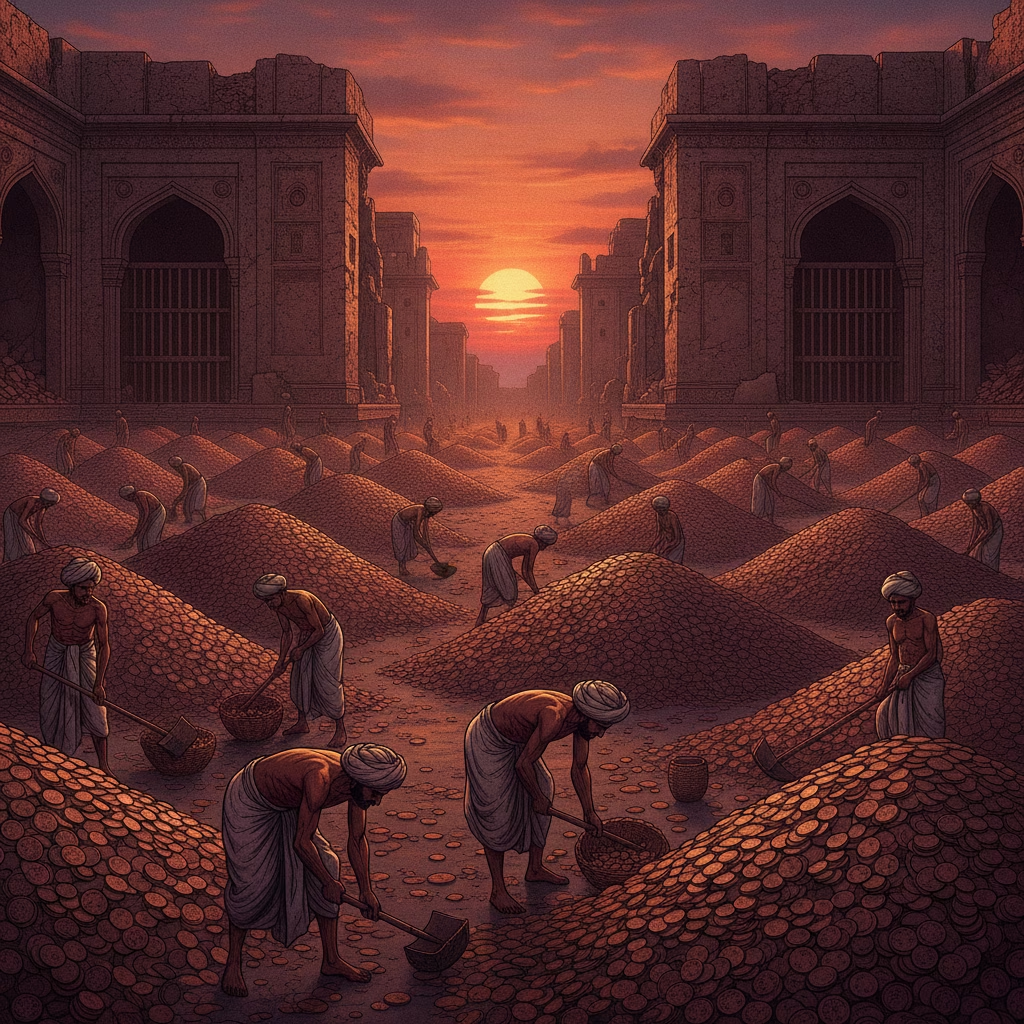
The token currency experiment bankrupted the treasury and taught future rulers a harsh lesson about the nature of money. Currency requires more than sovereign decree; it requires trust, scarcity, and the inability to be easily replicated. Muhammad bin Tughluq had possessed the wisdom to conceive an abstract monetary system—an idea centuries ahead of its time—but had failed to account for the practical realities of enforcement and human behavior.
The copper tokens were eventually withdrawn, melted down, or simply abandoned. Some historians suggest that the piles of discarded copper in Delhi's treasury courtyards remained visible for years, a monument to failed innovation. The Sultan returned to traditional gold and silver coinage, his ambitious experiment relegated to a cautionary tale.
Yet there is something almost tragic about Muhammad's copper currency disaster. His core insight—that money is a symbolic representation of value rather than intrinsically valuable metal—was correct. Modern fiat currency operates on exactly this principle. But Muhammad lived in the wrong century, ruling a state without the administrative capacity, technological sophistication, or centralized control necessary to maintain a token currency system.
He was, perhaps, too wise for his time and too foolish to recognize it. The "Wisest Fool" had glimpsed the future of economics but lacked the tools to bring it into being. Instead, he created a moment when every kitchen in Delhi became a mint, when the line between legal tender and counterfeit dissolved, and when a brilliant idea collided catastrophically with medieval reality.
The lesson echoed through Indian history: innovation without implementation is just expensive philosophy. And somewhere in the archives of Delhi, perhaps a few of those copper tokens still survive—worthless metal that was once, by royal decree, worth its weight in gold.