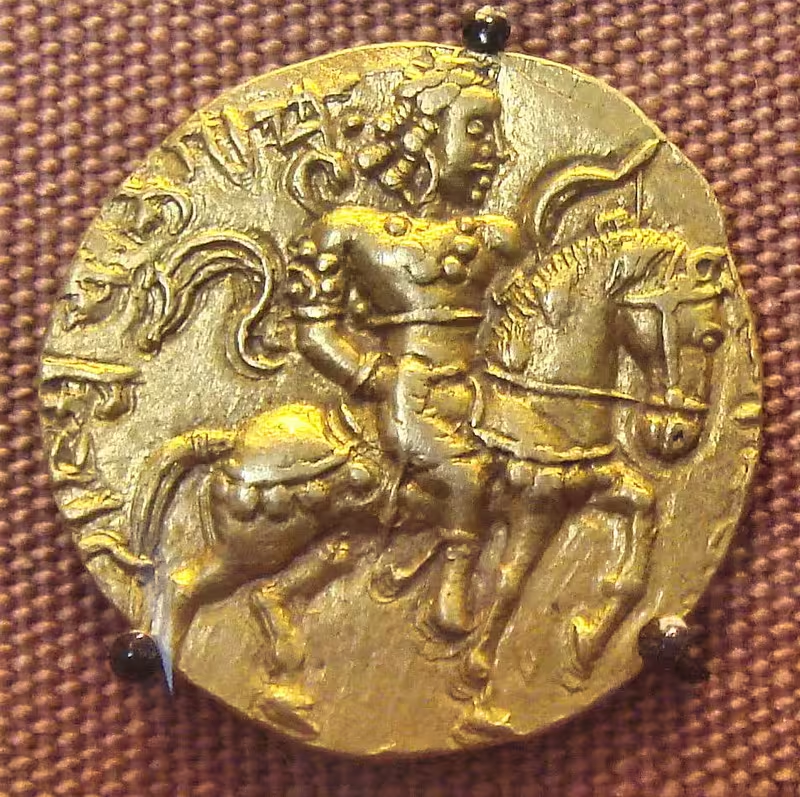

The King Who Walked in Shadows: Vikramaditya's Quest for Truth
The sun descended behind the sandstone walls of Ujjain, painting the sky in shades of saffron and crimson. Within the royal palace, King Vikramaditya—whose name meant "the sun of valour"—stood before a simple wooden chest, far from the jeweled splendor of his throne room.
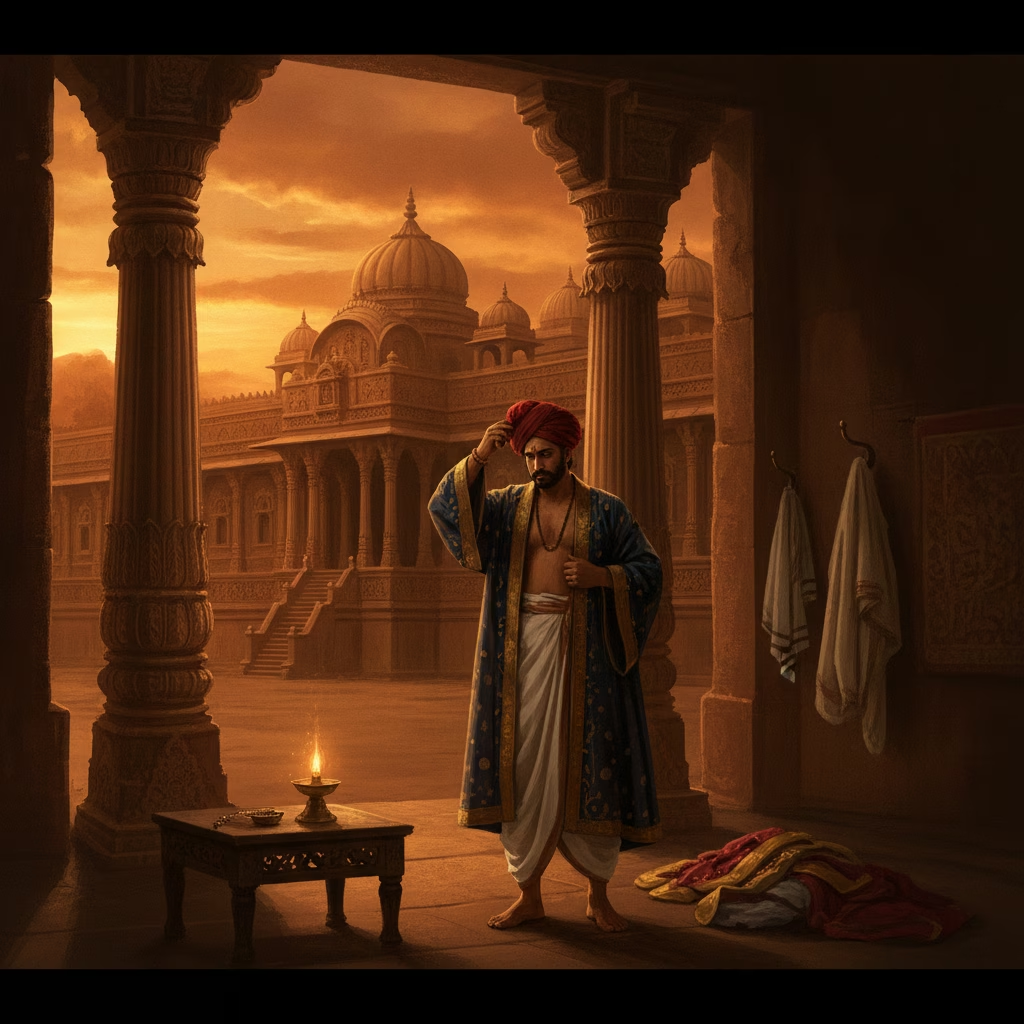
With practiced hands, he removed the golden crown that marked his sovereignty over the ancient city. The silk robes, embroidered with threads of gold, were carefully folded and replaced with the plain cotton dhoti of a common merchant. The transformation was complete when he wrapped a simple cloth around his shoulders and smudged dust upon his royal sandals.
This was Vikramaditya's secret, known only to his most trusted minister. Each night, when the palace guards believed their king retired to his chambers, he walked among his subjects as one of them. In the formal court, petitioners spoke with measured words, their grievances filtered through layers of protocol and fear. But in the streets, the king heard truth—raw, unvarnished, and real.
According to the traditional stories preserved in collections like Vetala Panchavimshati and Singhasan Battisi, Vikramaditya was renowned throughout ancient India for his justice and wisdom. Yet the legends also emphasize that his wisdom came not from isolation in ivory towers, but from understanding the lives of those he governed. Tonight, as on countless nights before, he would walk those streets and listen.
The palace's secret passage opened onto a narrow lane, and Vikramaditya emerged into the cooling evening air. The sounds of the city enveloped him—vendors calling out their final sales, children laughing in courtyards, the distant chanting from the temple of Mahakal. He was no longer a king. He was simply another man making his way through Ujjain's labyrinthine streets.
Shadows and Whispers
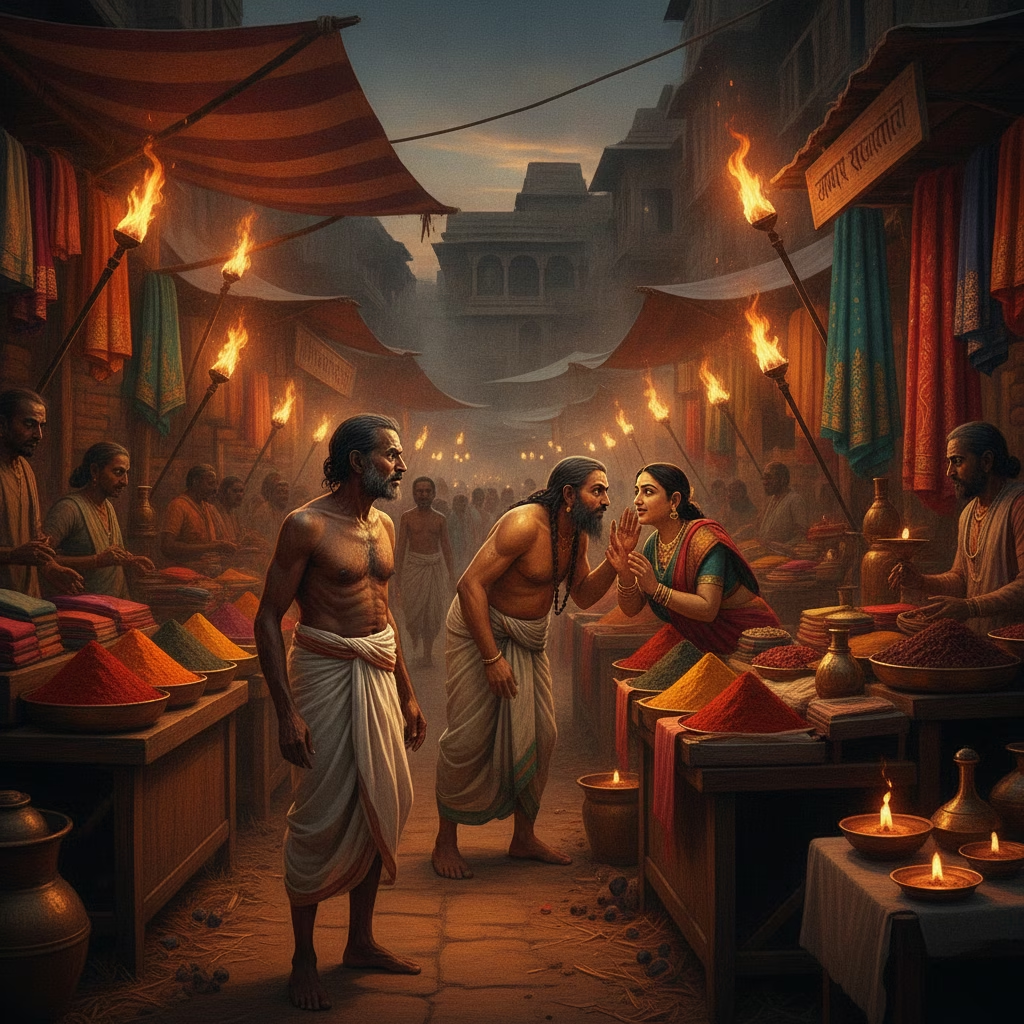
The night market sprawled across the square near the Shipra River, a constellation of oil lamps and torches that pushed back the darkness. Vikramaditya moved through the crowds with the ease of long practice, pausing at a spice merchant's stall to examine cardamom pods he had no intention of buying.
"...a scandal, I tell you," a voice carried from the neighboring stall. "The merchant Dhanadatta's wife, caught in adultery!"
"Are you certain?" another voice responded, thick with the accent of the weavers' quarter. "Sundari has always seemed so devoted."
"The evidence is clear," the first voice insisted. "A letter, found in her chambers. Love words written to another man. Dhanadatta discovered it himself."
Vikramaditya's fingers stilled on the cardamom. He turned slightly, keeping his face in shadow while his ears captured every word.
"Poor woman," a third voice joined, this one belonging to an elderly woman selling brass lamps. "Though if she is guilty, the law is clear. Dhanadatta has every right to cast her out, to see her punished."
"I heard she protests her innocence," the weaver said. "Claims the letter is a forgery."
"They all say that," the first merchant scoffed. "But Dhanadatta is a man of standing. Why would he lie about his own dishonor?"
The conversation drifted to other topics, but Vikramaditya remained rooted to the spot. Something in the tale troubled him—a dissonance he could not yet name. In his years of walking these streets, he had developed an instinct for truth, and this story rang false.
He knew Dhanadatta by reputation: a successful trader in silk and precious stones, recently risen to prominence in Ujjain's merchant guilds. And he knew that in matters of adultery, accusations alone could destroy a woman's life, regardless of truth. The law gave husbands tremendous power, and society's judgment was swift and merciless.
Vikramaditya purchased a handful of betel leaves from a nearby vendor, using the transaction to ask casual questions. Where did this Dhanadatta live? Near the eastern gate, in the prosperous quarter where successful merchants built their haveli mansions. And the woman, Sundari? The daughter of a respected family, married to Dhanadatta three years prior.
The king thanked the vendor and melted back into the crowd, his destination now clear.
A Woman's Anguish
The merchant's haveli stood three stories tall, its carved wooden balconies overlooking a central courtyard. Lamps blazed in every window—unusual for this late hour. Vikramaditya approached from a side lane, moving through shadows with the stealth that years of nightly wanderings had perfected.
Voices carried through the latticed windows. Angry voices, and beneath them, the sound of weeping.
"You shame me!" A man's voice, raw with fury. "You shame my house, my name, everything I have built!"
"I am innocent!" A woman's voice, breaking with desperation. "Husband, I swear by every god, I have never betrayed you!"
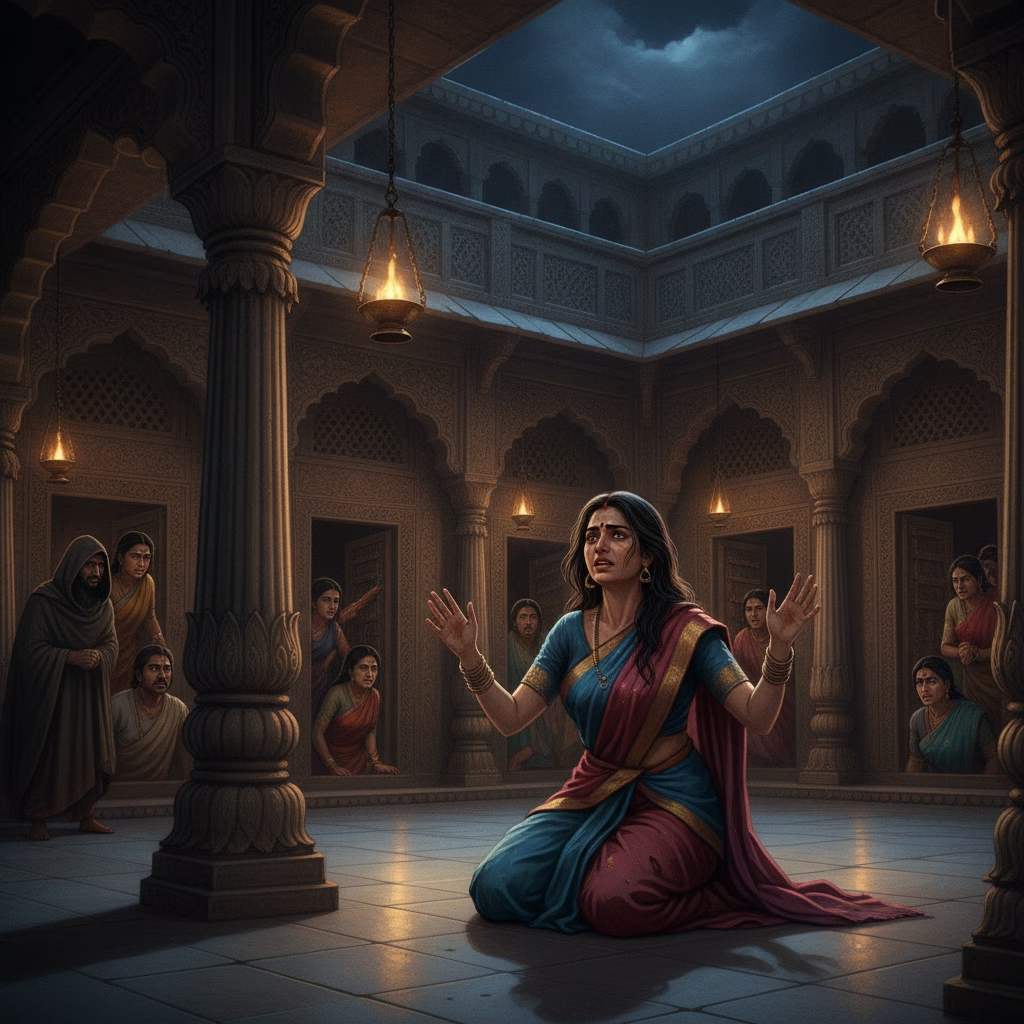
Vikramaditya positioned himself behind a pillar in the courtyard, where he could see through a ground-floor window. Inside, a woman knelt on the floor, her silk sari torn, her hair disheveled. This was Sundari. Even in her distress, she carried herself with a dignity that spoke of inner strength.
Dhanadatta stood over her, a letter clutched in his fist. "Then explain this! Found in your own chamber, in your own chest! Love words to Ravindra, my rival!"
"I have never written such words!" Sundari's hands were clasped in supplication. "Someone has placed it there to destroy me, to destroy us!"
"Lies!" Dhanadatta's hand rose as if to strike, then fell. "The elders have seen the letter. They agree—the evidence is clear. By tomorrow, all of Ujjain will know of your treachery."
Through other windows, Vikramaditya could see neighbors gathering, their faces a mixture of sympathy and satisfaction. In the harsh arithmetic of scandal, a fallen woman provided both entertainment and a cautionary tale.
But Vikramaditya, who had earned his reputation for wisdom by looking beyond surfaces, noted details others might miss. Sundari's confusion seemed genuine, not the calculated performance of a caught deceiver. And Dhanadatta's rage, while real, carried an undertone of something else—was it fear? Uncertainty?
The king withdrew from the courtyard, his mind already working. If Sundari spoke truth, then someone had indeed fabricated evidence. But who would benefit from destroying this family? And how could he, disguised as a commoner, investigate without revealing his identity?
These questions accompanied him as he made his way back through the darkened streets, but he did not return to the palace. Not yet. The night was young, and truth rarely revealed itself in a single evening.
The Patient Hunter
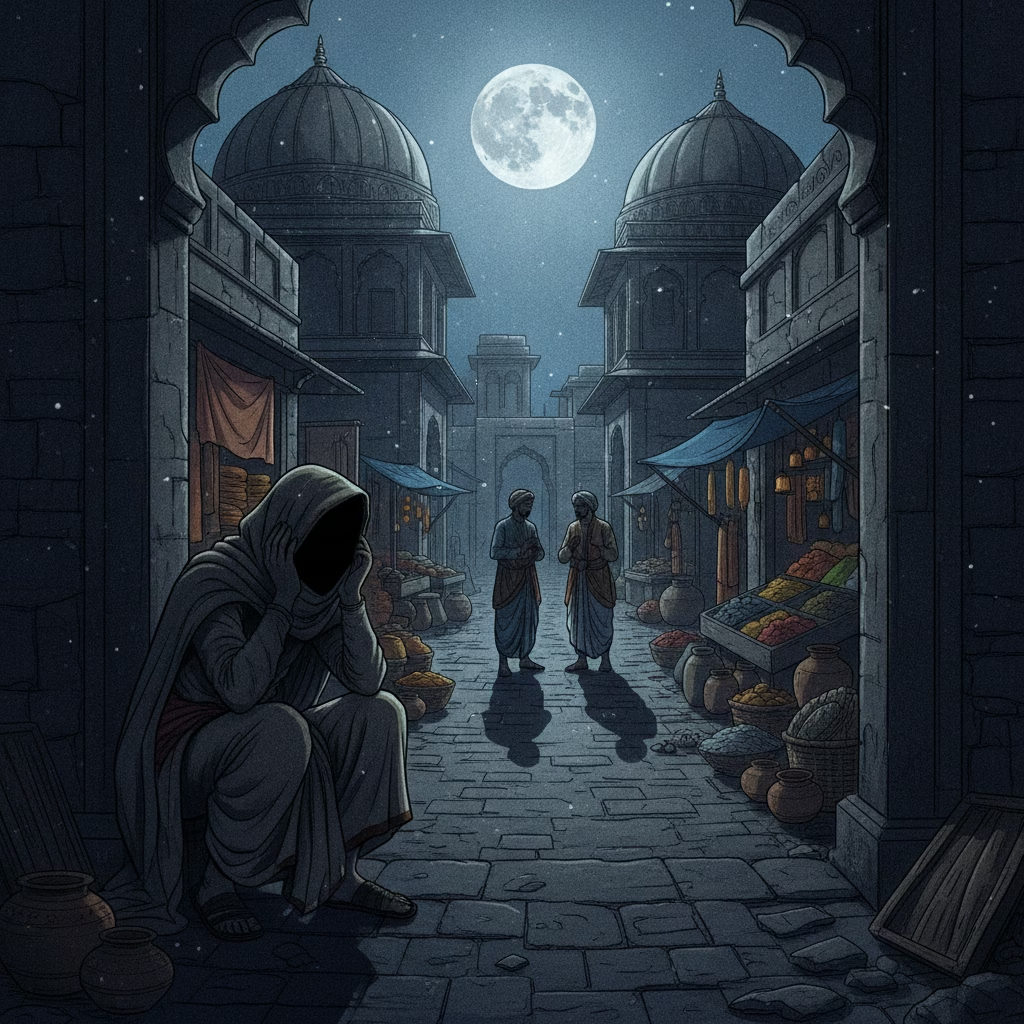
Over the following three nights, Vikramaditya became a ghost in Ujjain's merchant quarter. He listened in tea stalls and watched from rooftops. He asked questions in the guise of a traveling trader, curious about the city's commercial affairs. Slowly, carefully, he assembled pieces of a puzzle.
Dhanadatta and another merchant, Ravindra, had been locked in competition for a lucrative trade route to the southern kingdoms. The contract was to be awarded by the merchant guild within the week. Ravindra, the son of an old merchant family, had expected the route to be his by right of lineage. But Dhanadatta, the ambitious newcomer, had underbid him and offered better terms.
The letter accusing Sundari of adultery named Ravindra as her supposed lover—a claim that, if believed, would destroy both Dhanadatta's reputation and his chances of securing the contract. A man cuckolded by his business rival would be seen as weak, unworthy of trust.
But there was a deeper layer. Vikramaditya learned that Ravindra had recently hired a new scribe, a man known for his skill in copying hands—the ability to replicate another person's handwriting with perfect accuracy. This scribe had been seen near Dhanadatta's haveli on the very day before the letter was "discovered."
On the fourth night, Vikramaditya followed the scribe to a wine house on the river's edge. There, loosened by drink, the man boasted to his companions about a "special commission"—a letter written in a woman's delicate hand, worth more than a month's usual wages.
"Whose hand did you copy?" one of the companions asked.
The scribe grinned. "A merchant's wife. From samples her maid provided—old shopping lists, notes to servants. Easy work."
"And the content?"
"Love poetry, passionate declarations." The scribe laughed. "The sort of thing that ruins lives."
Vikramaditya had heard enough. He now understood the full scope of the conspiracy. Ravindra, desperate to prevent Dhanadatta from winning the trade route, had orchestrated an elaborate scheme. He had bribed a maid in Dhanadatta's household to steal samples of Sundari's handwriting and to plant the forged letter where it would be found. The accusation of adultery would destroy Dhanadatta's standing, and naming Ravindra as the supposed lover would make the insult even more devastating—while also providing Ravindra with a convenient excuse to challenge Dhanadatta's honor publicly.
It was clever, ruthless, and entirely false. And tomorrow, Sundari would face judgment by the merchant guild's elders, who would almost certainly condemn her based on the forged evidence.
Vikramaditya left the wine house and made his way back to the palace. The time for disguise had ended. Now, the king must act.
The Sun of Valour Rises
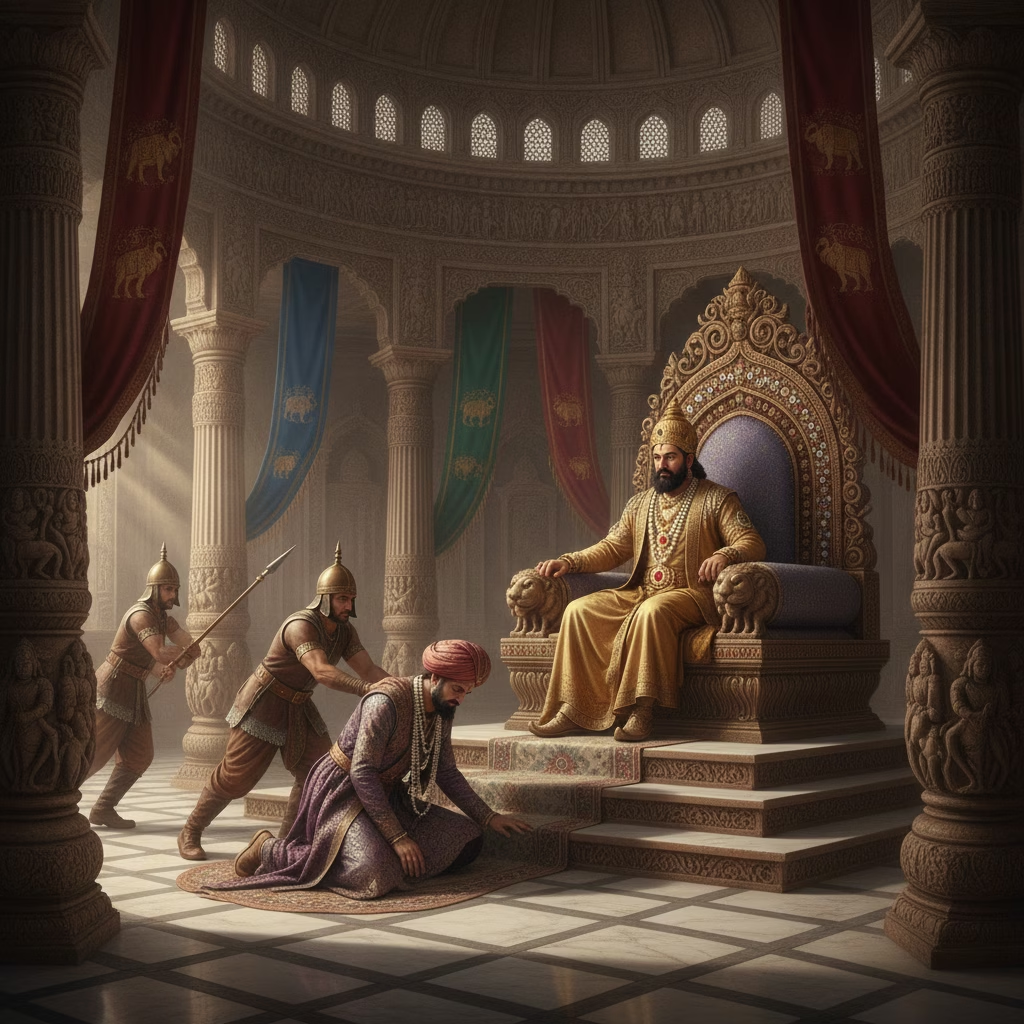
When dawn broke over Ujjain, royal guards appeared at Ravindra's mansion with a summons. The merchant was commanded to appear before King Vikramaditya immediately, along with his scribe. Similar summons went to Dhanadatta and Sundari, and to the elders of the merchant guild.
In the great throne room of the palace, Vikramaditya sat in his full royal regalia, every inch the legendary king whose wisdom was celebrated throughout ancient India. The throne, elevated on a platform of white marble, seemed to radiate authority. Guards lined the walls, their spears gleaming in the morning light that streamed through high windows.
Ravindra entered first, his face carefully composed but his hands trembling slightly. He prostrated himself before the throne, as custom demanded.
"Rise," Vikramaditya commanded. His voice, so often gentle in his nighttime wanderings, now carried the weight of royal power. "Ravindra, son of Jayanta, you stand accused of conspiracy and forgery."
The merchant's composure cracked. "My lord, I—"
"Silence." The king's hand rose. "Bring in the scribe."
The scribe, sobered by a night in the palace cells, stumbled forward. Unlike Ravindra, he had no reserves of dignity to draw upon. He fell to his knees, words tumbling out in confession before any question was asked.
"Mercy, great king! I was paid to forge a letter, to copy a woman's hand! I didn't know it would cause such harm! Ravindra promised me gold, and I needed—"
"You needed gold more than honor," Vikramaditya said coldly. "And you, Ravindra, needed a trade route more than justice."
He gestured, and guards brought forth the maid who had been bribed to steal Sundari's writing samples and plant the forged letter. She too confessed, weeping, describing how Ravindra had promised her enough money to return to her village and marry.
Then Dhanadatta and Sundari were brought in. The merchant looked haggard, his confidence shattered by the royal summons. Sundari walked with her head high, though her eyes were red from weeping.
"Dhanadatta," Vikramaditya said, his tone softening slightly. "You were deceived, and in your pain, you nearly destroyed an innocent woman. Your wife spoke truth. The letter was a forgery, planted by your rival to ruin you both."
Justice Illuminated
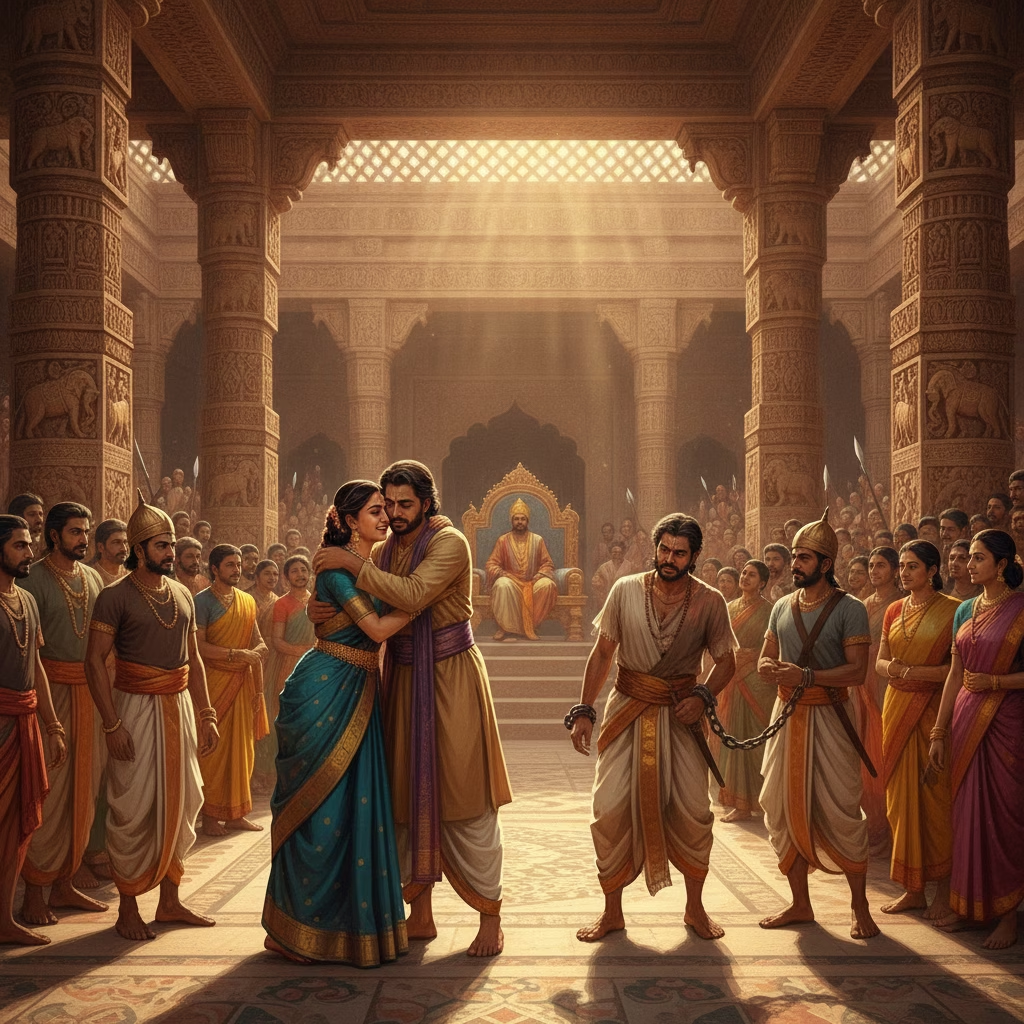
The throne room fell silent as the full weight of the revelation settled over those present. Dhanadatta turned to his wife, his face crumbling.
"Sundari... I... forgive me. I should have believed you. I should have known..."
Sundari said nothing, but tears ran down her cheeks—tears of relief, vindication, and perhaps grief for the trust that had been broken.
Vikramaditya rose from his throne and descended the marble steps, a gesture that shocked those present. Kings did not leave their elevated position for mere merchants. But Vikramaditya approached Sundari and spoke words meant for her alone, though all in the room heard them.
"You have endured false accusation with dignity and maintained your innocence when all seemed lost. This is the mark of true character. Your name is restored, and let all of Ujjain know that the king himself proclaims your honor."
He turned to Ravindra, and now his voice carried the full force of royal judgment. "You sought to destroy an innocent woman to advance your commercial interests. You corrupted servants, employed forgers, and nearly succeeded in a monstrous injustice. The trade route you coveted is forever denied to you. Your properties are forfeit to the crown, to be distributed as compensation—to Sundari for her suffering, to Dhanadatta for the damage to his house, and to the poor of Ujjain who suffer when the powerful play their cruel games."
"As for you," he addressed the scribe and the maid, "you were tools in another's scheme, but you chose to be those tools. You will serve five years in the palace workshops, your labor dedicated to the public good. Perhaps honest work will teach you the value of integrity."
The merchant guild elders, who had been prepared to condemn Sundari, now bowed low before the king, acknowledging his wisdom. The case was closed, justice served.
But as the throne room emptied and the principals departed—Sundari and Dhanadatta together, Ravindra in chains, the co-conspirators to their sentences—one of the elders approached the throne with a question that had been troubling him.
"Great king, if I may ask... how did you learn of this conspiracy? The summons came so swiftly, before we had even convened to judge the case. It was as if you knew the truth before any formal investigation."
Vikramaditya smiled, a knowing expression that hinted at secrets. "I have my ways of learning what transpires in my city. A wise king does not wait for truth to arrive at his throne. Sometimes, he must go out and find it."
The King's Path
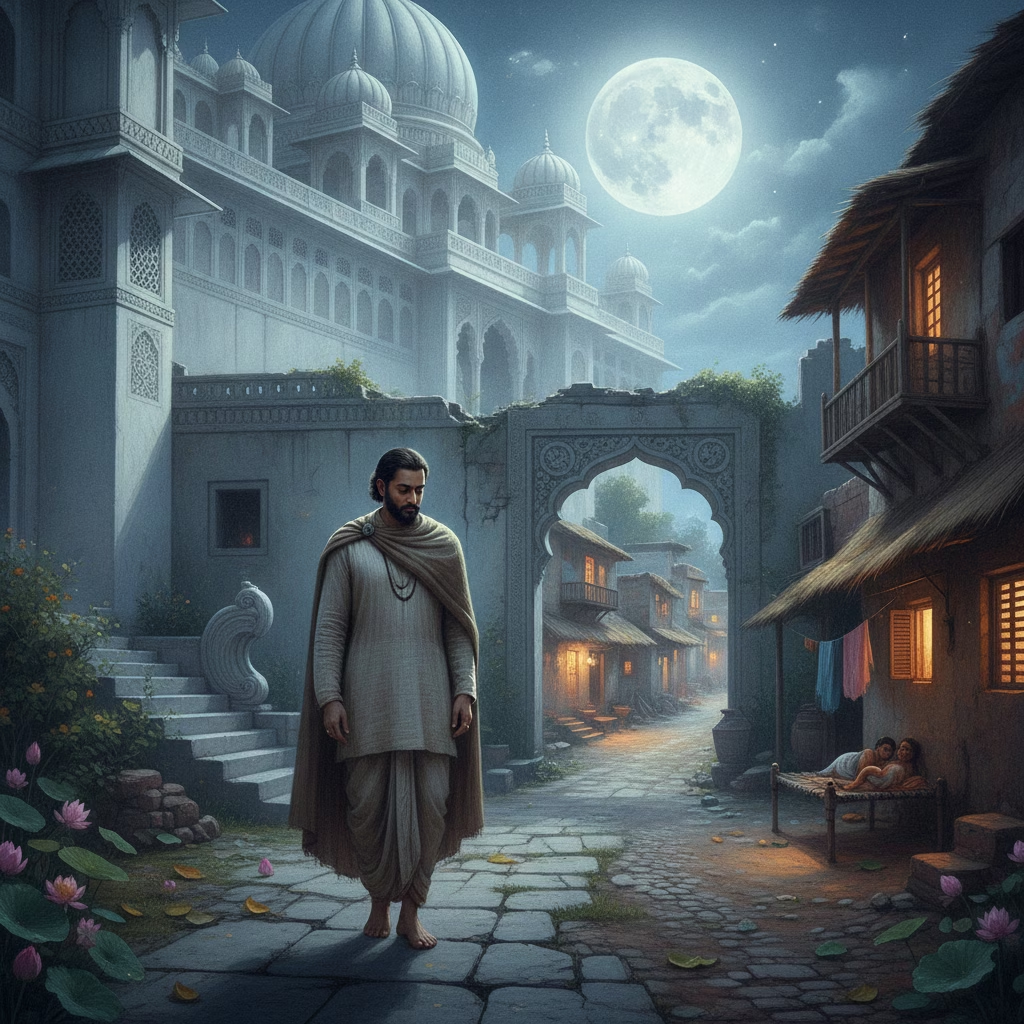
That night, as stars emerged over Ujjain, a simply-dressed figure once again walked the city streets. Vikramaditya had shed his royal robes for plain cotton, his crown for a simple cloth wrap. The palace lay behind him, its lamps blazing in the darkness. Ahead, the night market was coming to life.
He paused at a familiar spice merchant's stall, the same one where he had first overheard whispers of Sundari's accusation. The merchant was holding forth to a small crowd, telling the story of the day's dramatic revelations in the throne room.
"...and the king himself descended from his throne! Can you imagine? He spoke directly to the wronged woman, proclaimed her honor before all present. They say Vikramaditya has eyes and ears everywhere, that no injustice in Ujjain escapes his notice."
"He is well-named," an elderly listener observed. "Vikramaditya—the sun of valour. Like the sun, his justice illuminates all corners, even those hidden in shadow."
The disguised king smiled and moved on, deeper into the market. Around him, his subjects went about their lives—bargaining, laughing, arguing, loving. These were the people he served, and their trust was worth more than all the gold in his treasury.
According to the legends preserved in ancient texts and mentioned by scholars through the centuries, Vikramaditya's reputation for justice and wisdom spread far beyond Ujjain, making him one of the most celebrated kings in Indian tradition. The stories in Vetala Panchavimshati and Singhasan Battisi would preserve his legend for generations, inspiring rulers to follow his example.
But those future legends were built on nights like this—on a king's willingness to set aside his crown and walk among those he governed, to hear their truths and right their wrongs. The throne gave him power, but these nightly journeys gave him wisdom.
As Vikramaditya made his way through the lamp-lit streets, he was already listening, already observing. Somewhere in this vast city, another injustice might be unfolding, another truth waiting to be uncovered. And when dawn came, he would return to his throne, carrying with him the knowledge gained in darkness.
For he was Vikramaditya, the sun of valour, and his light reached everywhere—especially into the shadows where truth often hid, waiting for a king brave enough to seek it out.