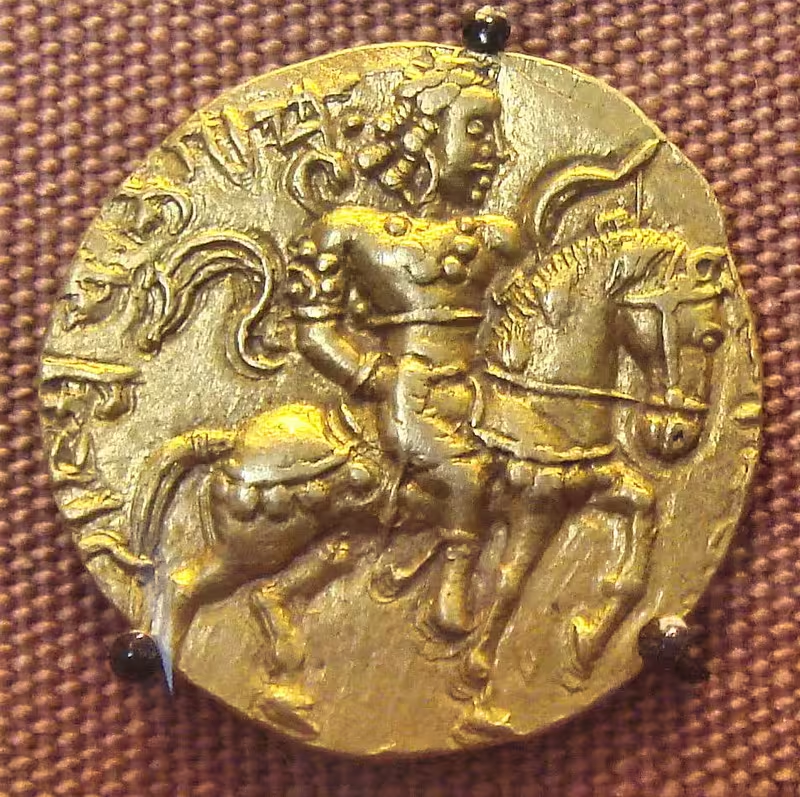

The Vetala's Challenge: When King Vikramaditya Entered the Cremation Ground
The oil lamps flickered in the great court of Ujjain as the sun descended beyond the Shipra River. King Vikramaditya—whose name meant "the sun of valour"—sat upon his throne, dispensing justice as he did each evening. The court was nearly empty when a figure emerged from the shadows near the pillared entrance.
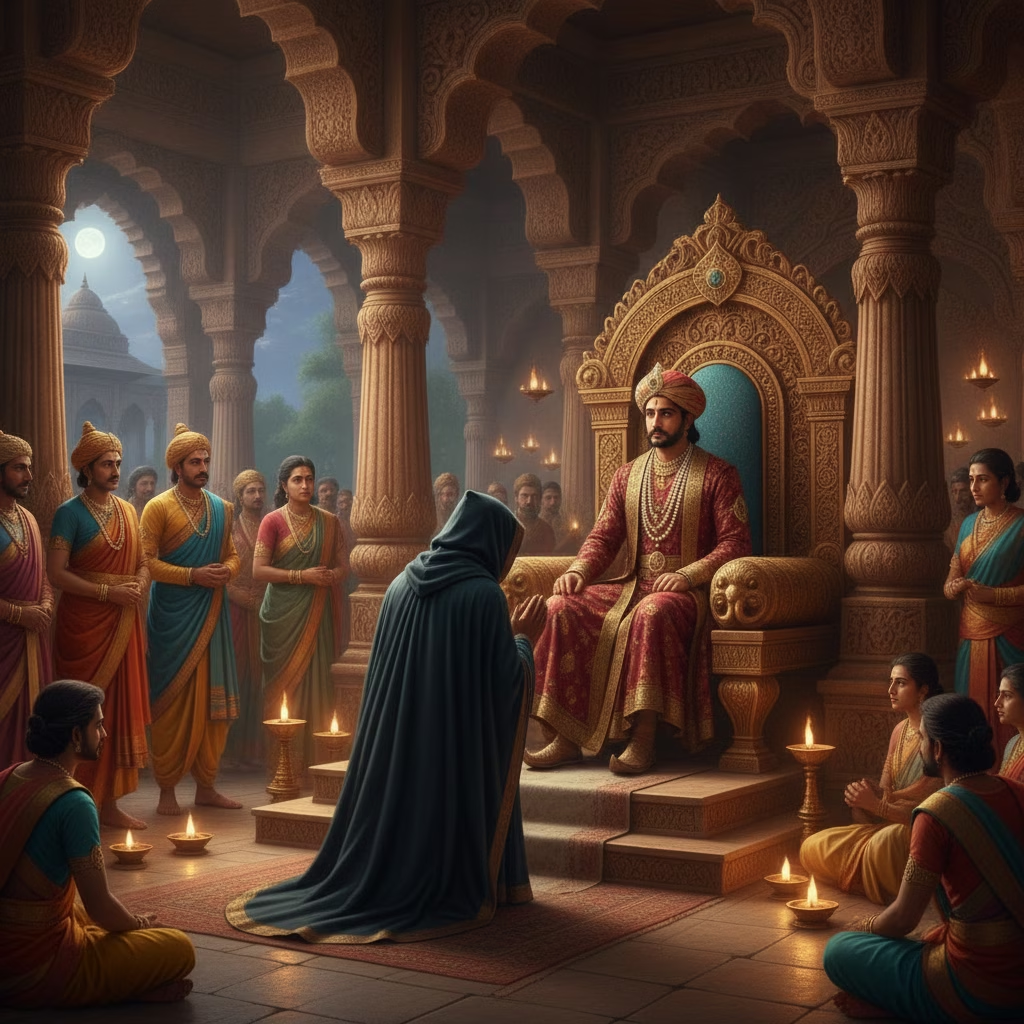
The stranger was unlike any petitioner who had come before. Draped in dark robes that seemed to absorb the lamplight, he moved with an unsettling grace. When he bowed before the throne, the courtiers instinctively drew back.
"Great king," the sorcerer said, his voice like wind through a tomb, "your reputation for courage and generosity precedes you. They say Vikramaditya has given away three hundred thousand gold coins for a single philosophical debate. They say no challenge is too great for the sun of valour."
Vikramaditya studied the man carefully. "Flattery is the language of those who seek difficult favors. Speak plainly."
The sorcerer's lips curved into a smile. "I require a service that only the bravest king could perform. In the cremation ground beyond the city walls hangs a corpse from an ancient banyan tree. This corpse is possessed by a vetala—a spirit of great power. I need you to retrieve it and bring it to me in silence."
A murmur rippled through the remaining courtiers. The chief minister stepped forward. "Your Majesty, this is madness. The cremation grounds are haunted. No good can come from dealings with sorcerers and spirits."
But Vikramaditya had already made his decision. Throughout the legends preserved in the Vetala Panchavimshati, his courage was never in question. "I accept," he declared. "When shall I go?"
"Tonight," the sorcerer replied. "On this moonless night. And you must go alone."
Into the Darkness
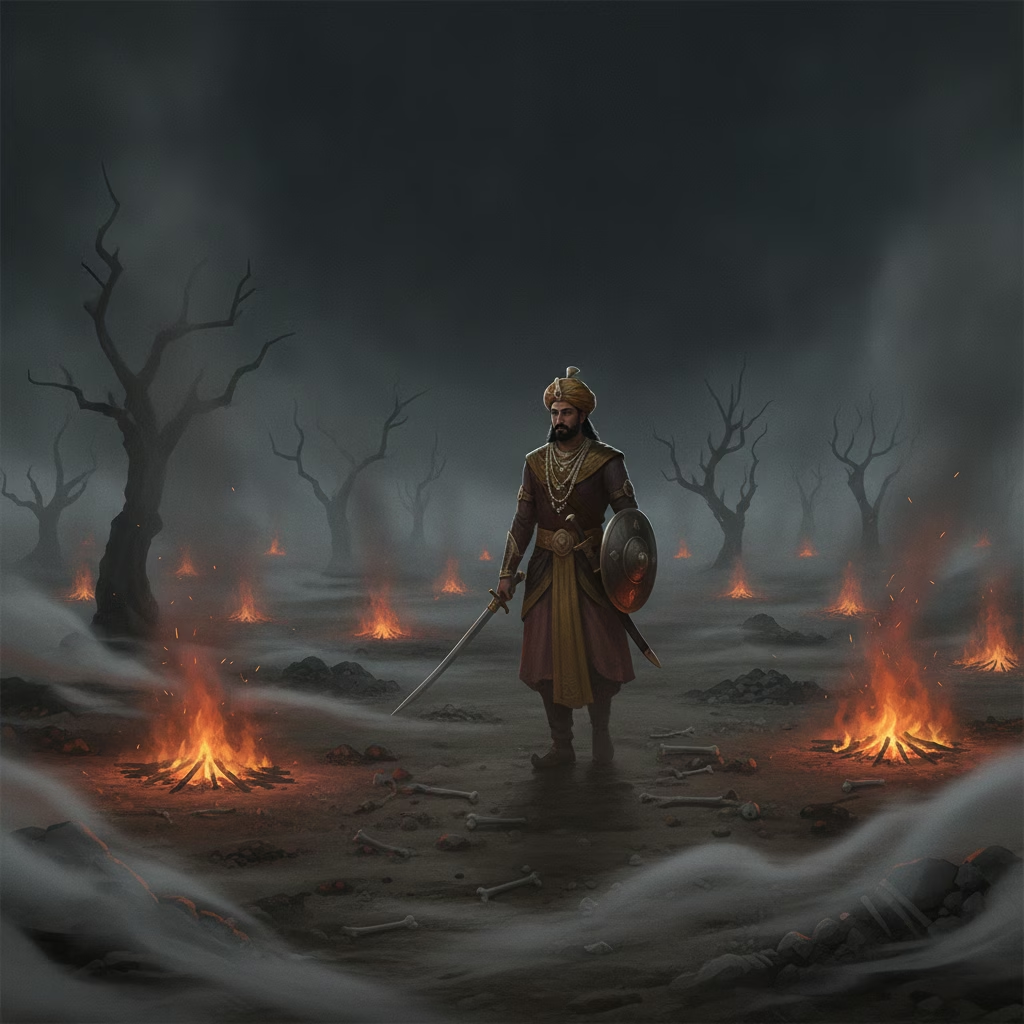
The city of Ujjain slept as Vikramaditya walked through its gates. He wore simple clothing, carrying only a sword—not for protection against the dead, but as a symbol of his royal duty. The path to the cremation ground wound through increasingly desolate terrain.
As he walked, the sounds of the living city faded behind him. The night was indeed moonless, the darkness broken only by the distant glow of funeral pyres that never fully died. The cremation ground sprawled across a vast area, a landscape of death that served all of Ujjain.
Smoke hung in the air like ghostly curtains. The ground crunched beneath his feet—not earth, but layers of ash and bone fragments accumulated over generations. Twisted trees grew here, their roots nourished by the remains of thousands. In the darkness, their branches looked like grasping hands.
Vikramaditya pressed forward. He had faced armies and wild beasts, had matched wits with the greatest scholars of his age. Yet there was something uniquely unsettling about this place where the boundary between life and death grew thin.
A jackal's cry split the night. Then another. Soon a chorus of them echoed across the cremation ground, as if announcing his arrival to whatever dwelt here.
Ahead, silhouetted against the faint glow of dying embers, stood a banyan tree of immense age. Its aerial roots hung down like a tangled curtain, and from one of its branches, he could see it: a corpse, hanging upside down, swaying slightly in a wind he could not feel.
The Spirit Awakens
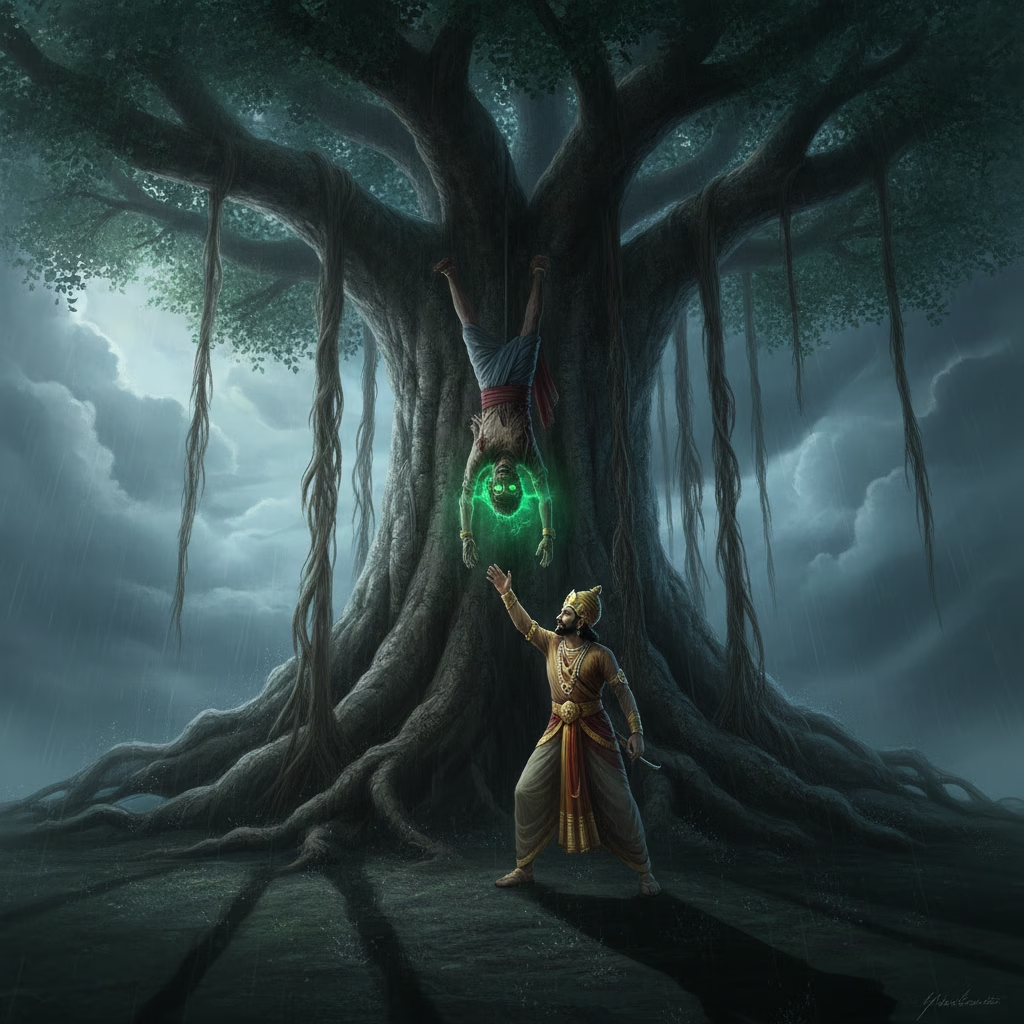
Vikramaditya approached the ancient tree with measured steps. The corpse was that of a young man, pale in death, dressed in the simple clothes of a Brahmin. How long it had hung there, he could not tell.
He reached up and grasped the corpse's ankle.
The moment his fingers closed around cold flesh, the eyes snapped open—not the clouded eyes of death, but glowing with an otherworldly intelligence. The corpse's head tilted at an impossible angle to look directly at him, and when it spoke, the voice was ancient and amused.
"So," the vetala said, "the great Vikramaditya comes to the cremation ground. The sun of valour ventures into the realm of darkness and death."
Vikramaditya said nothing. He had been warned to maintain silence.
"I know why you've come," the vetala continued. "The sorcerer has sent you to fetch me like some errand boy. But I am no ordinary spirit, and this will be no ordinary task."
The king pulled the corpse from the branch and hoisted it onto his shoulder. It was heavier than it should have been, as if the weight of the spirit itself added to the burden.
"I will make you a proposition," the vetala said as Vikramaditya began walking back toward the city. "A game, if you will. I shall tell you a story—a tale of human folly, wisdom, love, and justice. At the end, I will pose a question. If you know the answer and remain silent, your head will explode into a thousand pieces. But if you speak, I will fly back to my tree, and you must start again."
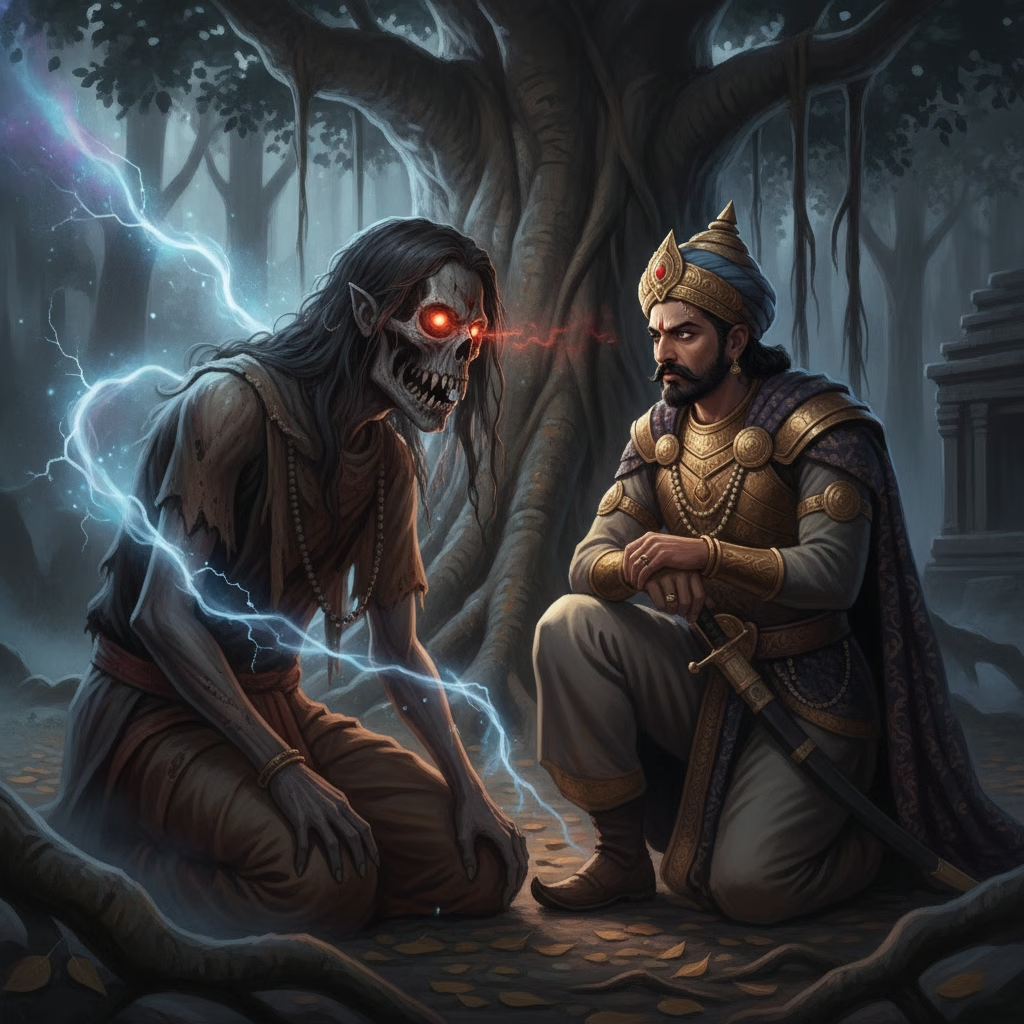
Vikramaditya continued walking, his face impassive. The vetala laughed, a sound like wind through hollow bones.
"There is only one way to break this cycle," the spirit continued. "You must either confess ignorance—admit there is a question you cannot answer—or I must ask a question that truly has no answer. Only then can you deliver me in silence to your sorcerer friend."
The king's jaw tightened, but he said nothing.
"Excellent!" the vetala exclaimed. "Then let us begin. I have twenty-five stories to tell, King Vikramaditya. Twenty-five riddles to test your wisdom. We shall see if the legends about you are true."
The First Tale
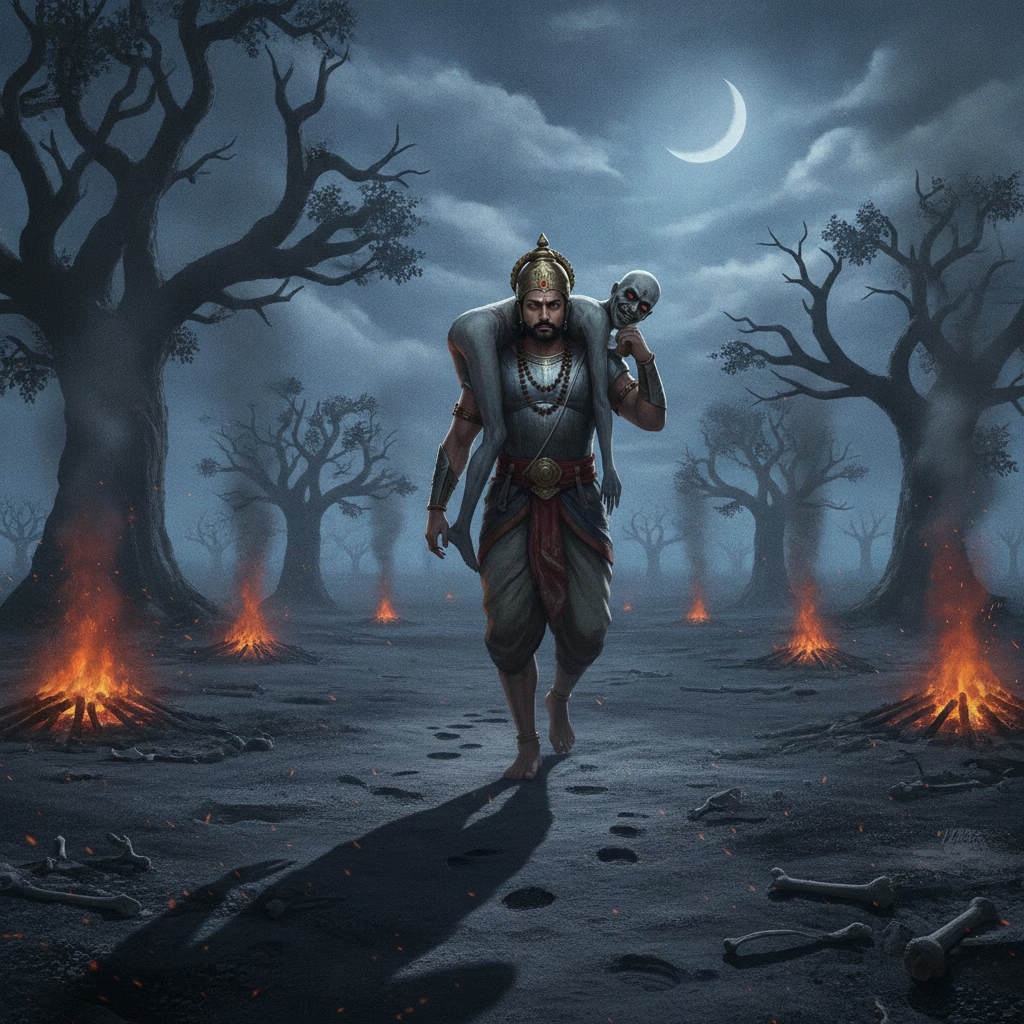
As Vikramaditya walked through the cremation ground, the corpse heavy on his shoulder, the vetala began its first story:
"There once lived a merchant with three daughters, each more beautiful than the last. When they came of age, three suitors arrived—a prince, a scholar, and a warrior. The merchant could not decide which daughter should marry which suitor, so he devised a test.
"He placed his daughters in three identical rooms, each with a window overlooking the garden. He told the suitors they could observe the daughters for one day, then declare their choice. Whichever suitor demonstrated the truest understanding of the woman he chose would win her hand.
"The prince watched the eldest daughter all day. He saw her reading poetry, arranging flowers, and singing softly to herself. At day's end, he declared, 'She has the soul of a princess. I choose her.'
"The scholar observed the middle daughter. He saw her studying scrolls, debating with her tutors, and writing in a journal. He said, 'Her mind matches mine. I choose her.'
"The warrior watched the youngest daughter. She spent the day in silence, sitting by her window, occasionally smiling at something only she could see. At sunset, the warrior said, 'I choose her, for she knows the value of peace.'
"The merchant blessed all three marriages. But here is the strange part: on the wedding night, each daughter revealed a secret. The eldest confessed she had been performing for the prince, acting as she thought a princess should. The middle daughter admitted she had been pretending to be scholarly to attract the learned man. But the youngest daughter told the warrior, 'I was truly at peace, for I saw you watching and knew you were the one.'"
The vetala paused, and Vikramaditya could feel the weight on his shoulder shift.
"Now tell me, wise king: which marriage was based on the truest understanding? The prince who saw performance and believed it? The scholar who was deliberately deceived? Or the warrior whose presence itself changed what he observed?"
Vikramaditya walked several more steps, his mind working through the riddle. The answer was clear to him—the warrior's marriage was truest, for the youngest daughter's peace was genuine, caused by his presence itself. The warrior understood that he brought her peace, while the others understood only illusions.
But to speak would break the silence.
He took another step, then another. The answer burned in his mind, demanding to be spoken. The vetala had been clever—this was not a difficult riddle for a king known for his wisdom. The difficulty was in remaining silent when the answer was known.
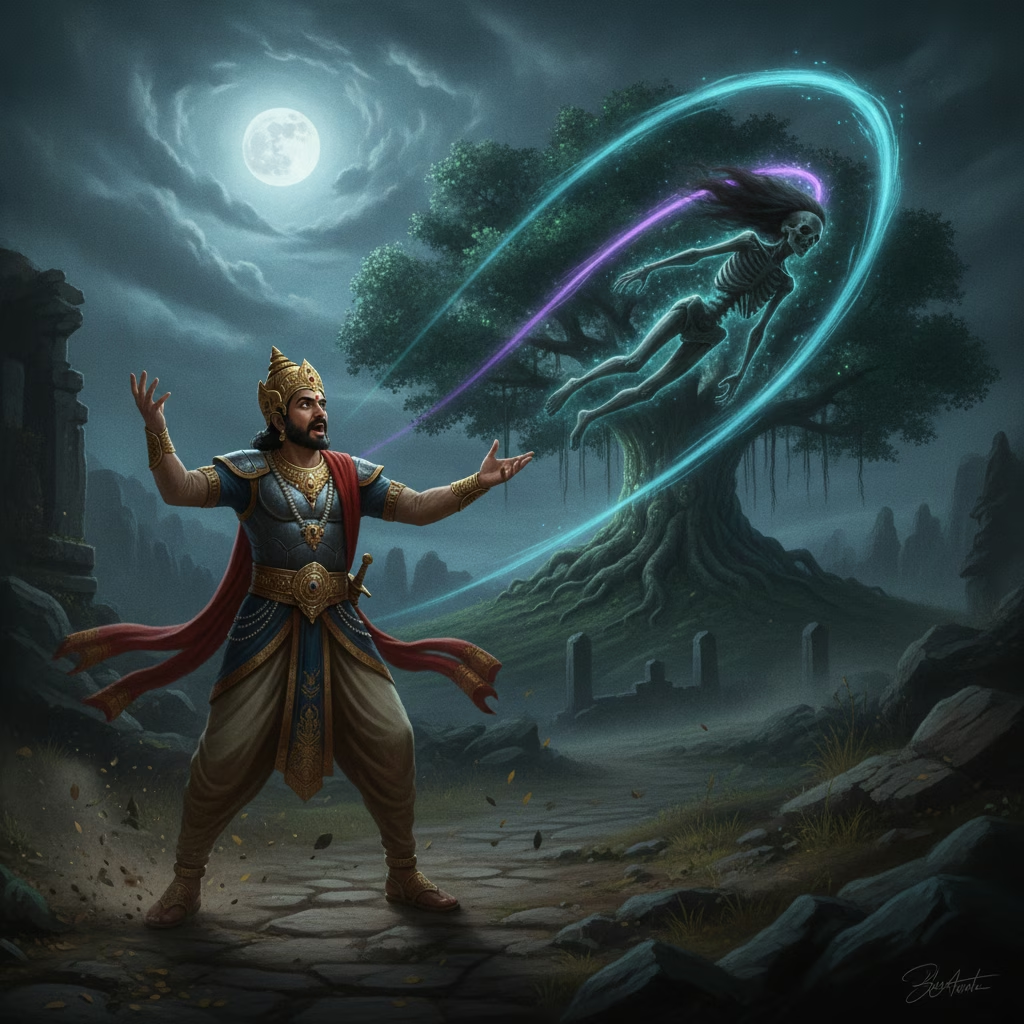
Finally, Vikramaditya could bear it no longer. "The warrior's marriage was truest," he declared, "for the youngest daughter's peace was genuine, born from his very presence. He understood the reality he helped create, while the others understood only—"
Before he could finish, the corpse became weightless. It flew from his shoulder like a bird released from captivity, soaring back through the darkness toward the banyan tree. The vetala's laughter echoed across the cremation ground.
Vikramaditya stood in the ash and darkness, watching the spirit depart. He had known what would happen. The vetala had warned him clearly. Yet his nature—the wisdom that made him Vikramaditya, the sun of valour—had compelled him to speak the truth.
He turned and began walking back toward the banyan tree.
The Cycle Begins
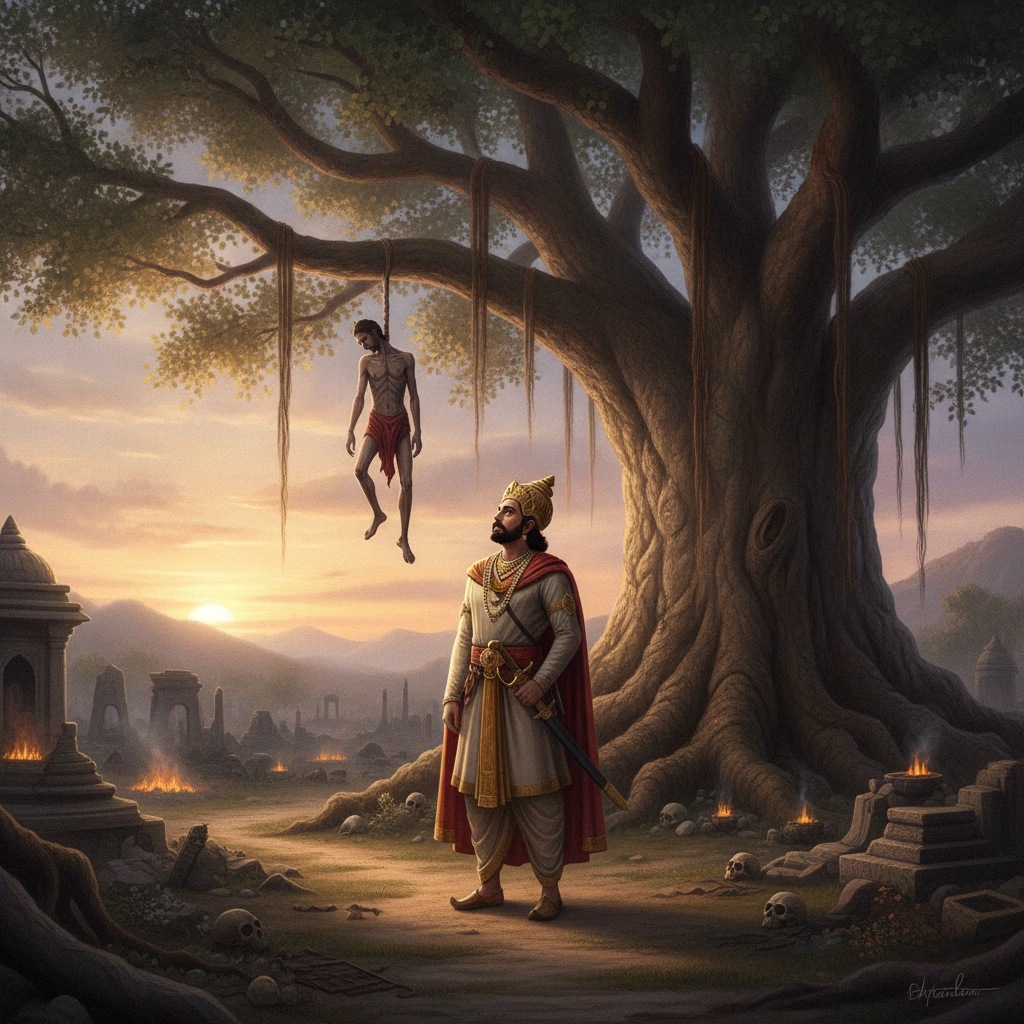
When Vikramaditya reached the ancient tree, the corpse hung once more from its branch, swaying in that unfelt wind. The first hints of dawn were touching the eastern horizon, but the cremation ground remained shrouded in darkness.
He reached up and grasped the ankle again.
The eyes opened, glowing with that same ancient amusement. "Welcome back, great king," the vetala said. "That was one story. I have twenty-four more. Shall we continue?"
Vikramaditya pulled the corpse down and hoisted it onto his shoulder once more. As he began walking, the vetala started its second tale, and the king understood the true nature of the challenge before him.
This was not merely a test of courage or wisdom. It was a test of something deeper—the ability to hold silence in the face of truth, to carry knowledge without the compulsion to speak it. For a king whose very title meant "the sun of valour," whose legends would be preserved in the Vetala Panchavimshati and retold for generations, this was perhaps the greatest challenge of all.
Twenty-five stories. Twenty-five riddles. Twenty-five journeys through the cremation ground.
The sun of valour walked into the darkness, and the vetala's voice filled the night with another tale of human wisdom and folly, building toward another impossible question that demanded an answer.
The cycle had only just begun.