Overview
In the valley east of Karnataka’s Western Ghats, a medieval capital once spread around the large Dorasamudra reservoir. Known in its prosperous period as Dwārasamudra or Dorasamudra, the city became the regal capital of the Hoysala Empire in the 11th century CE. Today it is called Halebidu, a name associated with an old, ruined or deserted city.
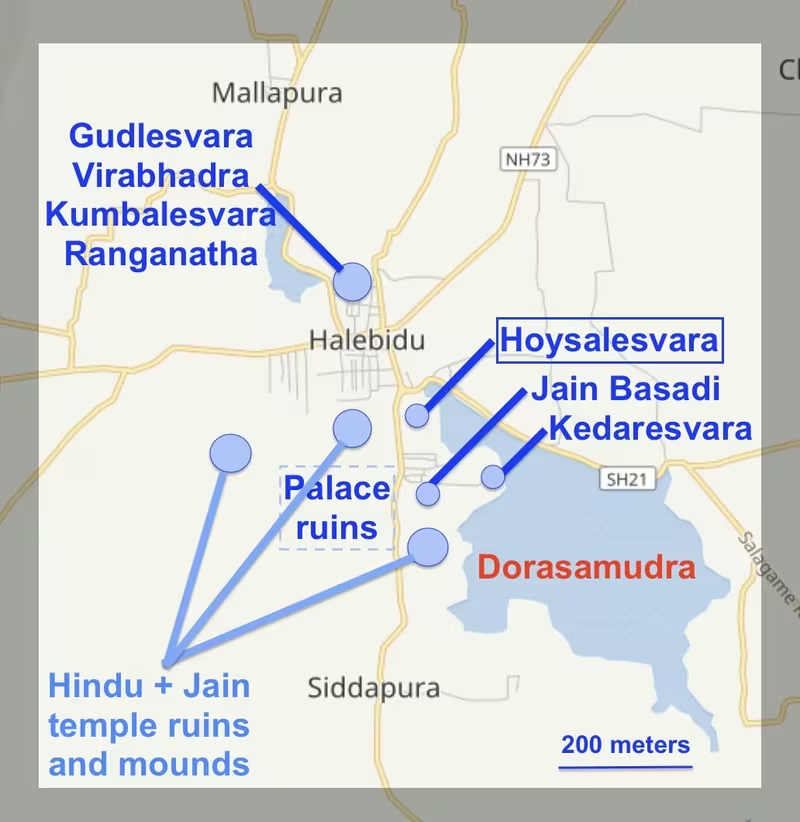
Halebidu is remembered especially for its temples, but its remains describe a much larger urban centre. Fort walls enclosed an area with an average span of about 2.25 kilometres. Within that space were reservoirs, public tanks, roads, a palace, farms, temples and archaeological mounds. The surviving Hoysaleswara, Kedareshwara and Jain Basadi temples represent only a fraction of the monuments that once stood in the capital.
The city’s surviving sculpture is notable for its range. Shiva, Vishnu, Devi, Vedic deities, Jain Tirthankaras and Saraswati appear across the monumental landscape. The temples therefore preserve not a single artistic tradition, but a broad Hoysala synthesis shaped by different religious communities, regional influences, patrons and artisans.
Etymology and Names
Halebidu is a modern name associated with an old capital, old city, encampment or ruined city. In modern writing it is also rendered as Halebid or Halebeedu. These forms reflect the local name after the city was damaged, looted and deserted following attacks in the 14th century.
During its Hoysala period, the settlement was known as Dwārasamudra. Dorasamudra is another historical form of the name, and inscriptions from the Hoysala era attest to the importance of this city under several rulers. The change from a royal capital to a place remembered as an old or ruined city reflects the political transformation that followed the invasions of the 14th century.
Geography and Location
Halebidu lies in Hassan District of Karnataka, in a valley east of the Sahyadri, or Western Ghats. Low-lying mountains, boulders and seasonal rivers surround the valley. Its position gave the city access to routes leading towards northern Karnataka, western Andhra Pradesh and northern Tamil Nadu.
Water shaped the settlement. The early Hoysala rulers and their governors, merchants and artisans built the city near a large reservoir and greatly expanded the Dorasamudra water body. Four major reservoirs and many smaller public tanks lay within the fortified city. The major temples, roads and urban activity were concentrated around the reservoir.
The historic capital was also connected by roads to Belur and Pushpagiri, as well as to other towns and pilgrimage sites. This regional network helped link the royal centre with places of religious, commercial and political importance. In the modern era, Halebidu is about 15 kilometres from Belur, 30 kilometres from Hassan by road, and connected towards Mysore and Mangalore.
Ancient and Early Hoysala History
The early history of the Hoysalas remains uncertain. Their own inscriptions from the 11th and 12th centuries traced the dynasty to Krishna-Baladeva roots and to the Yadavas of Devagiri. The family also formed marriage connections with the Kalyani Chalukyas, a dynasty known for its temple and artistic traditions.
Modern historians widely identify the early Hoysalas as a Jain family. The earliest inscriptions and local traditions present their rulers as followers and patrons of Jainism. A founding legend centres on a hill chief named Sala, who is said to have killed a tiger or lion while saving his Jain teacher, the monk Sudattamuni. The story became part of the dynasty’s remembered origins, although the wider historical development of Hoysala power was gradual.
From the 10th century onward, the Hoysalas consolidated their authority and expanded their territory. By the 11th century, they had developed Halebidu into their principal royal capital. The city was built anew near the reservoir, and its growth depended not only on royal authority but also on the work of governors, merchants and artisans.
Historical Timeline
The Hoysala Capital
By the early Hoysala period, the Dorasamudra reservoir had been excavated and expanded, while the capital acquired fort walls and a network of water tanks. Several dozen temples stood in and around the city. Only a small number survive, but their remains indicate the scale of the former urban landscape.
The largest and most elaborate groups were the twin Hoysaleswara temple, the three Jain Basadis and the Kedareshwara temple. Other shrines were simpler, and some are now known only from inscriptions, excavated fragments and ruined mounds.
The Hoysala Palace stood immediately west of the principal Hindu and Jain temples. It extended south towards Benne Gudda, or “Butter Hill.” The palace has disappeared almost completely, although mounds and fragments remain near the hill. A second group of Hindu and Jain temples occupied the area west of the palace at the Nagareshvara site.
Other lost or ruined structures included a Saraswati temple and a Krishna temple in the north, as well as Hucesvara and Rudresvara temples in the central and southern parts of the city. Four temples in the northeastern section—Gudlesvara, Virabhadra, Kumbalesvara and Ranganatha—have survived in some form. Farms west of the fortified zone supplied food for the capital’s population.
Invasions and Decline
Dorasamudra was attacked and destroyed in the 14th century by forces of the Turko-Persian Delhi Sultanate. Malik Kafur demanded that the Hoysala monarch Veera Ballala III accept Khalji suzerainty, pay tribute and provide logistical support for campaigns directed towards the Pandya capital of Madurai.
The city endured further waves of war and plunder. Inscriptions suggest that there were attempts to repair the temples, palace and infrastructure after the first destruction. These efforts, however, could not restore Dorasamudra’s earlier political and economic importance. Later invasions ended the Hoysala kingdom’s power and the city’s role as a prosperous capital.
For nearly three centuries, Dorasamudra produced no new inscriptions or other clear evidence of renewed political or economic prosperity. A mid-17th-century Nayaka-era inscription at Belur is identified as the first later record to use the name Halebidu. Even after the capital’s decline, Hindu and Jain communities continued to live in the region and support or repair surviving temples.
Political Significance
Halebidu’s importance came first from its role as a royal capital. Its fortifications enclosed not only temples but also a palace, reservoirs, roads and productive agricultural land. The arrangement shows that the Hoysala capital was an organised urban settlement rather than merely a collection of shrines.
The palace, now lost, stood beside the major temple district. Its position placed royal authority close to the ritual and artistic centre of the city. Roads linked Dorasamudra to Belur and other important settlements, while inscriptions from the mid-10th to early 13th centuries record the city’s continuing importance under different Hoysala kings.
The destruction of the capital demonstrates the vulnerability of inland imperial centres to military campaigns. Once the Hoysala state was weakened by invasion and tribute demands, the city lost the political systems that had sustained its monumental building programme.
Religious and Cultural Importance
Halebidu’s temples preserve an unusually wide range of religious imagery. The Hoysaleswara and Kedareshwara temples are dedicated to Shiva, yet their reliefs also include Vishnu, Devi and Vedic legends. This combination reflects the breadth of Hindu traditions represented in Hoysala art.
The Jain monuments stand close to Hoysaleswara. Three major Basadis are dedicated to Parshvanatha, Shantinatha and Adinatha. Their sculptures include large monolithic Jina images and finely carved representations of Saraswati. Jain reliefs also appear within the panel programme of the Hindu temples, while the Jain artwork incorporates imagery associated with a broader cultural world.
The presence of Hindu and Jain monuments together is consistent with the early Hoysala association with Jainism and with the dynasty’s later patronage of diverse religious traditions. The surviving inscriptions and artwork also point to connections extending beyond a single local style, including scripts and artistic influences associated with different parts of India.
Economic Role and Water Infrastructure
The capital depended on a carefully developed water system. The Dorasamudra reservoir was expanded on a large scale, and four additional major reservoirs were located inside the city along with many smaller public tanks. This infrastructure supported domestic life, temple activity and the wider urban population.
The Hulikere step well, or kalyani, illustrates the sophistication of this public water system. Considered one of the most advanced 12th-century step wells in southern Karnataka, it shows how water management formed part of the city’s public architecture.
Agricultural land west of the fort supplied the capital. Merchants and artisans helped build and maintain the city, while roads connected it to Belur, Pushpagiri and other regional centres. Although surviving records do not provide a complete picture of trade or population, the reservoirs, farms, roads and concentration of temples indicate a substantial and organised urban economy.
Monuments and Architecture
Hoysaleswara Temple
The Hoysaleswara temple is the largest and most elaborate surviving monument at Halebidu. It is a twin temple dedicated to Shiva and carries an extensive programme of carved reliefs. Shaivism, Vaishnavism, Shaktism and Vedic legends all appear in its sculptural decoration.
The temple’s importance lies not only in its scale or ornament, but also in the way it brings together different strands of Hindu visual culture. It remains the principal surviving monument of the former capital.
Kedareshwara Temple
Kedareshwara is a three-sanctum temple dedicated to Shiva. Like Hoysaleswara, it contains a wide range of reliefs associated with Shaiva, Vaishnava and Shakta traditions, together with Vedic narratives. Its more compact arrangement forms part of the central monumental group near Hoysaleswara.
Jain Basadis
The three Jain Basadis stand close to Hoysaleswara. Dedicated to Parshvanatha, Shantinatha and Adinatha, they contain monolithic Jina figures and intricate carvings. The Saraswati imagery within the Jain artistic programme further demonstrates the intellectual and cultural breadth of the site.
Hulikere Step Well
The Hulikere kalyani represents the civic side of Hoysala architecture. Unlike the great temples, it was designed around the practical and ceremonial management of water. Its presence in the former capital helps explain how the city supported daily life beyond the royal and religious complexes.
Northern Temples and Archaeological Sites
The northern group includes the Gudlesvara, Virabhadra, Kumbaleshvara and Ranganatha temples. These buildings are simpler and have more limited surviving artwork, but they remain living temples, with local communities involved in their preservation.
The Nagareshvara site and palace area are mainly archaeological zones. Excavations of mounds have revealed Hindu and Jain temple structures, idols and scattered architectural fragments. These remains help reconstruct the lost sections of the capital, even though the palace itself has vanished.
Famous Personalities
The most prominent figures associated with Halebidu are Hoysala rulers, especially Veera Ballala III, who faced the demands of Malik Kafur and the Delhi Sultanate during the invasions of the 14th century. The remembered founder-figure Sala also occupies an important place in Hoysala tradition through the story of his defence of the Jain monk Sudattamuni.
The available historical record does not preserve a complete list of the architects and sculptors responsible for Halebidu’s monuments. Their work survives through the temples, reliefs, inscriptions and fragments distributed across the former capital.
Decline and Revival
Halebidu declined after the city was attacked and looted twice by forces associated with the Delhi Sultanate. The destruction affected the palace, temples and civic infrastructure. Although repairs were attempted, the city did not recover its earlier role as a political and economic centre.
Its religious life did not disappear. Hindu and Jain communities continued to support living temples, particularly in the northern part of the settlement. Local efforts also helped recover and maintain simpler shrines and archaeological remains.
In the modern period, Halebidu’s significance has increasingly rested on its surviving heritage. The Hoysaleswara temple, Jain Basadis, Kedareshwara temple and Hulikere step well preserve different dimensions of the Hoysala capital: imperial patronage, religious plurality, monumental sculpture and public infrastructure.
Modern Halebidu
Halebidu is a historic settlement in Hassan District, Karnataka. Its principal monuments lie within roughly a kilometre of one another, making the temple district a concentrated heritage landscape. A museum and park are located near the Hoysaleswara temple.
The site is connected by road to Hassan, Belur, Mysore and Mangalore. Belur, the earlier Hoysala capital, lies about 15 kilometres away and forms a natural companion site for understanding Hoysala political and architectural history. Nearby temples at Mosale, Belavadi, Javagal, Haranhalli and Doddagaddavalli extend the regional picture.
Halebidu matters because its ruins preserve both splendour and absence. The carved temples survive, but the palace, many shrines and much of the fortified city have been lost. Together, the surviving monuments and archaeological remains reveal how a Hoysala capital was built, sustained, attacked and remembered.
Timeline
Hoysala expansion
The Hoysala dynasty consolidated and expanded its power in the region.
Development of Dorasamudra
The settlement was developed near the expanded Dorasamudra reservoir and became the Hoysala capital.
Monumental building
Major Hindu and Jain temples, including the Hoysaleswara, Kedareshwara and Jain Basadi groups, were completed by the 12th century.
Delhi Sultanate invasion
Dorasamudra was attacked and destroyed by forces of the Turko-Persian Delhi Sultanate.
Attempts at repair
Inscriptions indicate efforts to restore temples, the palace and civic infrastructure after the invasion.
End of capital prosperity
Further warfare and plunder ended Dorasamudra’s role as a prosperous Hoysala capital.
The name Halebidu
A Nayaka-era inscription at Belur became the first later record identified as using the name Halebidu.