
The year was 1288, and the Godavari River flowed as it always had through the heart of Maharashtra. But for four children in the village of Alandi, the world had become as cold and unyielding as stone.
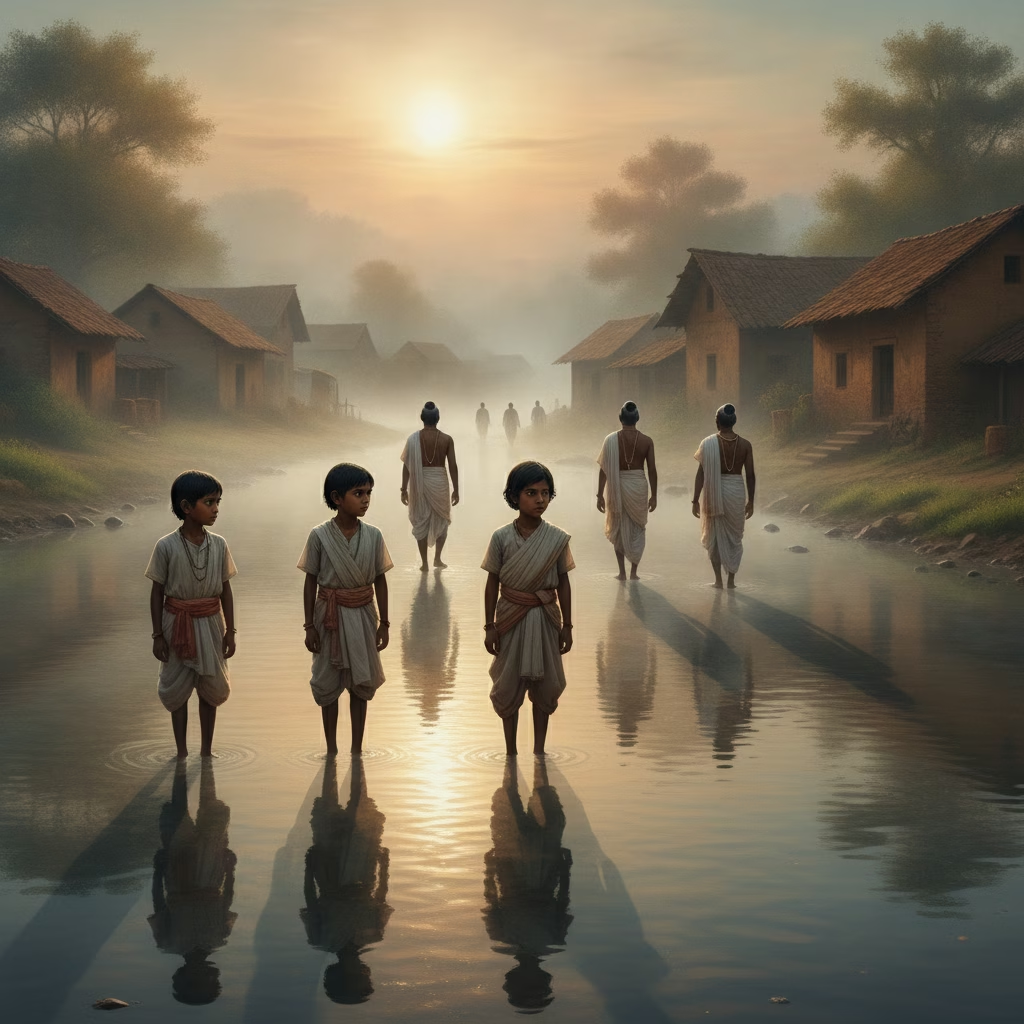
Dnyaneshwar stood at the river's edge, watching the morning mist rise from waters that had claimed his parents. He was thirteen years old. His older brother Nivruttinath was fifteen, younger brother Sopan eleven, and sister Muktabai just nine. They were alone now—orphans not by accident but by decree.
The Brahmins of Alandi had spoken their judgment clearly: their father Vitthal Pant had committed an unforgivable sin. After taking sannyasa—the sacred vows of renunciation—in the holy city of Kashi, he had returned to married life. It did not matter that his guru Ramashram had himself ordered Vitthal to return to his wife. It did not matter that the family had begged for another path to atonement. The Brahmins saw only heresy, and heresy demanded the ultimate price.
Vitthal and Rakhumabai had walked into the Indrayani River and never emerged. The suicide was their penance. But for their children, the punishment had only begun.
The four siblings were denied everything that marked them as Brahmins. No sacred thread ceremony would welcome them into their caste. No family would give them work. No merchant would sell them food in the market. Even speaking to them was considered pollution. They survived on what they could forage, on the charity of those brave or compassionate enough to defy the community's decree.
Yet in their isolation, something remarkable had taken root. Nivruttinath, separated from the family during their earlier wanderings near Nashik, had encountered the great yogi Gahaninath in a cave. The master had initiated the eldest brother into the profound wisdom of the Nath tradition—teachings that transcended caste, ritual, and the rigid boundaries the Brahmins guarded so jealously. Nivruttinath, in turn, had become guru to his younger siblings, sharing knowledge that flowed like the river itself: eternal, unstoppable, belonging to no one and everyone.
Dnyaneshwar proved an extraordinary student. Despite his youth, he grasped concepts that eluded scholars twice his age. The Advaita Vedanta philosophy—the understanding of non-duality, of the ultimate unity of all existence—seemed not learned but remembered, as if he had carried it across lifetimes.
But knowledge, the Brahmins insisted, was not for the children of a fallen sannyasin.
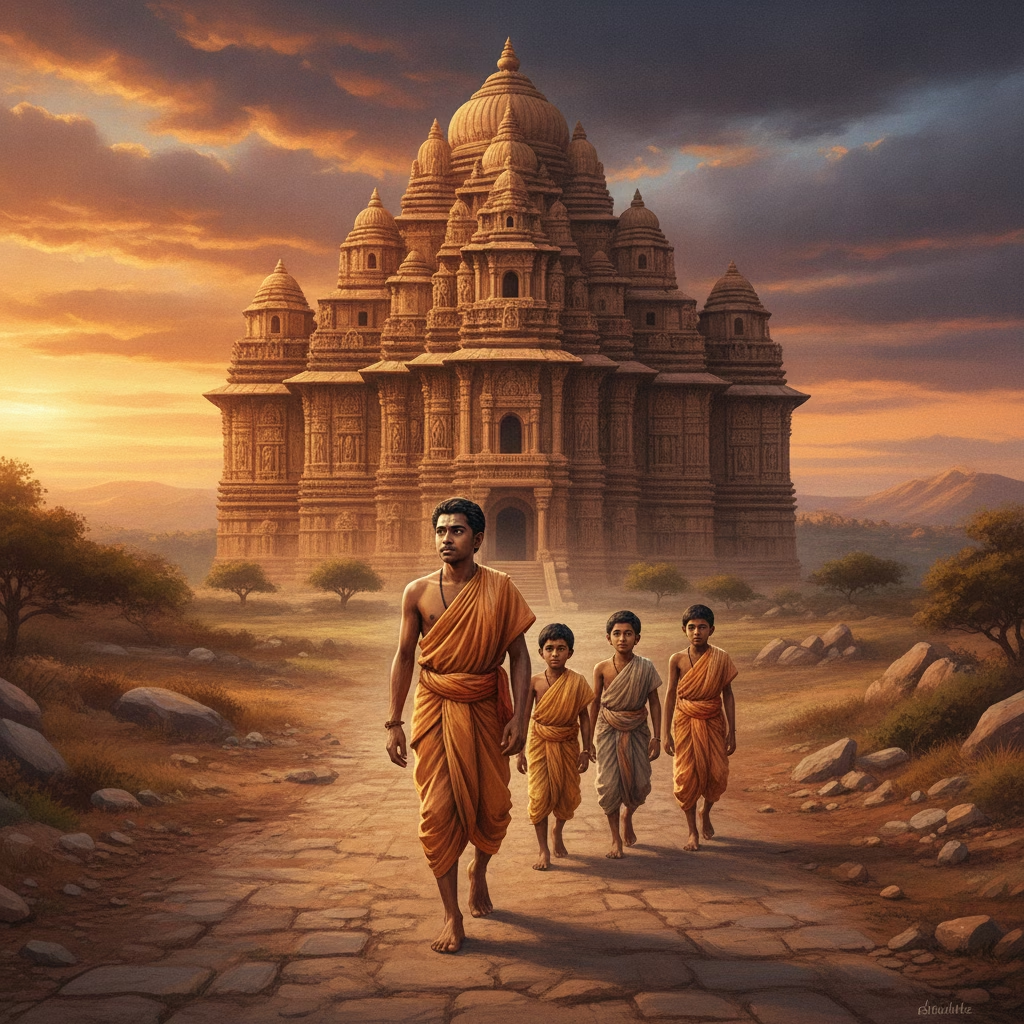
The summons came on a morning when the monsoon clouds gathered over the Sahyadri hills. A messenger arrived in Alandi with an official decree: the four siblings were to present themselves before the assembly of Brahmin scholars in Paithan.
Paithan—ancient, venerable Paithan, where the Godavari's sacred waters had witnessed centuries of learning. The town lay near Devagiri, capital of the Yadava kingdom, where King Ramadevarava patronized arts and scholarship. It was a place of grand temples and grander egos, where the most learned pandits gathered to debate scripture and settle disputes of dharma.
The siblings understood what this meant. This was no invitation but a trial. The Brahmins would challenge their right to study the Vedas, to speak of philosophy, to claim any place in the spiritual life of Maharashtra. They would be asked to prove the impossible: that children born of sin could possess sacred knowledge.
As they walked the dusty road toward Paithan, Muktabai stayed close to Dnyaneshwar. "What will you tell them, brother?" she asked.
Dnyaneshwar smiled, a serenity in his young face that seemed to belong to someone far older. "I will tell them the truth, sister. That knowledge is not owned but discovered. That the divine speaks through all who listen, regardless of birth or circumstance. That they guard gates that were never meant to be closed."
Nivruttinath walked ahead, his bearing that of a guru despite his fifteen years. Sopan, usually quiet, hummed a devotional song to Vithoba, the beloved deity of Maharashtra's common people. They were children, yes—but they were also something more. The Nath tradition had awakened in them an understanding that caste and ritual could not contain.
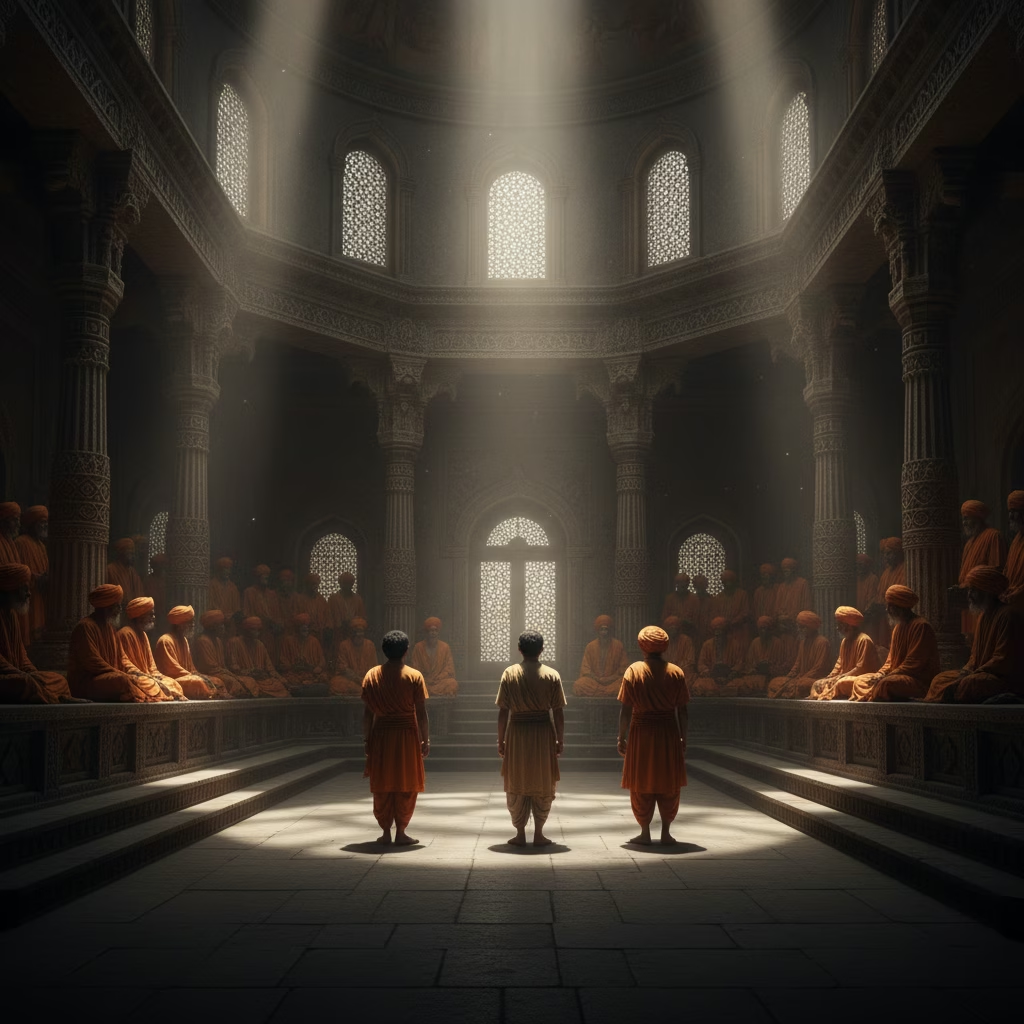
The assembly hall in Paithan was designed to intimidate. Massive stone pillars carved with scenes from the Puranas rose toward a ceiling lost in shadows. On three sides, elevated platforms held rows of scholars—men with flowing white beards, sacred threads gleaming against bare chests, foreheads marked with sandalwood paste and vermillion. They represented the accumulated authority of generations, the self-appointed guardians of spiritual knowledge.
The four siblings stood in the center, a pool of sunlight from the high windows illuminating them like defendants awaiting judgment.
The eldest scholar, Shri Haripant, spoke first. His voice carried the weight of seventy years of study. "You are the children of Vitthal Kulkarni, the sannyasin who broke his vows and returned to householder life. Your very birth is a product of sin. By what right do you claim access to the sacred knowledge reserved for the twice-born?"
Nivruttinath stepped forward to answer, but Dnyaneshwar gently placed a hand on his brother's arm. The thirteen-year-old moved into the center of the light.
"Respected elders," he began, his voice clear and steady, "you ask by what right we seek knowledge. I ask in return: by what right does anyone claim ownership of truth?"
A murmur rippled through the assembly. Children did not speak this way to their elders, certainly not outcast children to Brahmin scholars.
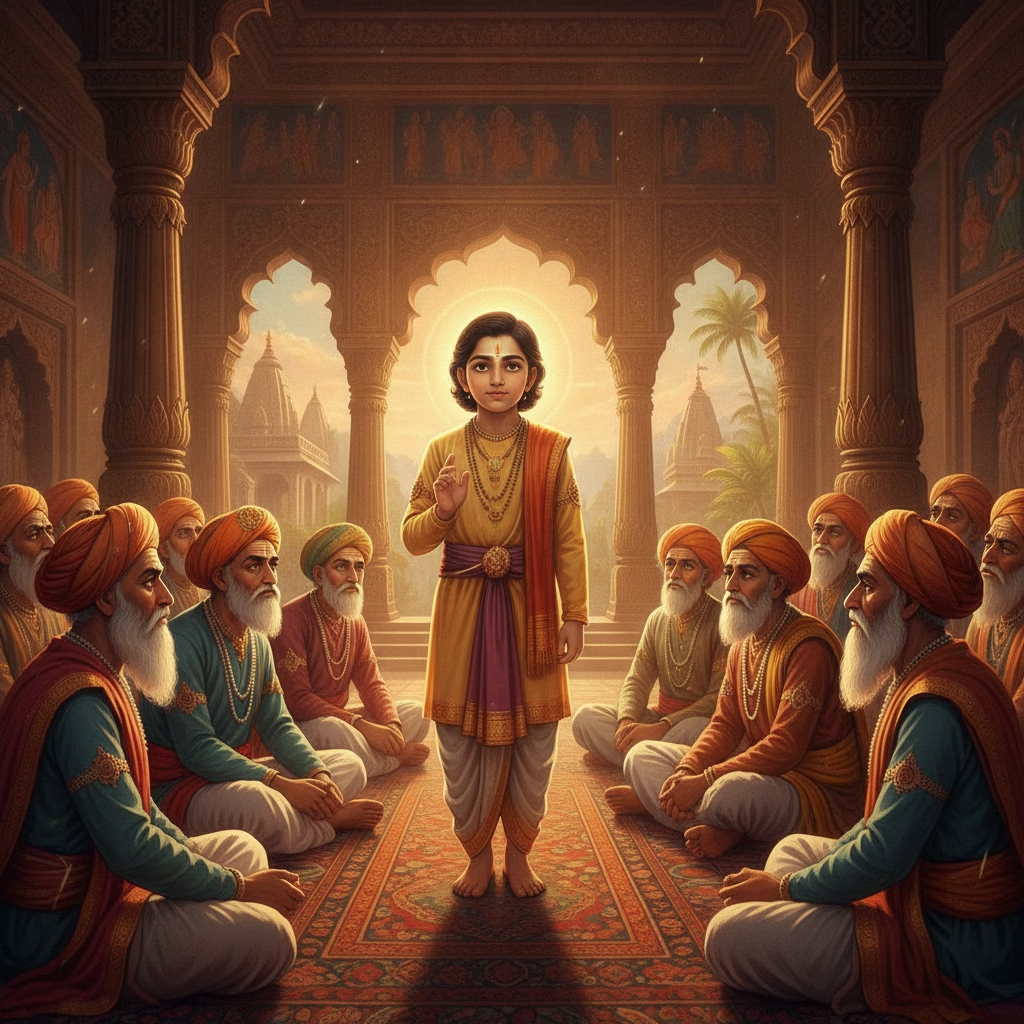
Dnyaneshwar continued, undeterred by the stirring he had caused. "The Upanishads teach us 'Tat Tvam Asi'—Thou Art That. The individual soul and the universal soul are one. If this is true—and I believe you accept it as truth—then how can knowledge be restricted? How can the infinite be parceled out according to birth?"
Haripant leaned forward. "You speak of the Upanishads, boy. But you have not been initiated. You have no guru in our tradition. You have not performed the sacred thread ceremony. You quote scriptures you have no right to read."
"I have a guru," Dnyaneshwar replied. "My brother Nivruttinath, who learned from the great Gahaninath of the Nath tradition. And before you say that this is not a proper lineage, remember that the Naths trace their wisdom to Adinath—Shiva himself. Is the Lord of Yogis not a sufficient source?"
Another scholar, younger and more aggressive, stood. "Clever words from a clever child. But knowledge is not merely philosophy debated in halls. It is ritual, sacrifice, the precise performance of sacred duties. Your family has polluted these very acts. Your father took vows of renunciation—the highest commitment a Brahmin can make—and broke them. What you call knowledge, we call contamination."
The hall fell silent, waiting for the boy's response. This was the crux of the matter: not his intelligence, but his legitimacy. Not what he knew, but who he was.
Dnyaneshwar closed his eyes for a moment. When he opened them, something had shifted. The scholars would later swear that the boy seemed to glow, that the air itself became charged with presence.
"You speak of purity and pollution," he said softly. "But the Bhagavad Gita teaches that the wise see with equal vision a learned Brahmin, a cow, an elephant, a dog, and an outcaste. If Krishna himself makes no distinction, why do you?"
He paused, letting the words settle. "My father sought liberation through renunciation. His guru commanded him to return to householder life—to learn that liberation is not found in running from the world but in understanding its true nature. His path was unconventional, yes. But was it sinful? Or was it a teaching you are unwilling to accept because it challenges your authority?"
The assembly erupted in argument. Some scholars nodded thoughtfully; others shouted in outrage. Haripant raised his hand for silence.
"You speak well, boy. Too well, perhaps. But words are easy. The scriptures tell us that true knowledge manifests in power—in the ability to channel divine will. If you possess genuine spiritual attainment, demonstrate it. Show us a sign that your knowledge comes from authentic realization, not merely a clever tongue."
It was a trap, of course. The demand for miracles was a way to discredit mystics who refused to perform on command. But Dnyaneshwar simply nodded.
"Very well. You say that we are unfit to speak the Vedas because of our birth. But the Vedas are not human compositions—they are eternal truths, heard by the rishis in deep meditation. They exist in all of creation, not merely in the mouths of Brahmins."
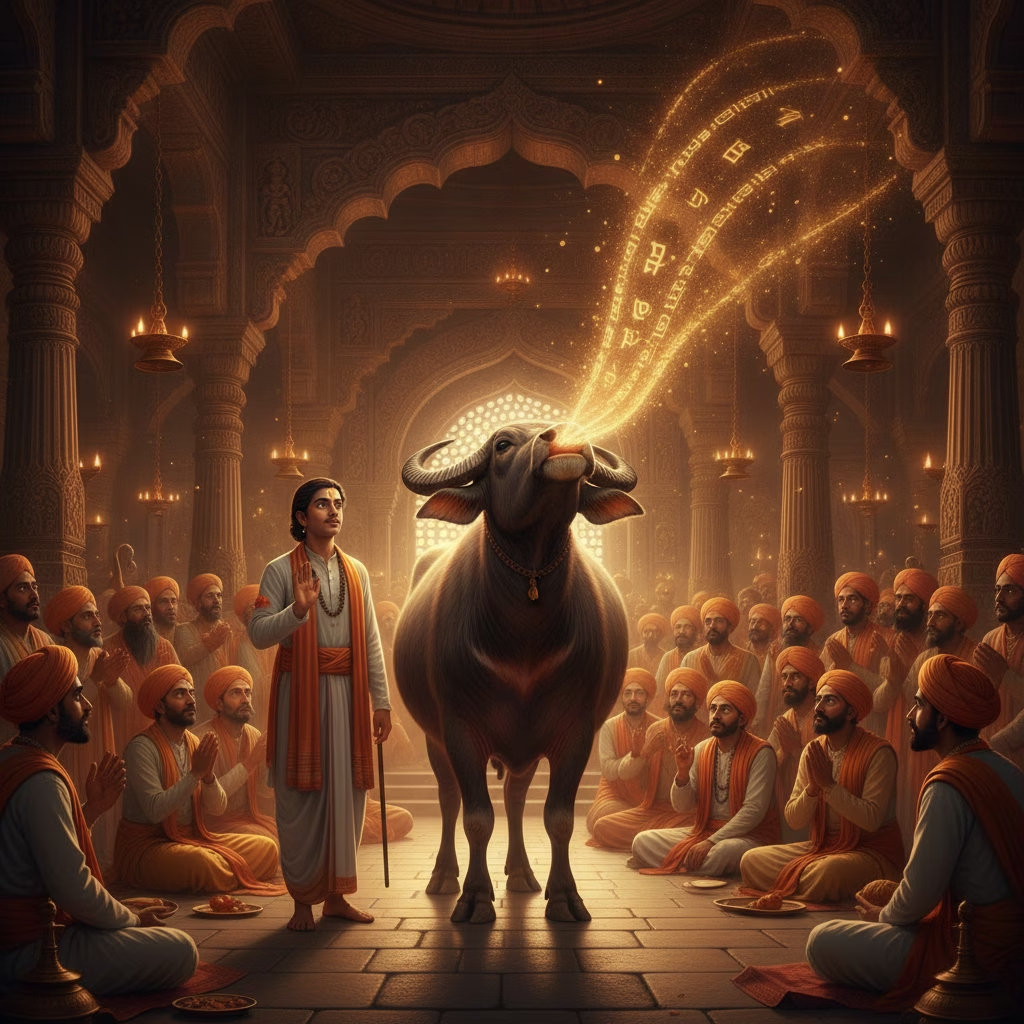
He turned to the entrance of the hall, where a water buffalo stood—the animal that had carried their meager belongings to Paithan. "This creature is considered low, fit only for labor. Let us see if the divine respects your boundaries."
Dnyaneshwar approached the buffalo and placed his hand on its head. He closed his eyes and whispered something the assembly could not hear. For a long moment, nothing happened. Then, impossibly, the buffalo opened its mouth—and Vedic verses poured forth, perfectly pronounced, each syllable crystal clear.
The hall exploded in chaos. Scholars leaped to their feet, some in wonder, others in horror. The buffalo continued its recitation, verse after verse of the Rig Veda, as if the ancient hymns had been waiting in its throat since the dawn of time.
When the animal finally fell silent, Dnyaneshwar turned back to the assembly. His face showed no triumph, only a deep sadness.
"You see," he said quietly, "the divine does not recognize the walls you build. Knowledge flows where consciousness awakens to receive it—in a Brahmin, in an outcast, in a child, even in an animal. Your scriptures are not your property. They are humanity's inheritance, and you are merely their custodians, not their owners."
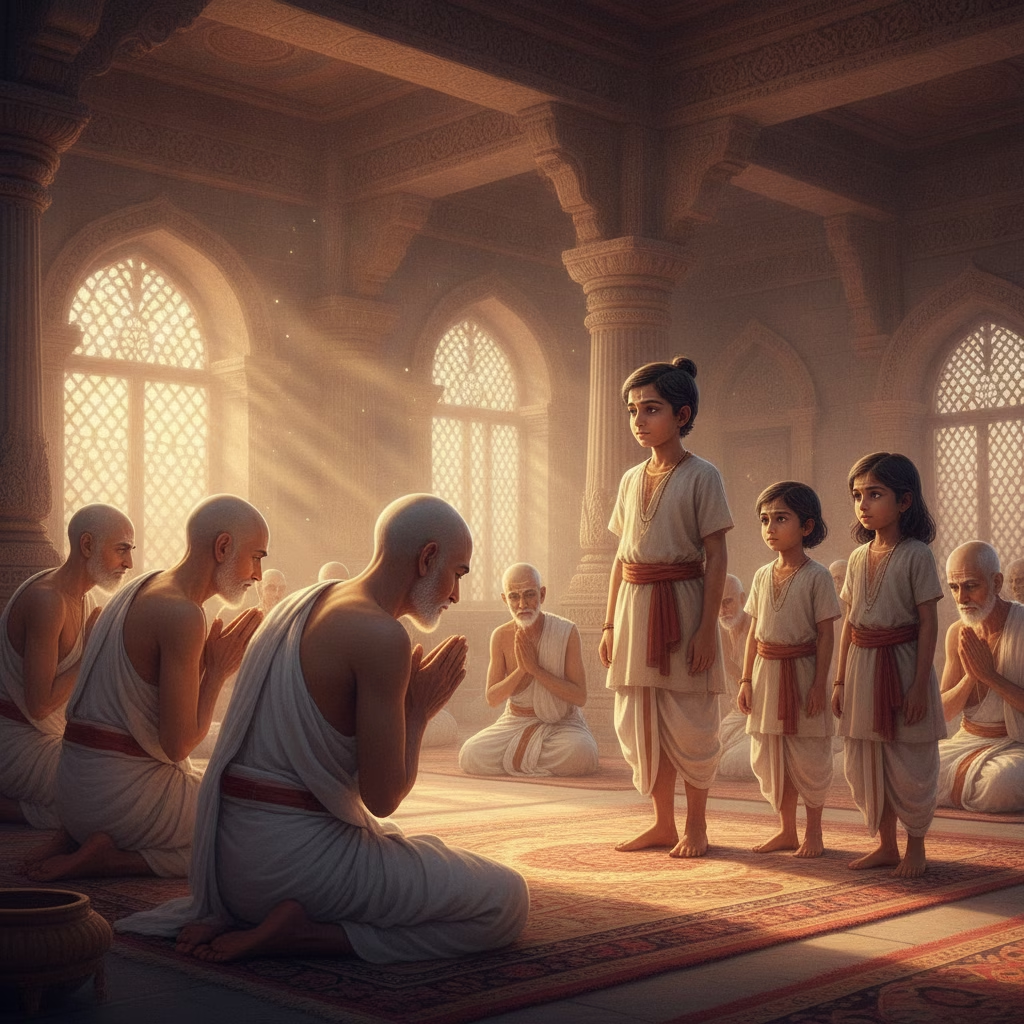
Haripant stood slowly. The old scholar's face had transformed, the stern judgment replaced by something like awe. He descended from his platform and approached the young boy.
"Dnyaneshwar," he said, and his use of the name—not "boy" or "outcast child"—was itself a recognition, "you have shown us something we had forgotten in our concern for tradition and purity. The purpose of knowledge is not to exclude but to illuminate. The purpose of spiritual practice is not to build walls but to dissolve them."
He turned to address the full assembly. "This child possesses genuine realization. His birth may be irregular by our standards, but his understanding is authentic. I propose that we lift the excommunication from this family and recognize these siblings as legitimate seekers of truth."
Not all the scholars agreed—change never comes without resistance. But enough nodded in assent that the decree was made. The four orphans of Alandi were no longer outcasts.
Yet as they left the assembly hall, Dnyaneshwar felt no elation. He had won their acceptance, but the larger battle remained. Maharashtra was filled with people denied knowledge because of caste, gender, or circumstance. The Brahmins' monopoly on spiritual wisdom kept millions in darkness.
He looked at his sister Muktabai, at his brothers Nivruttinath and Sopan. "This is just the beginning," he told them. "We must write. We must teach. The sacred knowledge locked in Sanskrit must be given to the people in their own tongue—in Marathi, the language of their hearts."
Two years later, at age fifteen, Dnyaneshwar would begin writing the Dnyaneshwari—a commentary on the Bhagavad Gita in Marathi verse that would transform the spiritual landscape of Maharashtra. It would become the oldest surviving literary work in the Marathi language, a milestone that made sacred philosophy accessible to common people for the first time.
But the seeds of that revolution were planted here, in Paithan, when a thirteen-year-old boy made a buffalo sing the Vedas—not to display power, but to demonstrate a truth the scholars had forgotten: that the divine belongs to everyone, or it belongs to no one at all.
According to Wikipedia, Sant Dnyaneshwar lived only twenty-one years, entering samadhi in 1296 CE by entombing himself in an underground chamber at Alandi. But in that brief life, he founded the Varkari Bhakti movement, inspired saint-poets like Eknath and Tukaram, and gave Maharashtra a spiritual voice that still echoes seven centuries later.
The boy who was denied the sacred thread became one of India's greatest philosophers. The outcast child became a saint. And the knowledge the Brahmins tried to hoard became a river that still flows, nourishing all who come to its banks with open hearts.