
The Midnight King: Rajaram's Escape from Raigad
The throne came to him covered in blood.
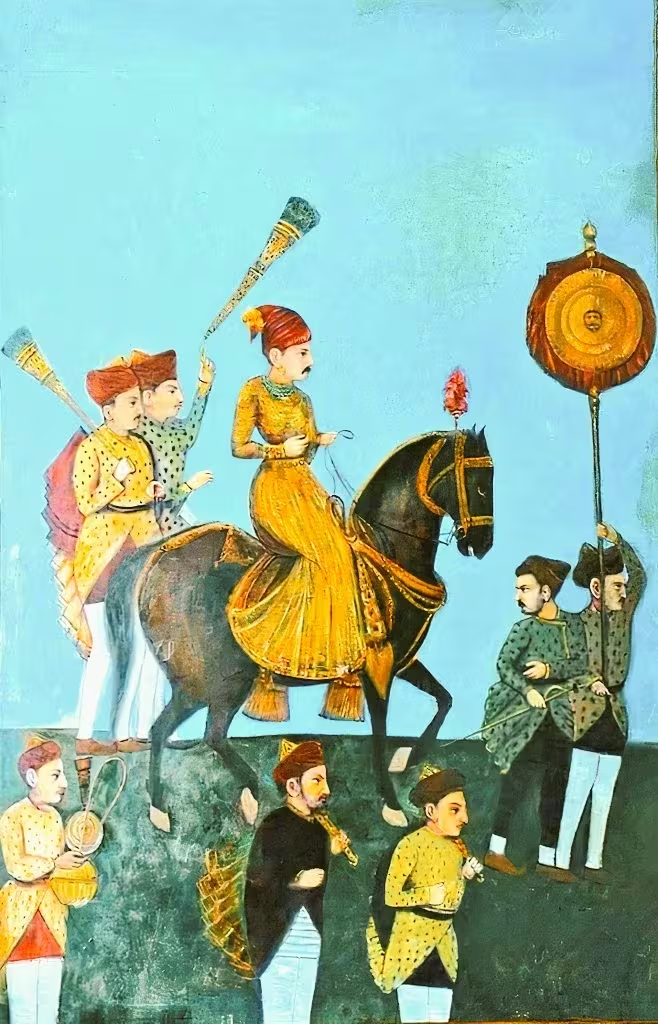
On March 12, 1689, Rajaram Bhonsale was informally crowned Chhatrapati at Raigad fort, the mountain capital his father Shivaji had carved from stone and ambition. He was nineteen years old. His half-brother Sambhaji—captured, tortured, and executed by the Mughals just weeks earlier—had left behind a kingdom at war and a nephew too young to rule. The crown fell to Rajaram not by choice, but by the cruel arithmetic of survival.
He had barely thirteen days.
The Siege Tightens
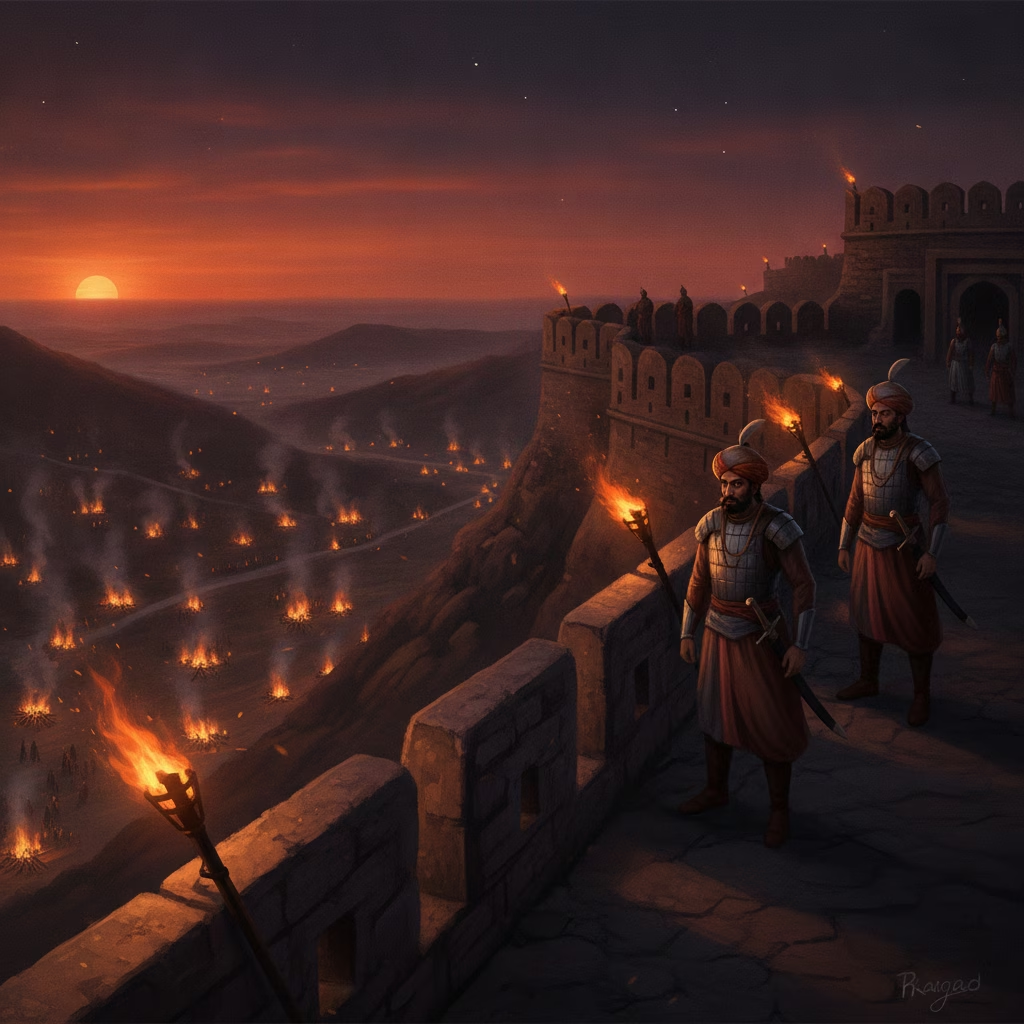
The Mughal armies moved like monsoon clouds—inevitable, suffocating, impossible to escape. On March 25, 1689, Itikad Khan (who would later be known as Zulfikar Khan) began laying siege to the region around Raigad. From the ramparts, Maratha sentries watched the enemy campfires multiply in the valleys below, spreading like a disease across the Deccan landscape.
Emperor Aurangzeb, now in his seventies, had staked his legacy on crushing the Maratha resistance. He had executed Sambhaji with deliberate cruelty—forty days of torture before the final beheading—as a message to all who would defy Mughal supremacy. Now he wanted the brother, the fort, and the final extinguishing of Shivaji's dream.
Rajaram's general, Santaji Ghorpade, was not a man who waited for death to arrive. While the young king inspected fortresses along the route to Pratapgad's Bhavani temple, ensuring they were provisioned and armed, Santaji conceived an audacious plan: entrench the main Maratha army at Phaltan as bait, then lead a small cavalry force in a lightning raid on Aurangzeb's camp at Tulapur. The objective was simple, impossible, and necessary—kill the emperor in the heart of his own army.
On a moonless night, Santaji and his second-in-command Vithoji Chavan led two thousand horsemen through enemy territory. They reached the Mughal camp undetected, a feat of navigation and nerve that bordered on miraculous. When they struck, it was with the precision of men who knew they would not get a second chance. They rushed at Aurangzeb's massive pavilion, cut the supporting ropes, and brought the entire cloth edifice crashing down, killing everyone inside.
But Aurangzeb was not there. By chance—or perhaps by the paranoia that keeps emperors alive—he had spent that night in his daughter's tent. History turned on such accidents.
The raid still achieved its purpose. After resting briefly at Sinhagad, Santaji descended the Bhor Ghat and attacked the rear of Itikad Khan's forces besieging Raigad, capturing five imperial war elephants in the chaos. Then Maratha contingents under Santaji and Dhanaji Jadhav routed Muqarrab Khan—the general who had captured Sambhaji—at Bhudhargad, forty-five miles south of Kolhapur. Muqarrab Khan and his son were mortally wounded, chased back to the Mughal camp, their plunder recaptured.
But Aurangzeb did not retreat. He never retreated. He sent more reinforcements. More men. More siege equipment. More resolve. Soon Itikad Khan's forces invaded Panhala, where Rajaram had taken refuge. The net was closing.
The Impossible Decision
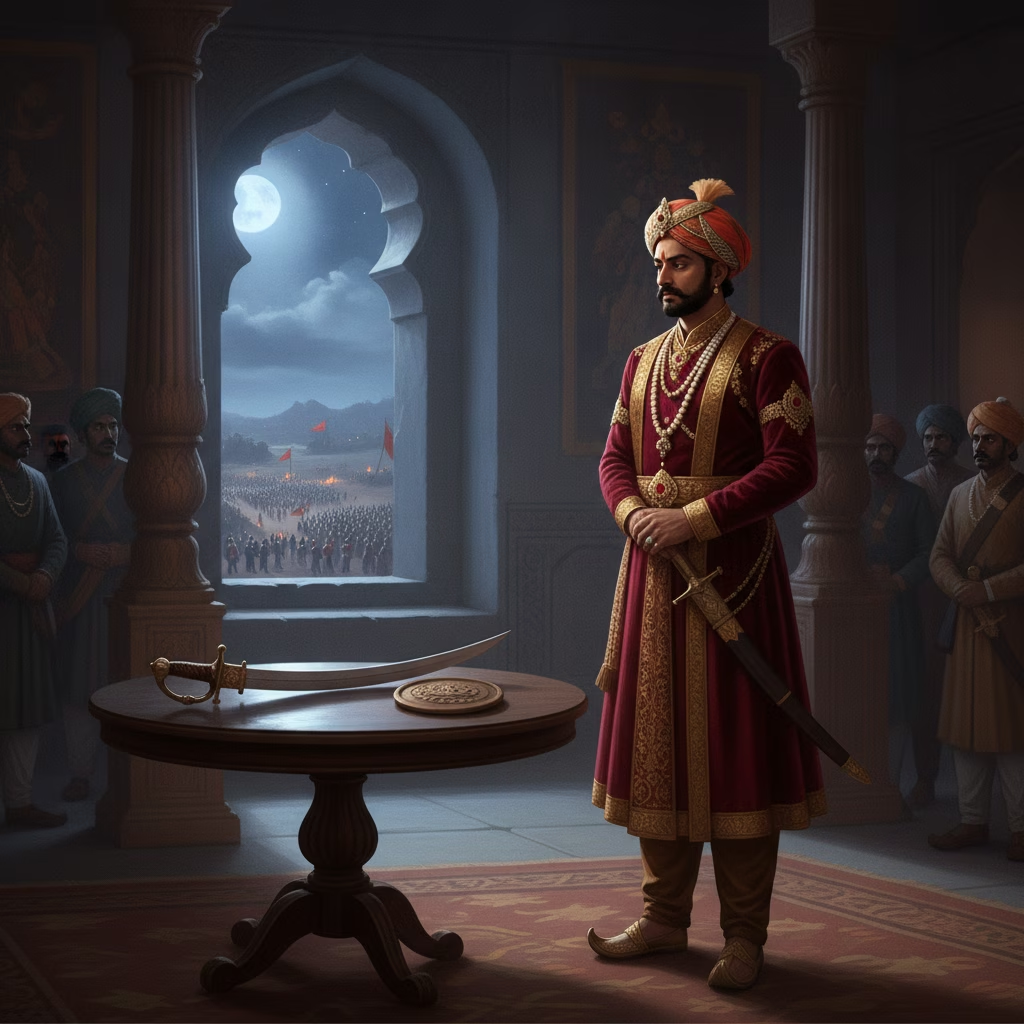
In a chamber at Panhala fort, Rajaram faced the choice that defines kings: die with dignity or live with shame.
His brother's fate haunted every calculation. Sambhaji had been captured because he stayed too long, fought too openly, believed too firmly in his own invincibility. The Mughals had made an example of him—paraded through streets, mutilated, humiliated before execution. The message was clear: this is what happens to Maratha kings.
Rajaram's advisors were unanimous. He must escape. Not to the nearby forts of the Konkan, all of which would soon be under siege, but to Jinji—a massive fortress complex in the distant south, in what is now Tamil Nadu, over six hundred miles away through enemy territory. Jinji was remote enough to be defensible, strong enough to withstand a prolonged siege, and far enough from the Deccan heartland that Aurangzeb might exhaust himself trying to reach it.
But to go to Jinji meant abandoning everything. The Maratha heartland. The forts his father had conquered. The people who looked to Raigad as the symbol of their independence. A king who flees his capital is no king at all—or so the old codes of honor insisted.
Yet a dead king is no king either.
Rajaram looked at his brother's sword, at the royal seal, at the maps showing Mughal forces converging from every direction. Outside, his generals waited. Three hundred men had volunteered to fight a delaying action, to buy their king the hours he would need to slip through the siege lines. Three hundred men who knew they were volunteering to die.
He made his decision. He would become a commoner. He would shed every mark of royalty, every symbol of authority, and walk through the darkness as a peasant. The throne would survive in exile. The war would continue from the south. His brother's death would be avenged, but not today, not here, not in a glorious last stand that would make poets weep and accomplish nothing.
Survival, not honor, was the strategy now.
Escape in Darkness
The night Rajaram left Panhala, he ceased to be a king.
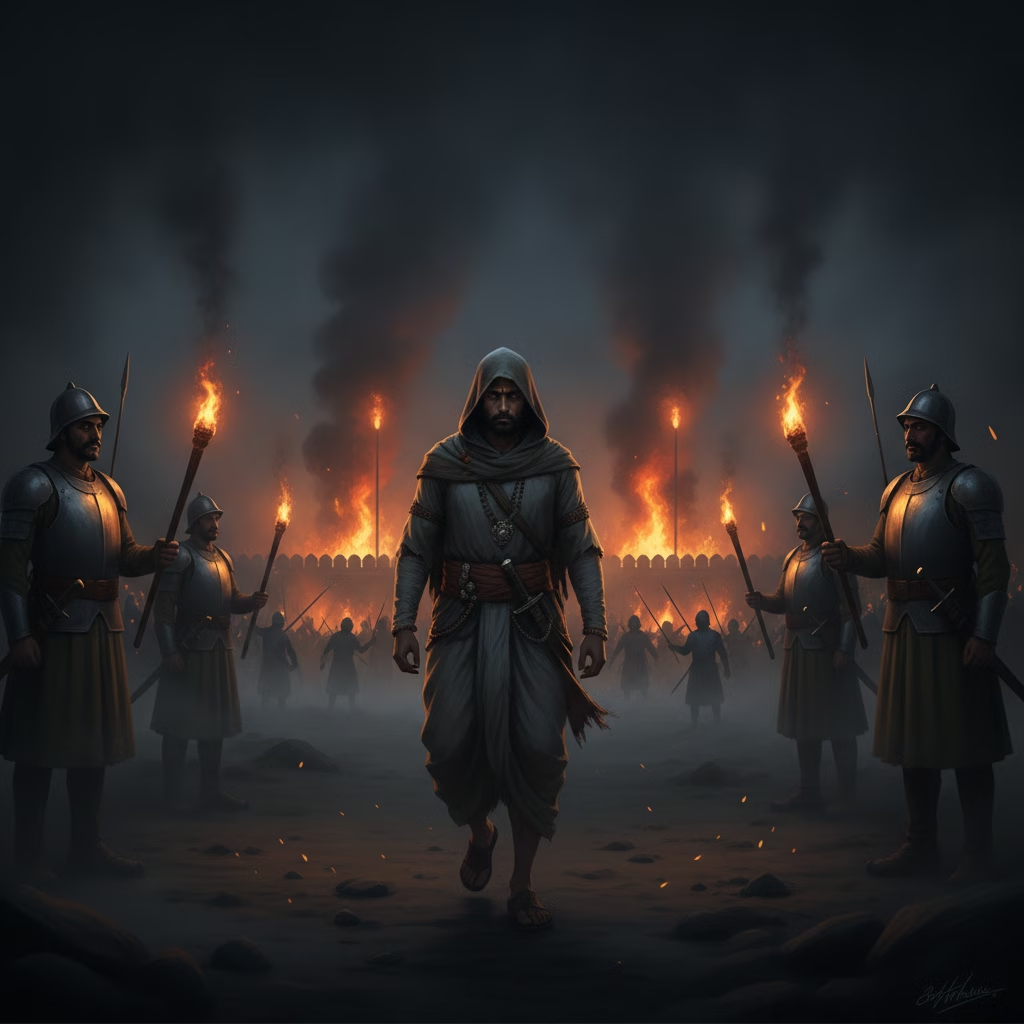
He removed his royal jewelry, his fine clothes, his every ornament of authority. In their place: the rough cotton of a farmer, the worn sandals of a traveler, the anonymous face of any man trying to survive in a land at war. His attendants did the same. In darkness, royalty becomes invisible.
The three hundred warriors moved first, engaging the Mughal besiegers with enough fury to draw attention, to create noise and confusion and the assumption that this was another Maratha raid. While swords clashed and men died buying time with their blood, Rajaram and his small party slipped through the siege lines.
They moved through Kavlya ghat, descending from Panhala's heights into the Deccan plateau. Every shadow could hide a Mughal patrol. Every sound could be the end. According to the Rajaramacharita, the incomplete Sanskrit biography written by his royal priest Keshav Pandit, Rajaram traveled with a handful of loyal companions, moving by night, hiding by day, following routes known only to local guides who could navigate the land by starlight and memory.
They passed through Pratapgad, where his father had killed Afzal Khan in single combat thirty years earlier. They reached Vishalgad, another fortress in the chain of Maratha defenses. At each stop, Rajaram remained disguised, revealing himself only to the fort commanders who could provide fresh supplies and intelligence about Mughal movements.
Behind him, the battle at Panhala raged through the night. The three hundred held their ground until dawn, then melted into the hills as Maratha guerrillas always did—making the Mughals pay for every mile, every fort, every small victory that felt like defeat.
By the time the Mughals realized the king had escaped, he was already days ahead, moving south toward the most dangerous obstacle of all.

The Crocodile River
The Tungabhadra River in monsoon season is a god that demands sacrifice.
Rajaram reached its banks with Bahirji Ghorpade, a warrior from the same clan as the legendary Santaji. Behind them, Mughal scouts were closing the distance. Ahead, the river churned with dark water and darker shapes—crocodiles that had claimed this territory long before any empire.
There was no bridge. No boat. No time.
Bahirji Ghorpade made the offer that would echo through Maratha folklore: he would carry the king across on his back. Rajaram, who had already shed his crown and his capital, now placed his life entirely in another man's strength. They entered the water together.
The crossing was a nightmare of endurance. Bahirji swam with the king clinging to his back, fighting the current, watching for the telltale ripples that meant crocodiles were circling. The monsoon-swollen river tried to pull them downstream, toward rapids that would smash them against rocks. Bahirji's muscles burned. His lungs screamed. But he did not stop.
They reached the far bank exhausted, soaked, alive.
But they were now in the territory of Kasim Khan, deep in Mughal-controlled land. The disguise became more critical than ever. According to the Keladinṛipavijaya of Linganna, Rajaram and Bahirji made their way to Keladi, near present-day Sagar in Karnataka, seeking assistance from an unexpected ally.
The Queen's Gambit
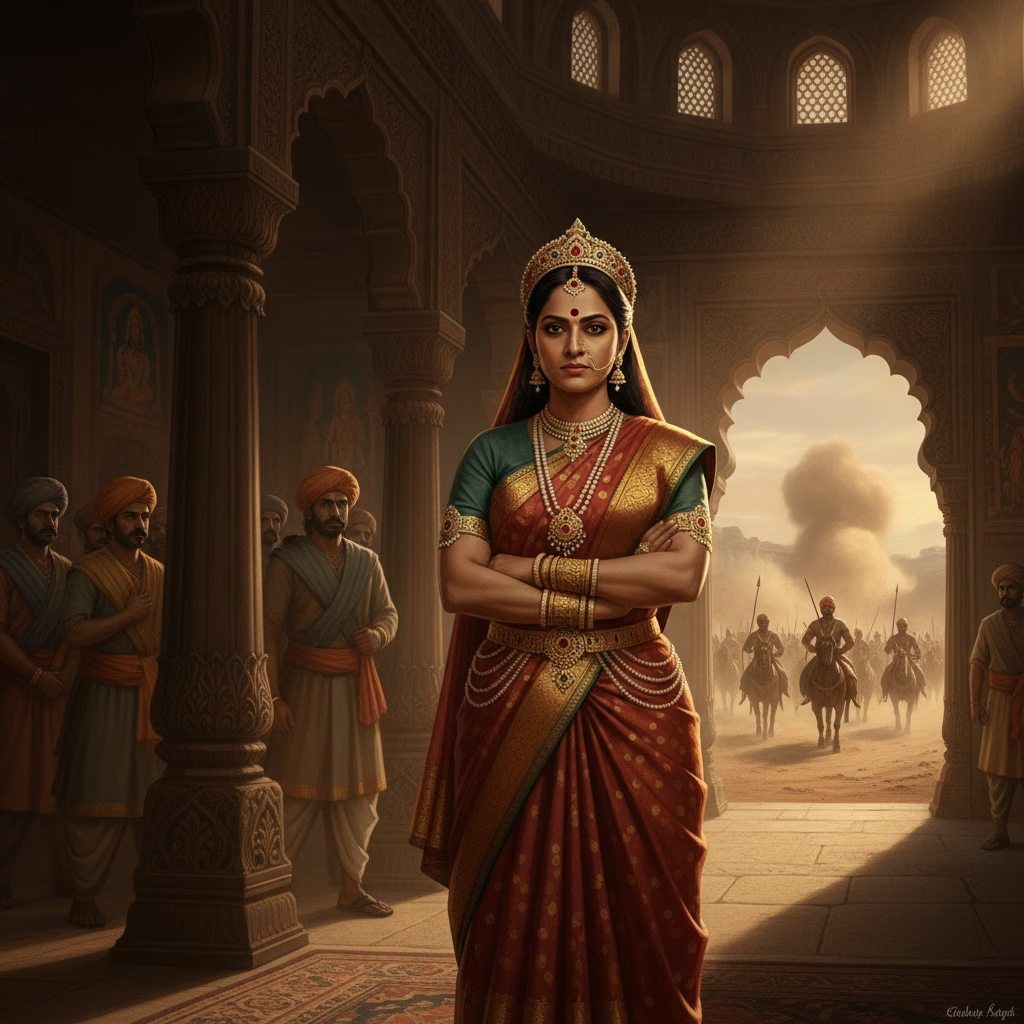
Queen Chennamma of Keladi was a widow ruling a small but strategically vital kingdom. When Rajaram arrived at her court in disguise, she faced her own impossible choice: shelter the fugitive Maratha king and invite Aurangzeb's wrath, or turn him away and abandon the broader alliance against Mughal expansion.
She chose defiance.
Chennamma not only gave Rajaram safe passage but actively kept Mughal forces engaged to ensure his escape route remained open. It was a calculated risk that would cost her dearly. To punish her intervention, Aurangzeb dispatched three generals—Jannisar Khan, Matabar Khan, and Sharza Khan—who captured the forts of Madhavpura and Anantpur and laid siege to Bednur. Chennamma escaped to Bhuvangiri, her kingdom in flames.
But Santaji Ghorpade, that relentless shadow of Mughal ambitions, arrived with Maratha forces and defeated all three khans. He protected Chennamma and, more importantly, ensured that the Mughal pursuit of Rajaram was throttled before it could succeed.
The network of resistance held. The alliance of smaller kingdoms against Mughal hegemony proved stronger than Aurangzeb's ability to crush them all simultaneously. While the emperor focused his massive armies on capturing forts, the king he wanted most slipped through his fingers.
 ## Arrival at Jinji
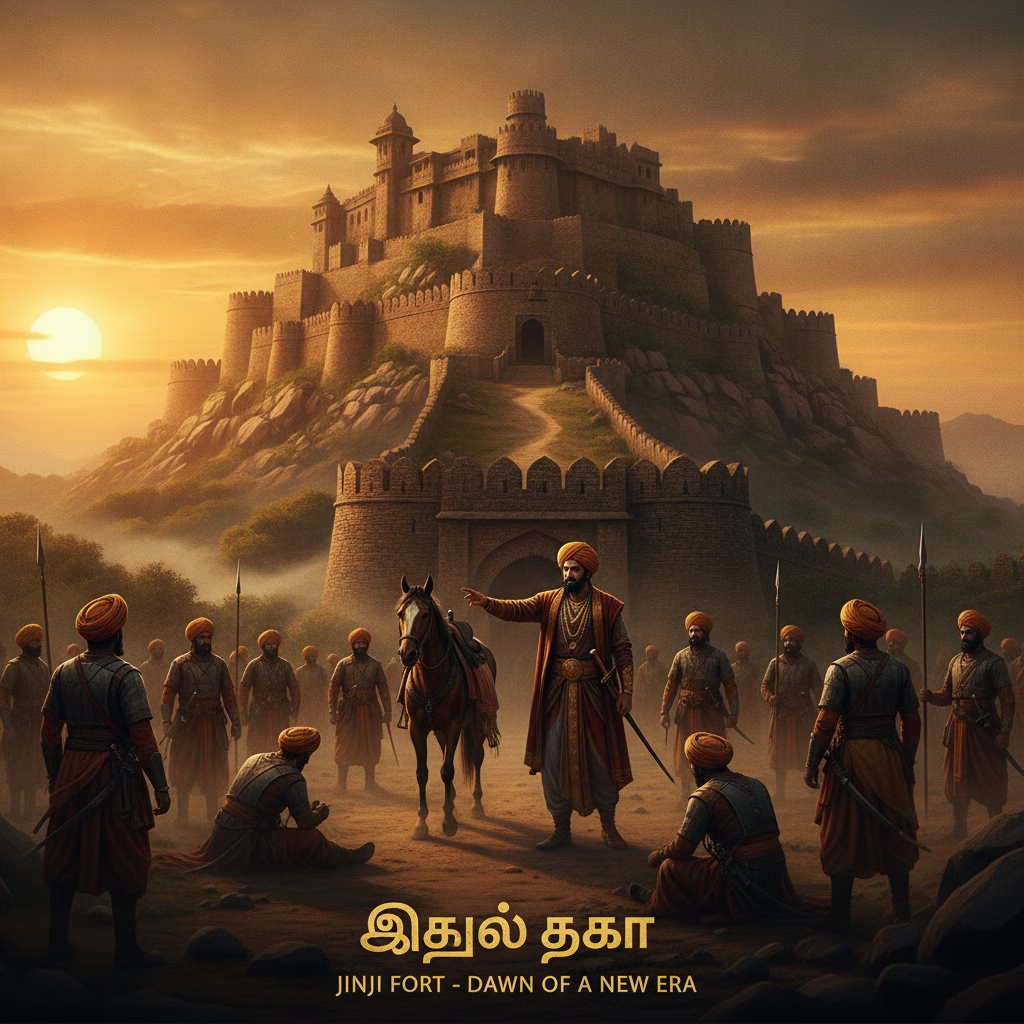
On November 1, 1689—after a month and a half of flight, disguise, river crossings, and narrow escapes—Rajaram reached Jinji fort.
The massive fortress complex rose from rocky hills in Tamil Nadu, far from the Deccan heartland, far from the graves of his father and brother, far from everything that defined Maratha identity. But it was defensible. It was supplied. And it was, for now, beyond Aurangzeb's immediate reach.
Rajaram had saved the throne by abandoning the capital. He had preserved Maratha independence by fleeing the Maratha homeland. According to Wikipedia, his eleven-year reign would be "marked with a constant struggle against the Mughals," most of it conducted from this southern exile.
Aurangzeb would eventually besiege Jinji too, dedicating years and enormous resources to capturing it. But by then, Rajaram had achieved his purpose: he had kept the Maratha cause alive. Guerrilla warfare continued across the Deccan. Santaji and Dhanaji raided Mughal supply lines. The resistance that Shivaji had ignited continued to burn.
Rajaram died at Jinji in 1700, never having returned to Raigad. His wife Tarabai would continue the struggle as regent for their infant son. The Maratha kingdom would eventually triumph, outlasting Aurangzeb himself and inheriting much of the empire he had bankrupted trying to conquer them.
But all of that began on a dark night in 1689, when a nineteen-year-old king became a commoner, when three hundred warriors died buying time, when a throne survived because its occupant was willing to abandon it.
History remembers the battles, the sieges, the grand strategies. But sometimes survival is the greatest victory—inglorious, unheroic, and absolutely necessary. Rajaram understood what his brother had not: a living king in exile can still win a war. A dead king, no matter how bravely he died, cannot.
The midnight escape from Panhala was not the end of Rajaram's story. It was the beginning—the moment when the Maratha cause learned to bend rather than break, to retreat rather than be destroyed, to survive at any cost.
In the darkness between Panhala and Jinji, between crown and disguise, between honor and necessity, Rajaram Bhonsale saved more than his own life. He saved the possibility of victory.