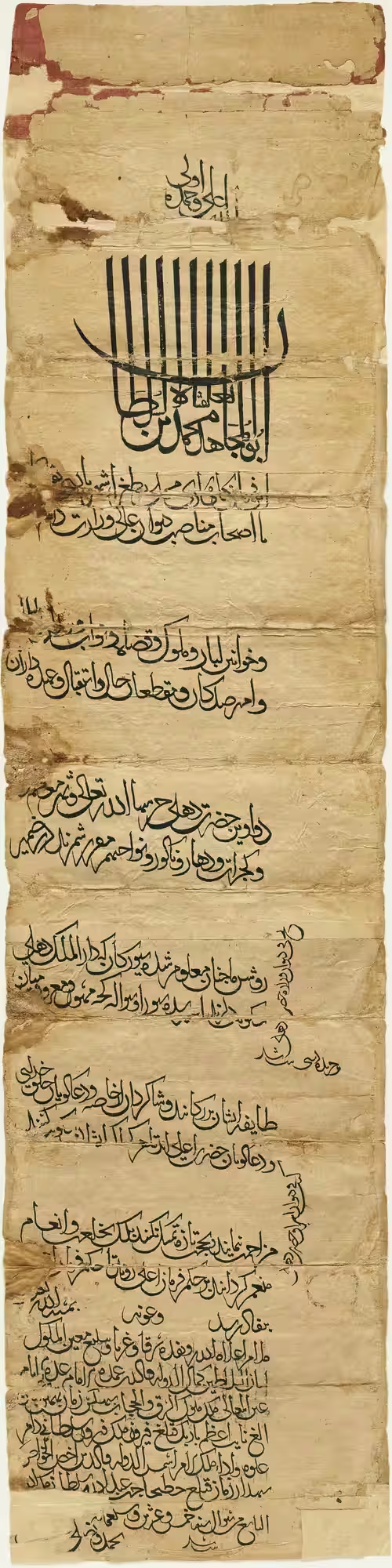

The Night Delhi Walked: Muhammad bin Tughluq's Forced March to Daulatabad
The year was 1327, and in the lamplit chambers of the Delhi Sultanate, a brilliant mind was conceiving a plan that would earn its architect the most paradoxical nickname in history: The Wisest Fool.
The Sultan's Grand Vision
Muhammad bin Tughluq was no ordinary ruler. Born Fakhr ud-Din Jauna Khan around 1290, he had ascended to the throne of Delhi in February 1325, just three days after his father Ghiyasuddin Tughluq's death. The young sultan was a polymath in an age when scholarship among rulers was rare—fluent in Persian, Hindavi, Arabic, Sanskrit, and Turkic. He had studied medicine, engaged with philosophy, and according to the Moroccan traveler Ibn Battuta, who would later visit his court, possessed one of the most formidable intellects of his time.
But intelligence without wisdom can be a dangerous thing.
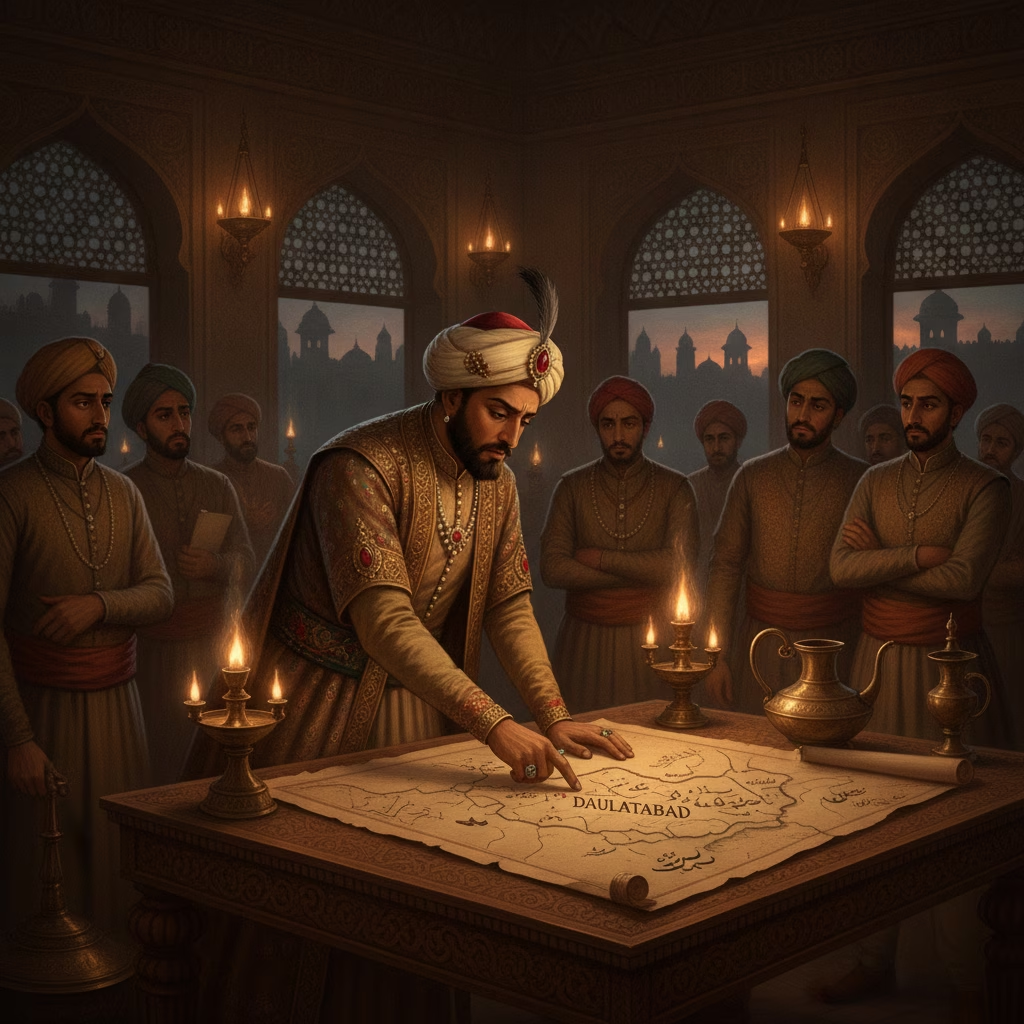
As Muhammad pored over maps in his palace, his finger traced a line from Delhi southward, across the vast expanse of the Indian subcontinent, to a fortress city in the Deccan: Daulatabad, formerly known as Devagiri. He had spent years there as a prince, campaigning in the southern territories during his father's reign. In 1323, he had successfully laid siege to Warangal, ending the Kakatiya dynasty. He knew the south intimately.
The logic seemed impeccable. Delhi, perched in the north, left the empire's southern territories feeling distant and neglected. Daulatabad sat at the geographic center of his domains—a position from which both north and south could be administered with equal attention. The Mongol and Afghan threats from the northwest had plagued Delhi for generations. A more central capital made strategic sense.
What happened next would become one of history's most catastrophic experiments in urban planning.
Preparations for the Great March
Once Muhammad bin Tughluq made a decision, he pursued it with characteristic thoroughness. If Delhi was to be emptied and Daulatabad populated, the journey itself must be made as comfortable as possible. The Sultan was not a cruel man by nature—indeed, historians note he was known for religious tolerance, even participating in Hindu festivals, unique among the sultans of Delhi.
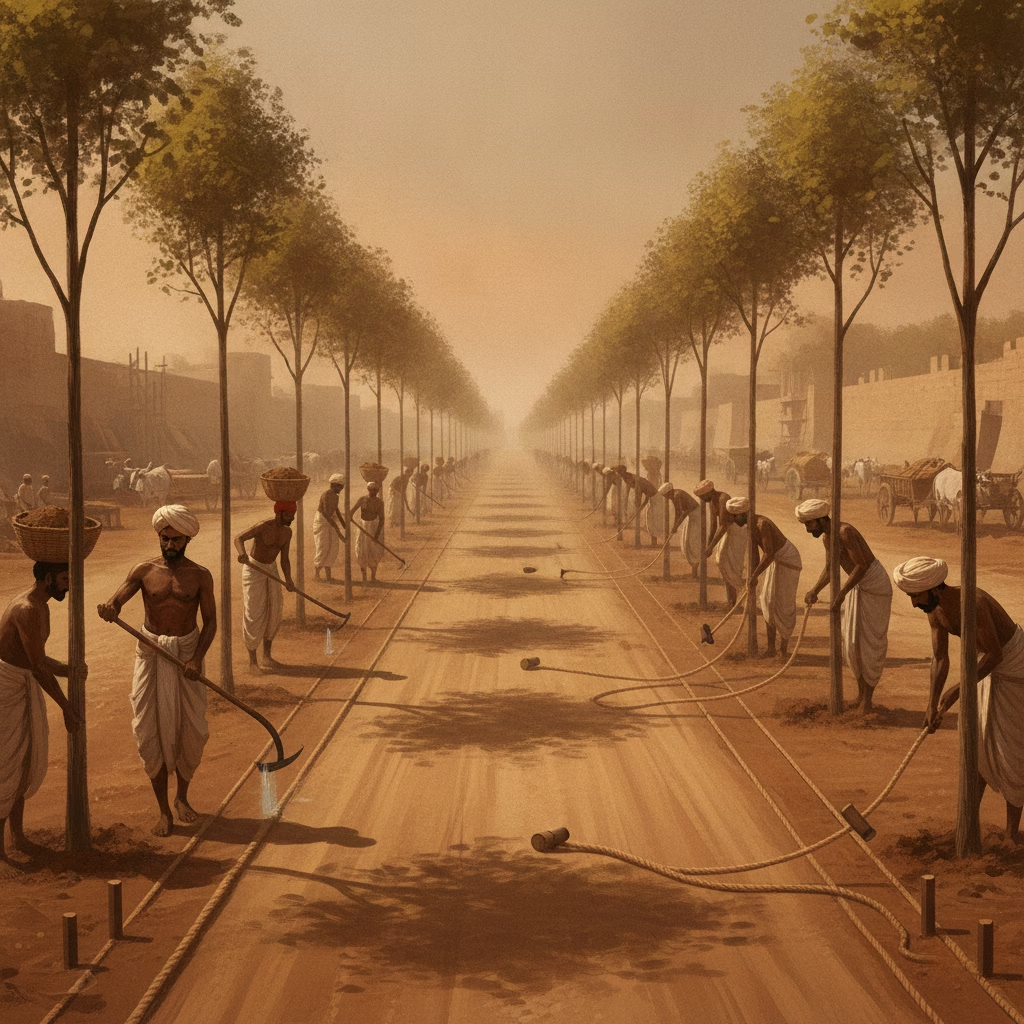
The preparations were elaborate. A broad highway was constructed spanning the 1,500 miles between the two cities. Royal engineers supervised the planting of shade trees on both sides of the road—a mercy in a land where summer temperatures could kill. Every two miles, halting stations were erected where travelers could rest.
Provisions for food and water were stockpiled at each station. The Sultan ordered that khanqahs—Sufi lodges—be established at regular intervals, each staffed with at least one holy man to provide spiritual comfort and practical assistance to travelers. A postal service was established to maintain communication between the old capital and the new.
On paper, it was a masterpiece of logistical planning. Muhammad had thought of everything.
Everything except human nature.
The Night of the Decree
The decree came around 1329. The exact night is lost to history, but its impact reverberates across the centuries.
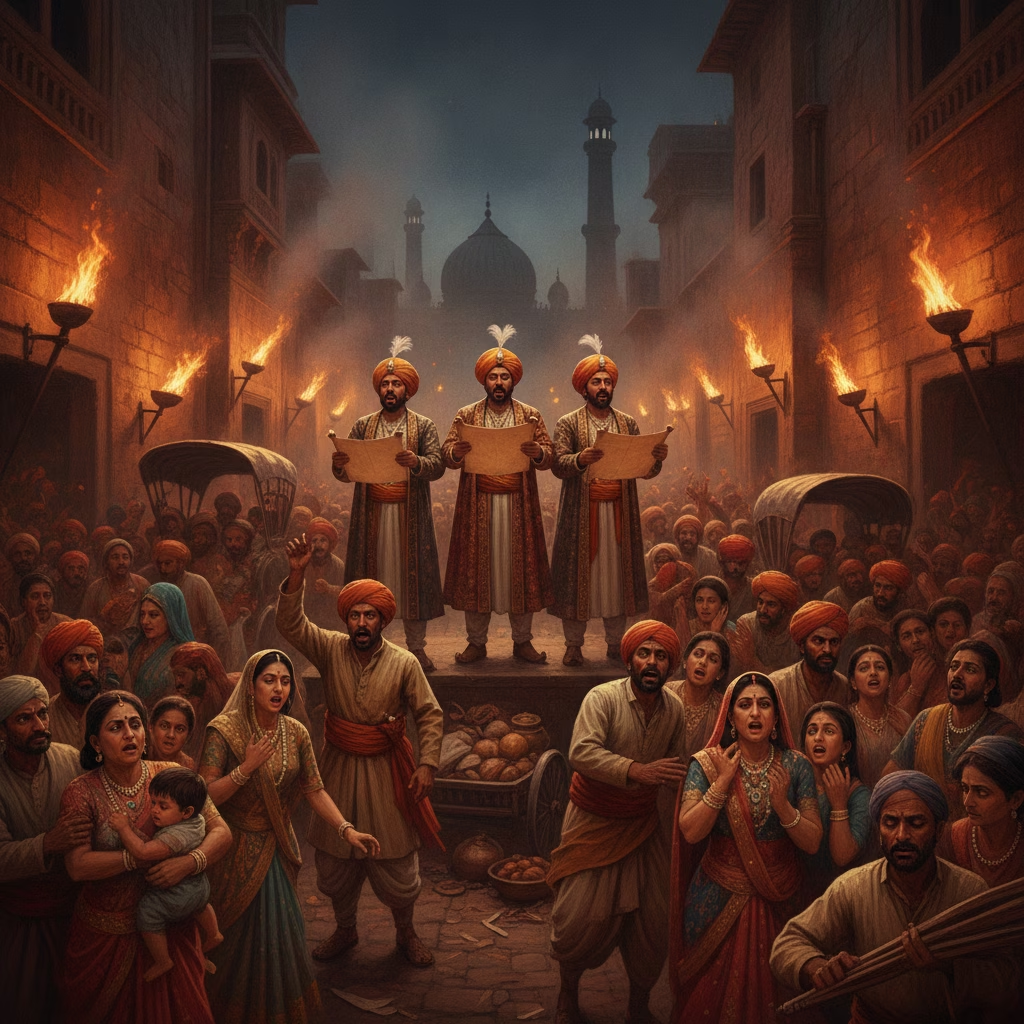
Royal heralds fanned out across Delhi as evening fell, their torches casting dancing shadows on ancient walls. In markets and mohallas, outside mosques and temples, in the homes of nobles and the quarters of slaves, the same proclamation was read: By order of the Sultan, all residents of Delhi—all—were to relocate to Daulatabad.
Not just the court. Not just the nobility. Everyone.
Slaves, nobles, servants, the ulema (religious scholars), Sufi saints, merchants, craftsmen, laborers—the entire population of one of the medieval world's greatest cities was ordered to abandon their homes and march 1,500 miles south.
Imagine that night. The disbelief. The chaos. Families who had lived in Delhi for generations, merchants with established businesses, craftsmen with workshops passed down through families—all told to pack what they could carry and prepare for a journey that would take months.
Even the Sultan's own mother made the journey in 1329, accompanied by nobles, perhaps to demonstrate that no one was exempt from this grand vision. The message was clear: Daulatabad was not merely a capital. It was to be the capital, and Delhi would be abandoned entirely.
The new city had been planned meticulously. Daulatabad was to be divided into wards called mohallas, with separate quarters for soldiers, poets, judges, and nobles. The Sultan offered grants to immigrants to ease their transition. Everything had been considered.
Except whether the people wanted to go.
According to Ibn Battuta, who documented these events, the citizens "showed dissent" despite migrating. It was an understatement that would prove tragically prophetic.
The March of Death
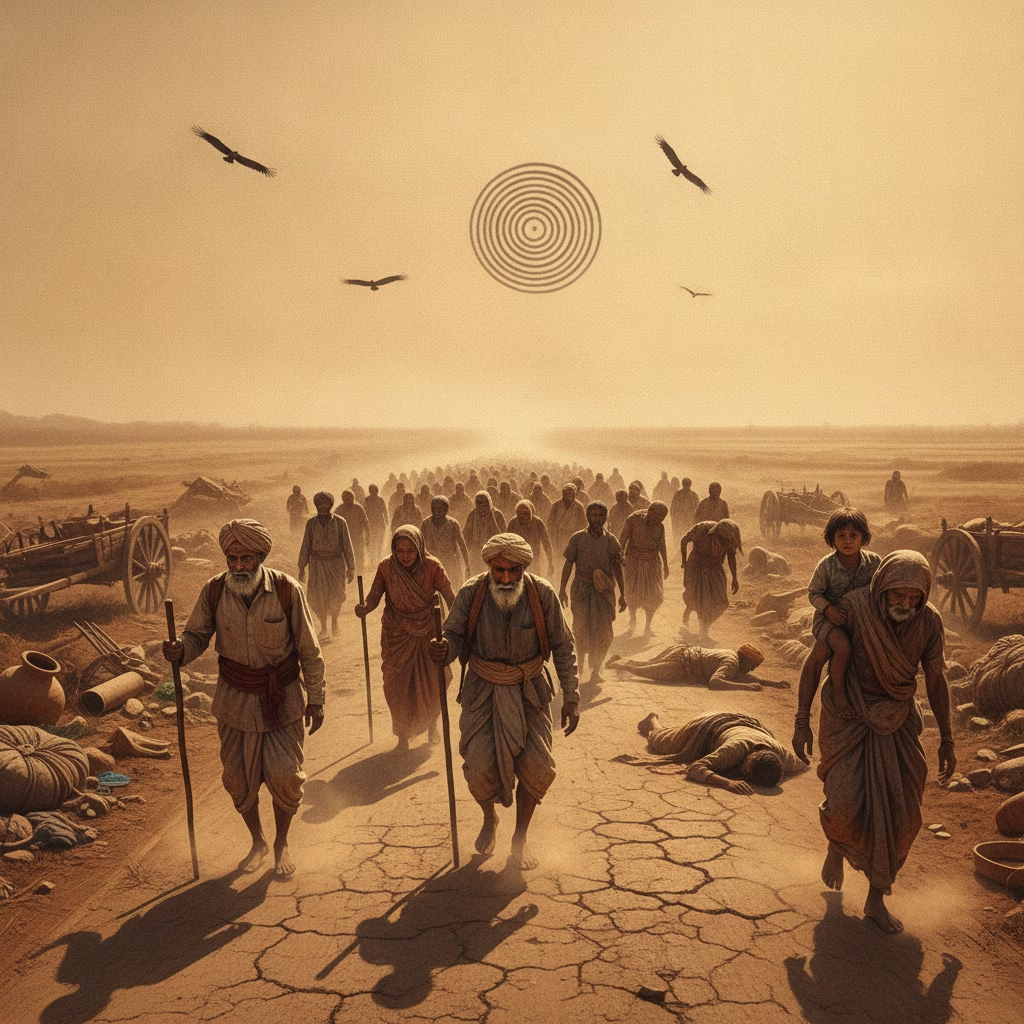
The great migration began, and almost immediately, the Sultan's careful plans began to unravel.
The halting stations, supplied for a manageable flow of travelers, were overwhelmed by the sheer numbers. The two-mile intervals between rest stops might seem reasonable on a map, but for the elderly, the infirm, children, pregnant women—two miles under the Indian sun became an ordeal.
The provisions, though planned, proved inadequate. The historical record is stark: "most of the people died during the shifting as the ruler was not able to provide them with enough food and water for their survival."
Read that again. Most of the people died.
The road from Delhi to Daulatabad became lined with graves. Families buried their elderly who couldn't continue. Children succumbed to dysentery and heat exhaustion. The Sufi saints at the khanqahs, meant to provide spiritual comfort, instead performed funeral rites day after day.
Those who survived the journey arrived traumatized, having lost family members, possessions, and any faith they might have had in their Sultan's wisdom.
The Stations of Suffering
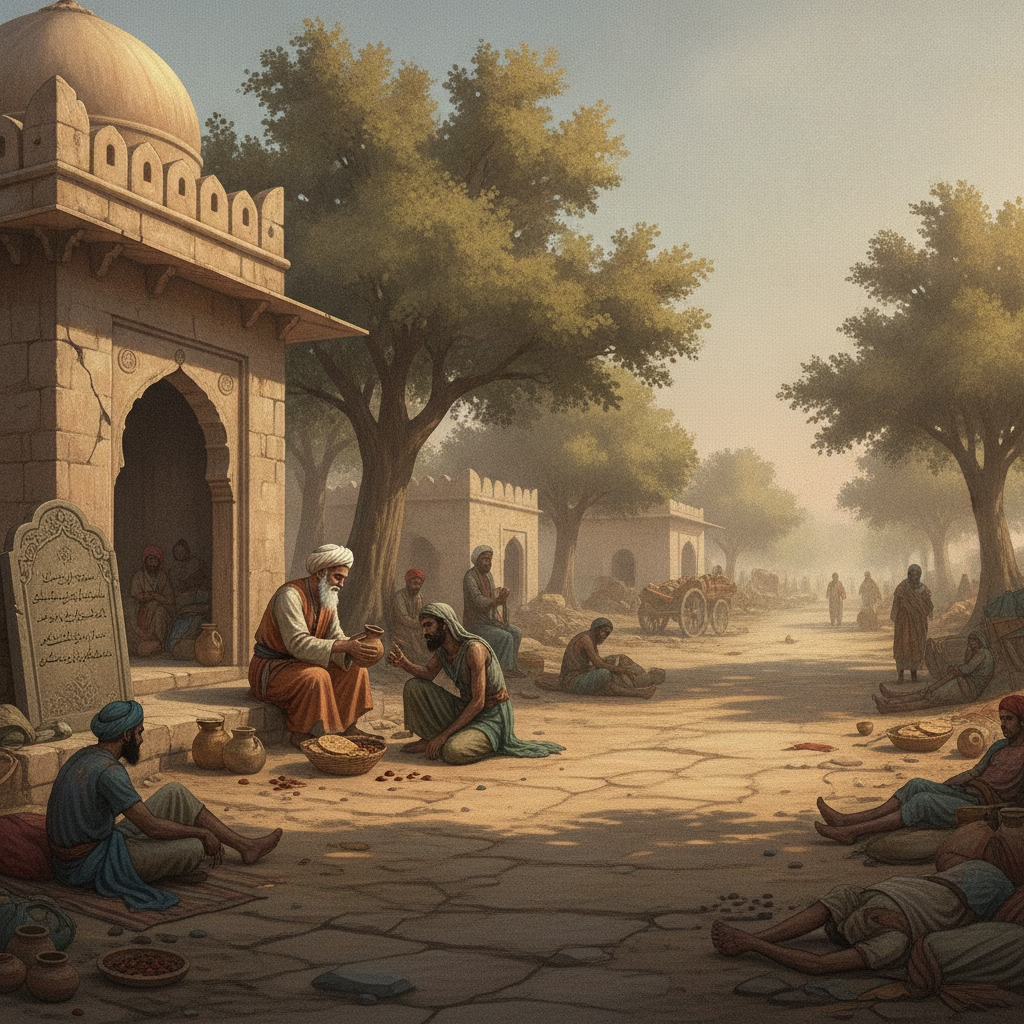
The rest stations that were meant to showcase the Sultan's foresight instead became monuments to his folly. At each khanqah, the Sufi saints did what they could. They offered water to the parched, shade to the sun-struck, prayers for the dying.
But compassion couldn't compensate for a fundamentally flawed premise: that an entire city's population could be relocated by decree, regardless of individual circumstances, desires, or capabilities.
The elite colonists from Delhi who survived the journey brought with them the Urdu language, which took root in the Deccan. Among these immigrants was Hasan Gangu, a celebrated general who would later found the Bahmani Empire. The migration, for all its tragedy, did reshape the cultural landscape of southern India.
But at what cost?
The Hollow Capital
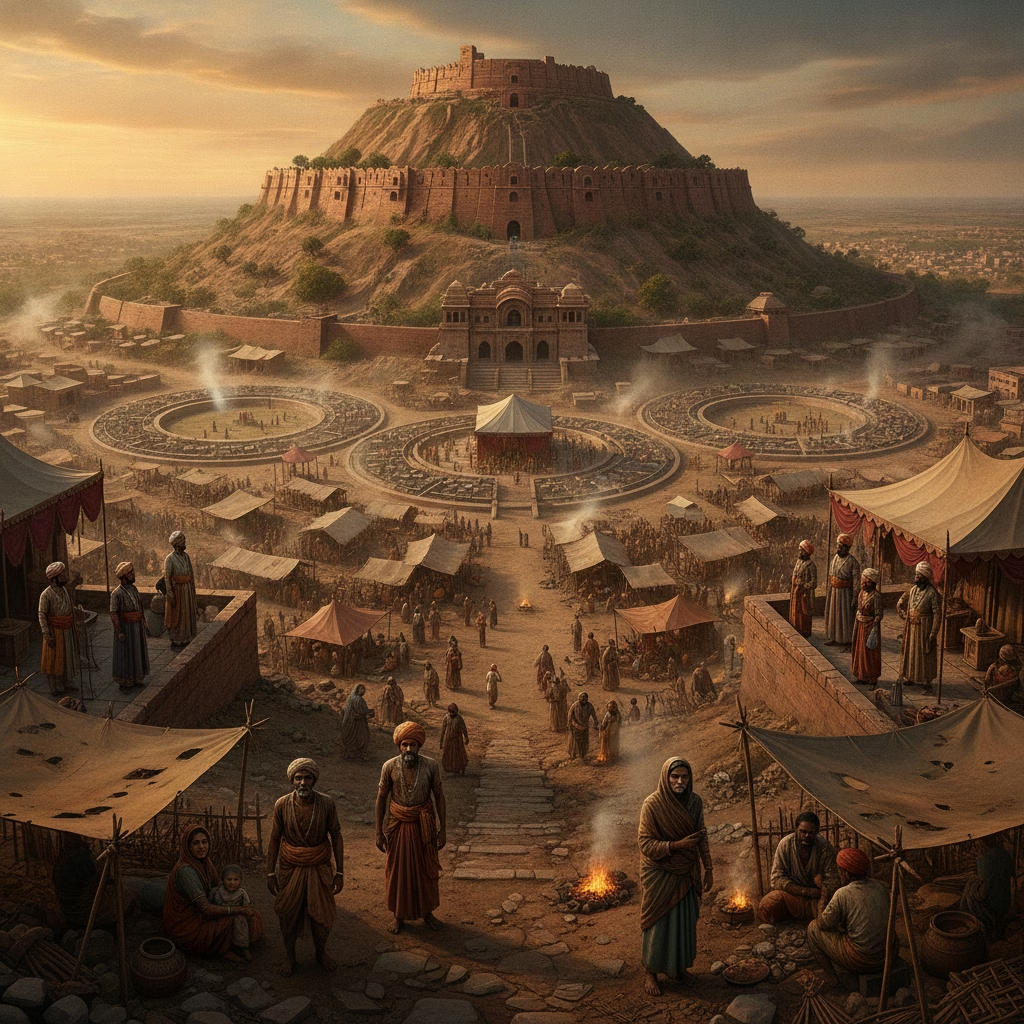
Daulatabad filled with survivors. The mohallas took shape—quarters for different professions and social classes, just as planned. The Sultan's grants helped some establish new lives. The fort on its distinctive hill became the seat of imperial power.
But the city was haunted by absence. Where there should have been the bustle of a thriving capital, there was instead the exhausted silence of refugees. Where there should have been enthusiasm for a grand new beginning, there was resentment and grief.
The dissent that Ibn Battuta noted was not mere grumbling. It was the smoldering anger of people who had been uprooted, who had watched loved ones die on a forced march, who had lost everything for one man's vision.
And in Delhi, the ancient capital stood largely empty—a ghost city of abandoned homes and silent streets, a monument to imperial overreach.
The Wisest Fool
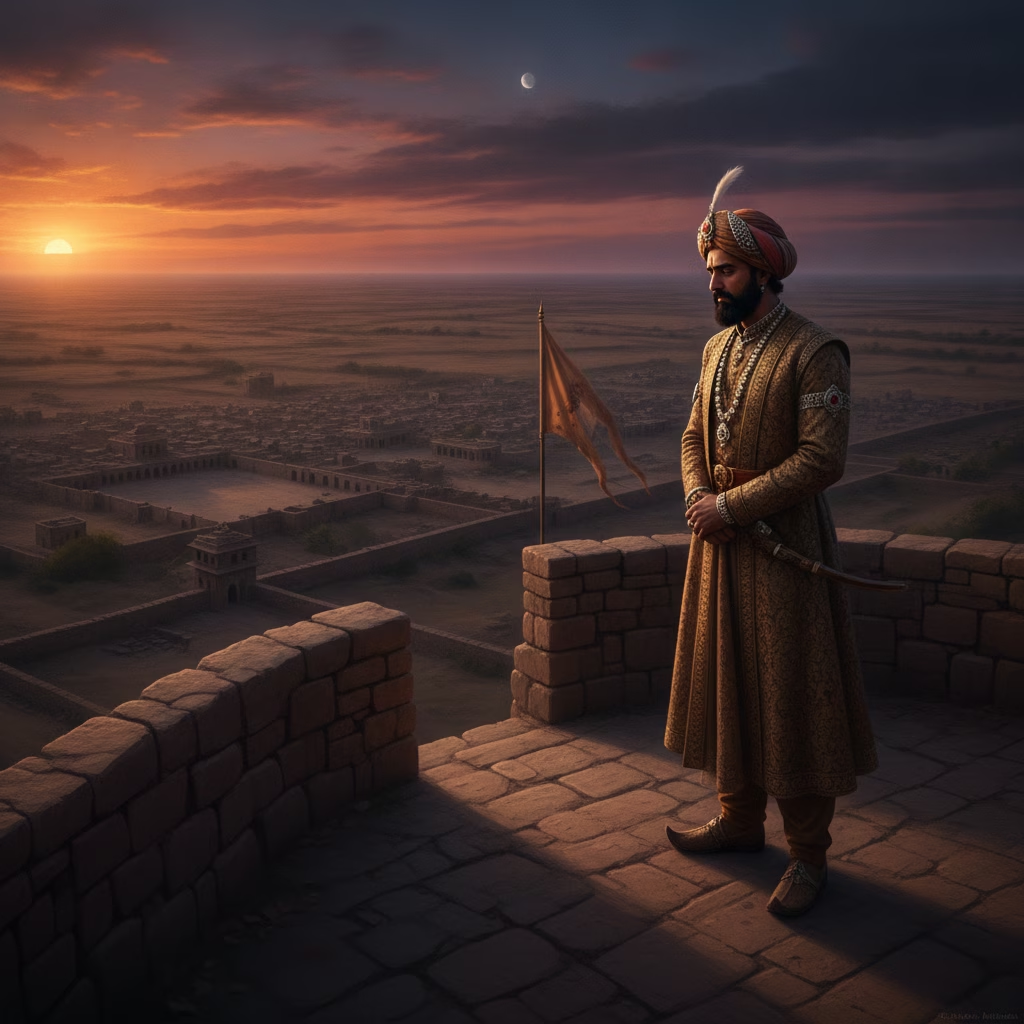
Muhammad bin Tughluq would eventually reverse his decision, allowing people to return to Delhi. But the damage was done. His nickname—The Wisest Fool—was earned not through lack of intelligence but through an excess of it unchecked by practical wisdom or empathy.
He could speak five languages but couldn't hear his people's objections. He could plan logistics for a 1,500-mile migration but couldn't imagine the human suffering involved. He could envision a perfectly positioned capital but couldn't foresee that you cannot simply move a civilization by decree.
The Sultan would rule until 1351, implementing other ambitious reforms—some successful, others disastrous. Modern historians suggest he may have exhibited traits of paranoid personality disorder, which might explain his inability to gauge how his grand schemes would be received.
But on that night when the decree went out, when torchlight illuminated the shocked faces of Delhi's residents, when families began the desperate calculus of what they could carry and what they must leave behind—on that night, one of history's greatest experiments in social engineering was born.
It would become a cautionary tale for the ages: a reminder that vision without wisdom, intelligence without empathy, and power without restraint can transform even the most brilliant plans into catastrophe.
The road from Delhi to Daulatabad still exists, though much changed. The trees the Sultan planted are long dead. The khanqahs have crumbled. But the story endures—of the night an entire city was ordered to walk, and the terrible price paid for one man's dream of a perfect capital.
The story of Muhammad bin Tughluq remains one of medieval India's most fascinating and tragic episodes. His reign from 1325 to 1351 was marked by ambitious experiments that often ended in disaster, earning him his paradoxical epithet: The Wisest Fool of Delhi.