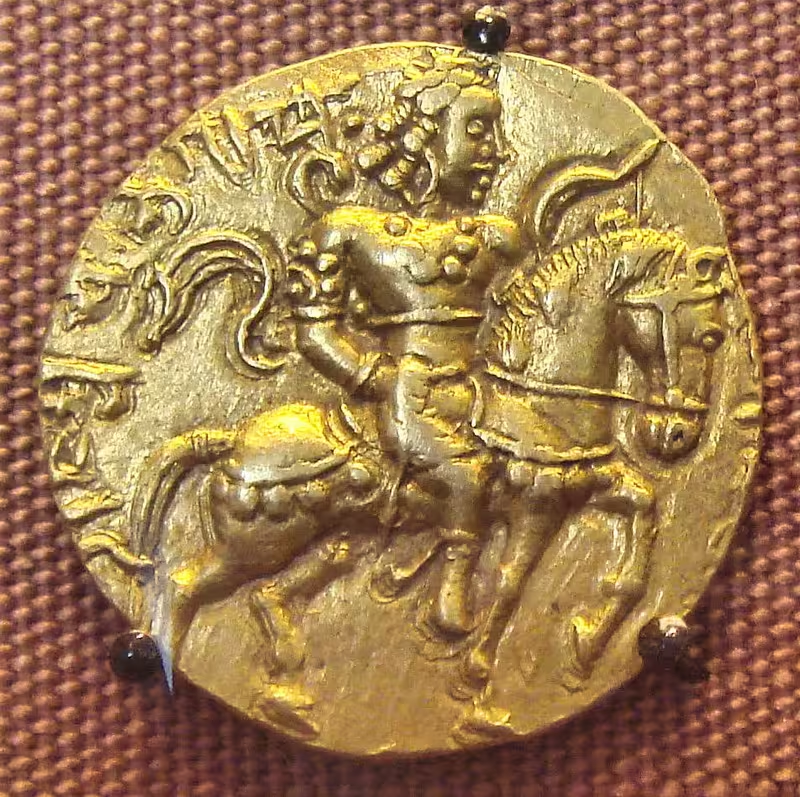

The Debt Across Lifetimes: When a Brahmin Challenged Vikramaditya's Sacred Word
The morning sun had barely cleared the eastern ramparts of Ujjain when the guards first noticed him—a figure approaching the royal palace gates with the deliberate stride of someone who carried purpose despite his poverty. His sacred thread, the mark of his Brahmin birth, hung against a chest visible through the tears in his utterly worn dhoti. Dust from what must have been many days of travel coated his bare feet and lower legs.
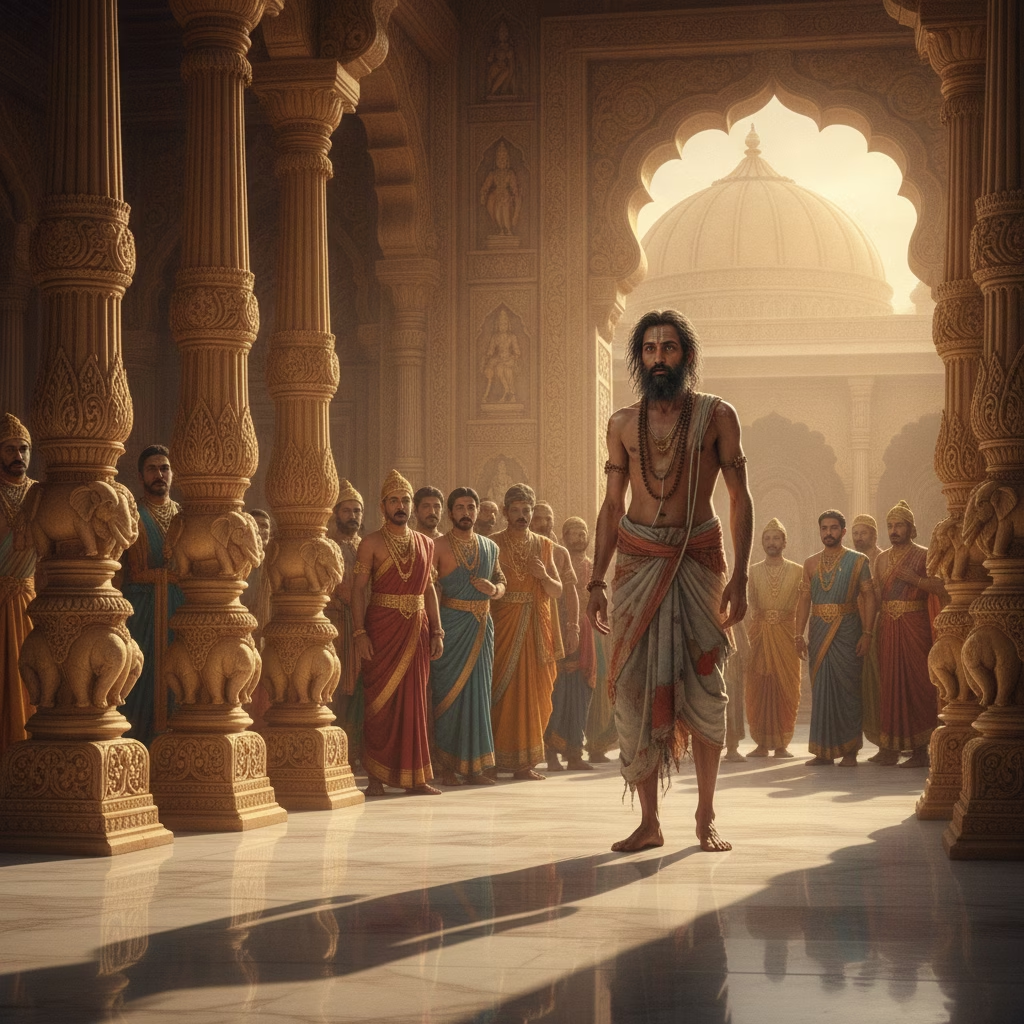
The guards exchanged uncertain glances. In the court of Vikramaditya—the legendary king whose very name meant "sun of valour"—even the poorest citizen could seek audience with their ruler. This was no mere tradition; it was the foundation upon which the king's reputation rested. According to the stories that would later be recorded in texts like the Vetala Panchavimshati and Singhasan Battisi, Vikramaditya's commitment to justice and accessibility was absolute.
Still, there was something unsettling about this particular Brahmin's demeanor. He did not carry the hesitant air of a supplicant seeking charity. His eyes, bright and sharp despite his disheveled appearance, held the certainty of a creditor come to collect.
The great court of Ujjain—capital of Vikramaditya's realm in most traditional accounts—was already in full assembly when the Brahmin was escorted through its towering golden pillars. Merchants presenting trade disputes, scholars seeking patronage, and nobles attending to matters of state all turned as one to observe this ragged figure crossing the polished marble floors.
Vikramaditya himself sat upon the throne, surrounded by the luminaries who would become known to history as his Navaratnas—the Nine Gems. These were the greatest minds of the age, poets and astronomers, physicians and mathematicians, each a master of their craft. Their presence was both ornament and instrument of the king's renowned wisdom.
"Your Majesty," the Brahmin's voice rang clear through the sudden silence, "I have come to claim what is mine by right. You owe me a debt, and I am here to see it paid."
A ripple of whispers spread through the assembly. Vikramaditya, famous in legend for his extraordinary generosity—stories told of him giving away 300,000 gold coins to scholars—kept careful accounts of his obligations. No creditor went unpaid in his kingdom.
"Speak," Vikramaditya said, his voice measured. "If I owe you a debt, it shall be honored. State your claim."
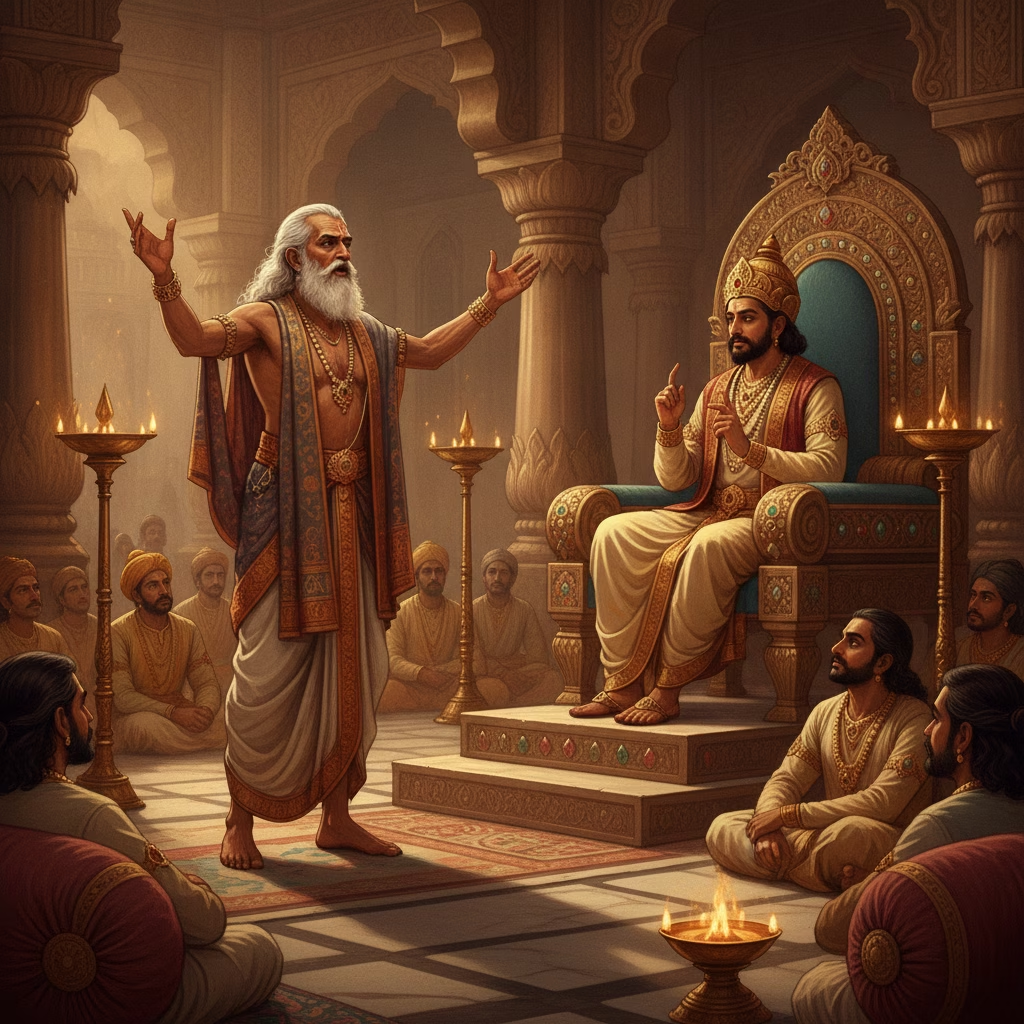
The Brahmin stepped forward, and in the hush of the court, he began to speak.
"In your previous life, great king, you were a merchant in the city of Pratishthana. I was a teacher, struggling to feed my family through the meager fees my students could afford. One day, you came to me seeking knowledge of the Vedas. You had wealth but no learning; I had learning but no wealth. We made an arrangement."
He paused, letting his words settle like stones in still water.
"You promised that when you achieved great fortune, you would return and provide for me so that I might teach without the burden of poverty. You swore this oath before the sacred fire, invoking the gods as witnesses. Then you left on a trading voyage and never returned. I learned later that your ship had foundered in a storm."
The Brahmin's eyes locked with Vikramaditya's. "I died in poverty, great king. But dharma does not die. Karma does not forget. You were reborn into this glorious station, while I returned to another life of struggle. Now, in my old age, I have come to remind you: a promise made before the gods transcends even death itself."
The court erupted. Voices overlapped in a cacophony of skepticism and shock.
"Preposterous!" "How can anyone verify such a claim?" "The man is clearly a charlatan!"
But Vikramaditya raised his hand, and silence fell as absolutely as if he had commanded the wind itself to still.
The king's face was unreadable, but those who knew him well could see the slight tension at the corner of his jaw. Here was a dilemma worthy of the legends that would immortalize his name. Vikramaditya's entire reputation rested upon two pillars: his unwavering commitment to truth and his absolute reliability in keeping his word. These virtues had made him not merely a king but a legend, a standard against which all future rulers would be measured.
If he dismissed the Brahmin's claim, he risked appearing to abandon his principles when they became inconvenient. If he honored an unverifiable debt from an alleged past life, he opened the door to every fraud and confidence artist in the realm.
"This court is adjourned," Vikramaditya announced. "We shall reconvene at sunset."
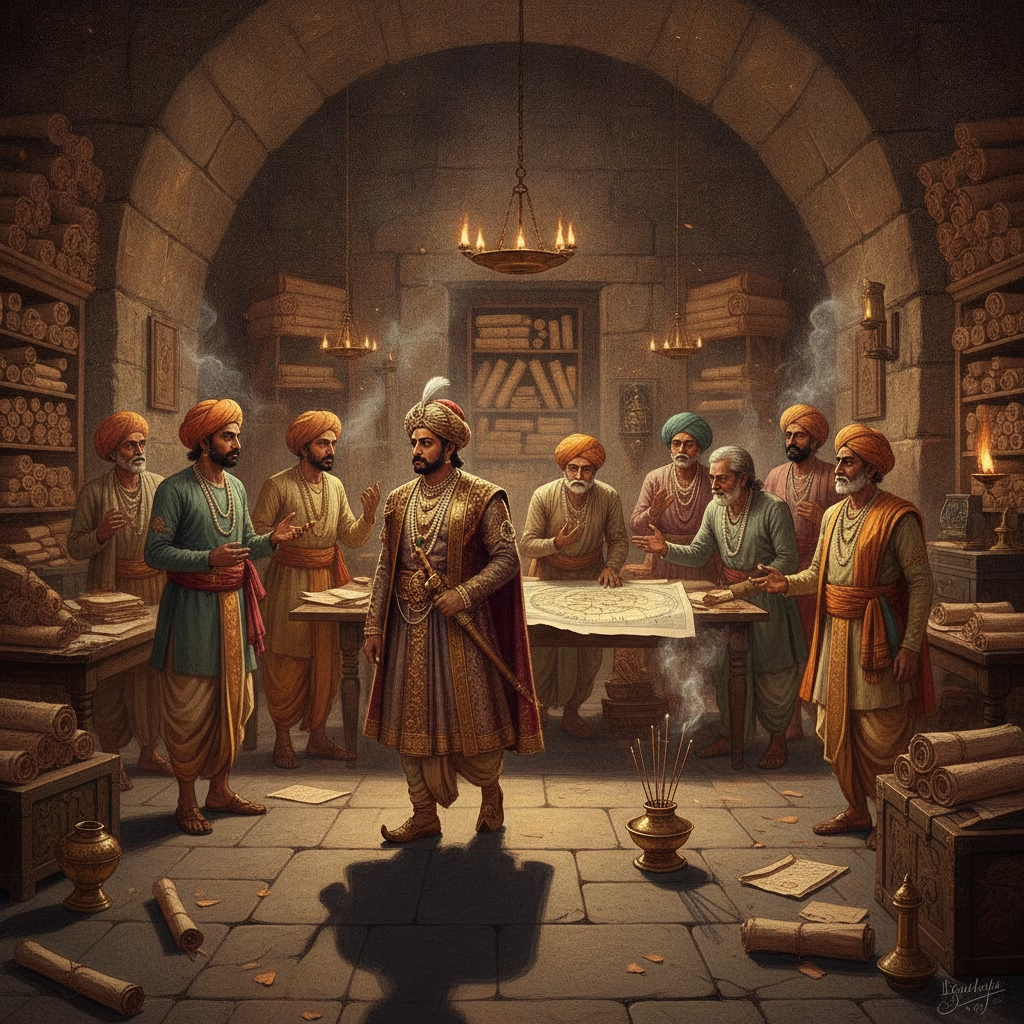
In his private chamber, Vikramaditya gathered his Nine Gems. The afternoon light slanted through high windows, illuminating faces creased with concern and contemplation.
"The man is obviously a fraud," one advisor began. "Your Majesty, you cannot possibly—"
"Can I not?" Vikramaditya interrupted quietly. "Tell me, what is the foundation of my authority? What makes my word law in this kingdom?"
"Your justice, Your Majesty. Your unwavering commitment to truth."
"Precisely. And if I dismiss this man's claim simply because it is inconvenient or unverifiable, what does that say about my commitment? That it extends only as far as my comfort? That truth matters only when it can be proven by witnesses I find acceptable?"
Another of the Nine Gems, a scholar of philosophy, leaned forward. "Yet, Majesty, there is also the truth of reason. The concept of rebirth is accepted, yes, but to honor every claim of past-life debt would be to invite chaos. How many 'creditors' would appear at your gates tomorrow if word spread that you had paid this one?"
Vikramaditya paced the length of the chamber, his mind working through the puzzle as he had worked through so many others in the stories that would be told of him for centuries to come.
"Then we must find a way," he said finally, "to honor both truth and reason. We must test the claim without dismissing the possibility of its validity."
"But how, Your Majesty? There are no witnesses to this alleged past life. No records. Nothing but the word of one man against the silence of history."
The king stopped pacing, and a slight smile touched his lips—the expression of a man who has found the thread that will unravel the knot.
"There is one witness," he said softly. "If this man truly lived the life he claims, and if I truly made the promise he describes, then somewhere in the depths of memory—in that place where the soul carries its experiences from one life to the next—there must be some trace. We shall see if he can find it, and if I can recognize it."
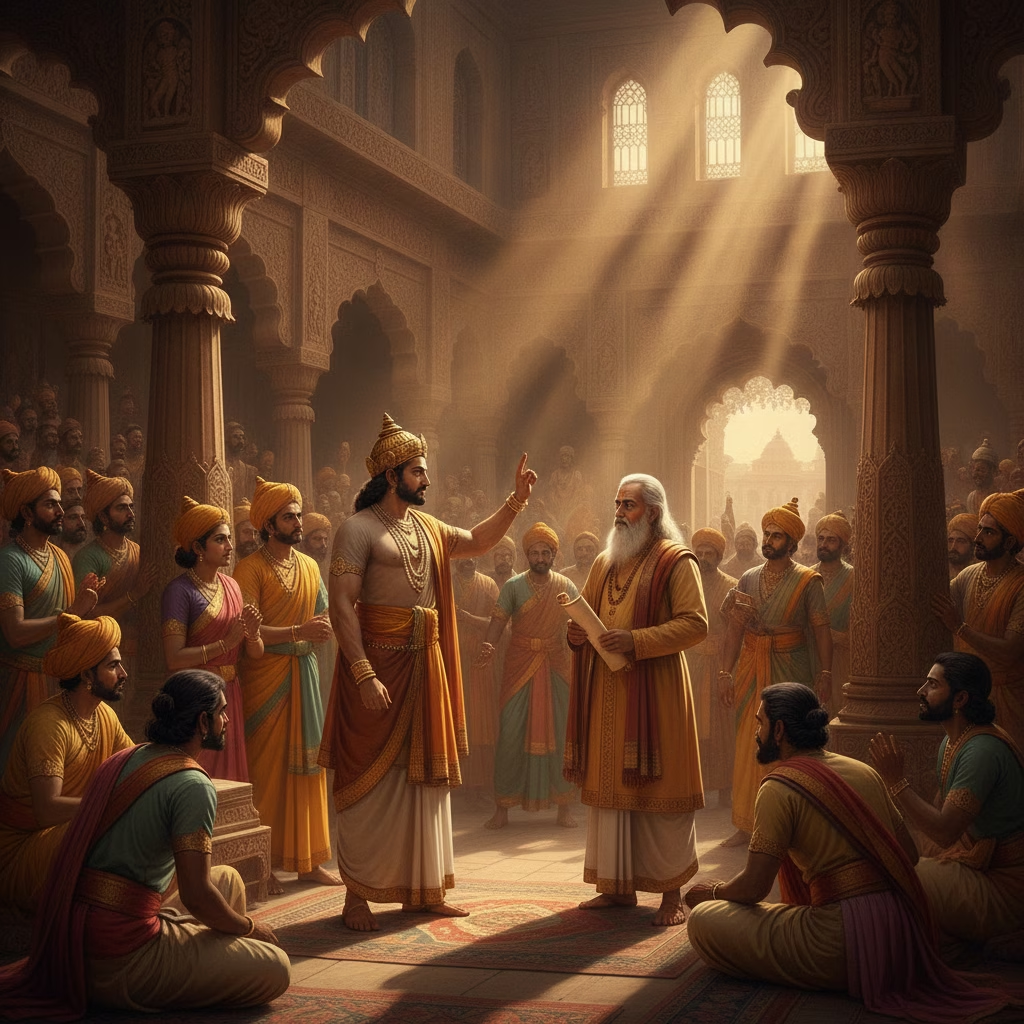
When the court reconvened at sunset, the golden light streaming through the western windows seemed to set the very air ablaze. The news had spread throughout Ujjain, and the chamber was packed with citizens eager to witness how their legendary king would resolve this unprecedented challenge.
Vikramaditya stood before his throne rather than sitting upon it, positioning himself as an equal participant in the test rather than a judge above it.
"Brahmin," he said, his voice carrying to every corner of the vast hall, "I will not dismiss your claim, for to do so would be to place my own convenience above the principle of truth. But neither can I honor it without some verification, for to do so would be to abandon reason and invite deception."
The Brahmin inclined his head, waiting.
"Therefore, I propose a test. If you truly were my teacher in a past life, and if I truly made this promise, then there must be details of that life—small, specific things—that only the two of us would know. I will enter into meditation, as will you. We shall each seek to touch those memories that lie beyond the veil of death. Then, before this assembly, we shall speak of what we find. If our accounts align in their details, I will know your claim is true."
"And if they do not align?" someone called from the crowd.
"Then I will still give him a generous gift," Vikramaditya said, "for he has done me the service of testing my principles and finding them sound. But I will not call it the payment of a debt."
The Brahmin smiled—a genuine expression that transformed his weathered face. "Your Majesty is as wise as the legends suggest. I accept your test."
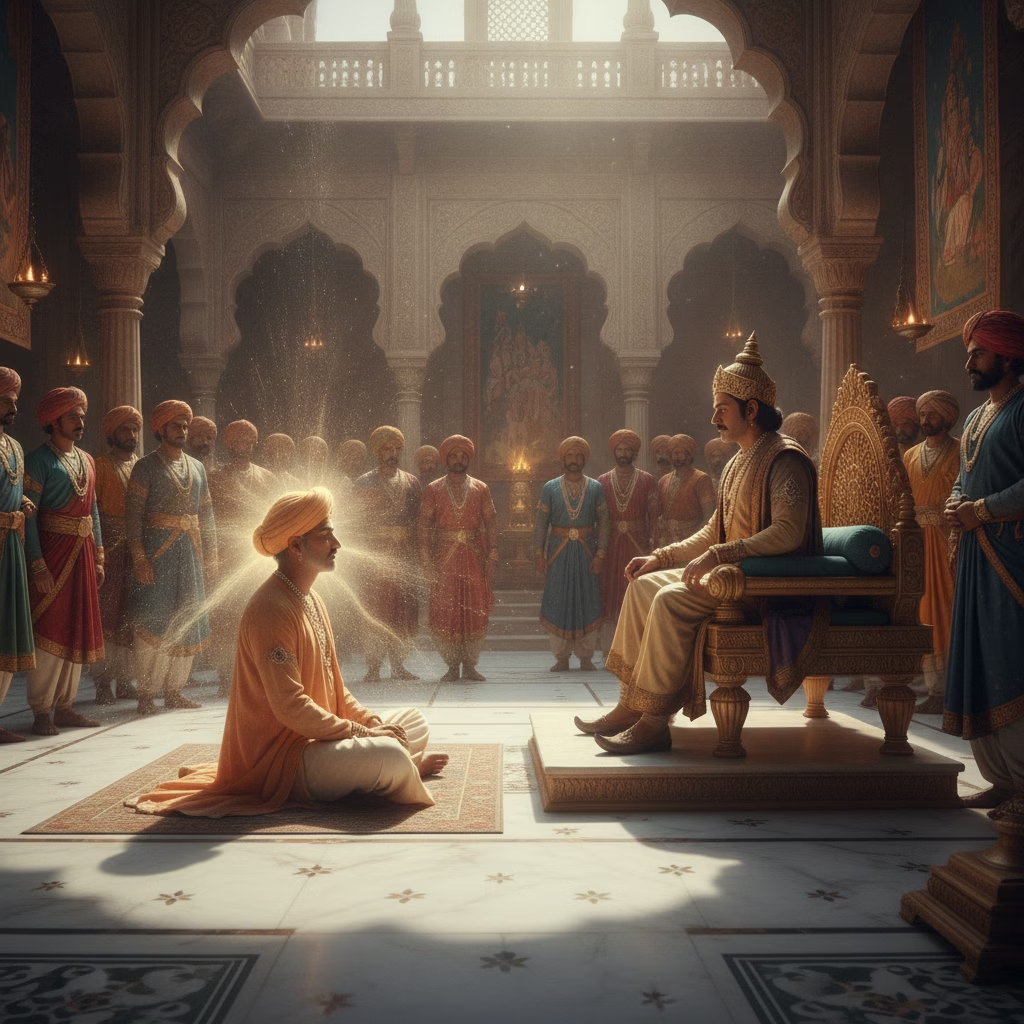
Two cushions were placed in the center of the court, and king and Brahmin sat facing each other. The assembly fell into a silence so complete that the sound of breathing became audible, a collective rhythm like gentle waves.
Vikramaditya closed his eyes and turned his attention inward, following the practices he had learned from the yogis and sages who had taught him to quiet the mind's constant chatter. He descended through layers of thought and memory, past the events of his current life, seeking something deeper.
At first, there was only darkness and the sound of his own heartbeat. Then, gradually, like stars emerging as twilight deepens into night, images began to form. They were fragmentary, uncertain—a feeling more than a vision. The smell of salt air. The creak of wooden planks. Hands, younger than his current hands, counting coins by lamplight.
And then, more clearly: a small room, sparse but clean. An older man with kind eyes, seated before a sacred fire. The weight of a promise settling onto his shoulders like a physical thing. The sound of Vedic verses being chanted. The taste of the ritual offerings. And a detail, small and specific: a brass lamp in the corner of the room, shaped like a peacock, one of its tail feathers bent from some long-ago accident.
Vikramaditya opened his eyes. Across from him, the Brahmin was also returning from his meditative journey, his face serene.
"Speak first," Vikramaditya said. "Tell us what you remember."
The Brahmin's voice was soft but clear. "I remember a young man, ambitious and eager, who came to me seeking knowledge. I remember his frustration with his own lack of learning, and his determination to rise above his station. I remember the evening he came to tell me he had secured a position on a trading vessel, and that he would return wealthy enough to fulfill his promise. And I remember..."
He paused, and something that might have been tears glinted in his eyes.
"I remember the brass lamp my wife had given me, shaped like a peacock. One of its tail feathers was bent—our daughter had knocked it over as a child. It was in that room, by the light of that lamp, that you made your promise."
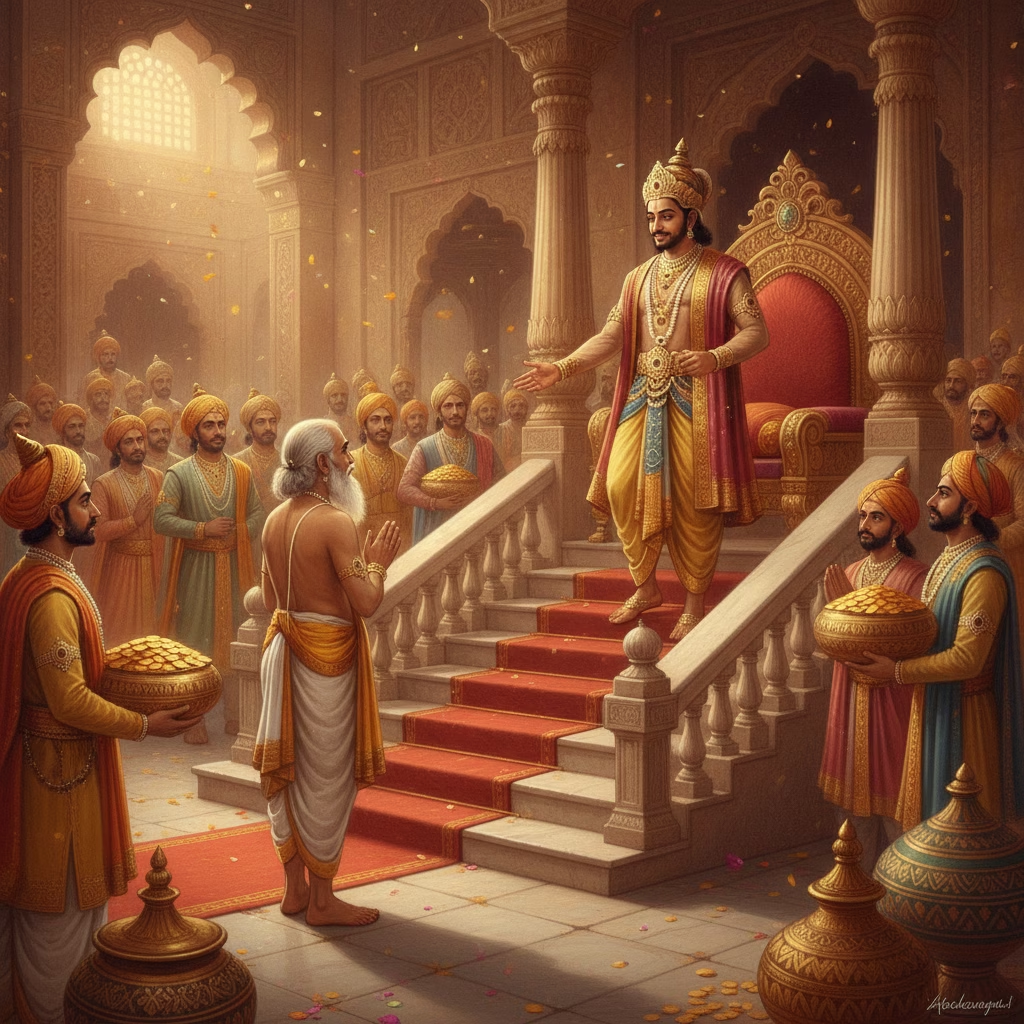
The silence that followed was absolute, broken finally by Vikramaditya's laugh—not of mockery but of wonder and recognition.
"The peacock lamp," he said, rising to his feet. "I had forgotten it entirely in this life, yet in meditation, it was the clearest detail I saw. The bent tail feather, exactly as you describe."
He descended from the throne's dais and approached the Brahmin, extending both hands to help the old man to his feet.
"Teacher," Vikramaditya said, and the word carried the weight of two lifetimes, "I have kept you waiting far too long. Forgive me."
The court erupted in amazed murmurs, but Vikramaditya's voice cut through them. "Let it be known throughout the kingdom: today we have witnessed proof that dharma transcends the boundaries of a single life, and that a promise made before the gods is eternal. This man shall receive not only what was promised—a life free from material worry so that he may pursue learning and teaching—but also my apology for the delay."
He turned to his treasurer. "Establish for him a household befitting a royal teacher, with an annual stipend of 100,000 gold coins. And let a school be built where he may teach any who wish to learn, without fee or barrier."
The Brahmin, tears now flowing freely, bowed deeply. "Your Majesty has not only kept your promise but exceeded it. Truly, you are worthy of your name—the sun of valour, whose light illuminates even the darkness between lives."
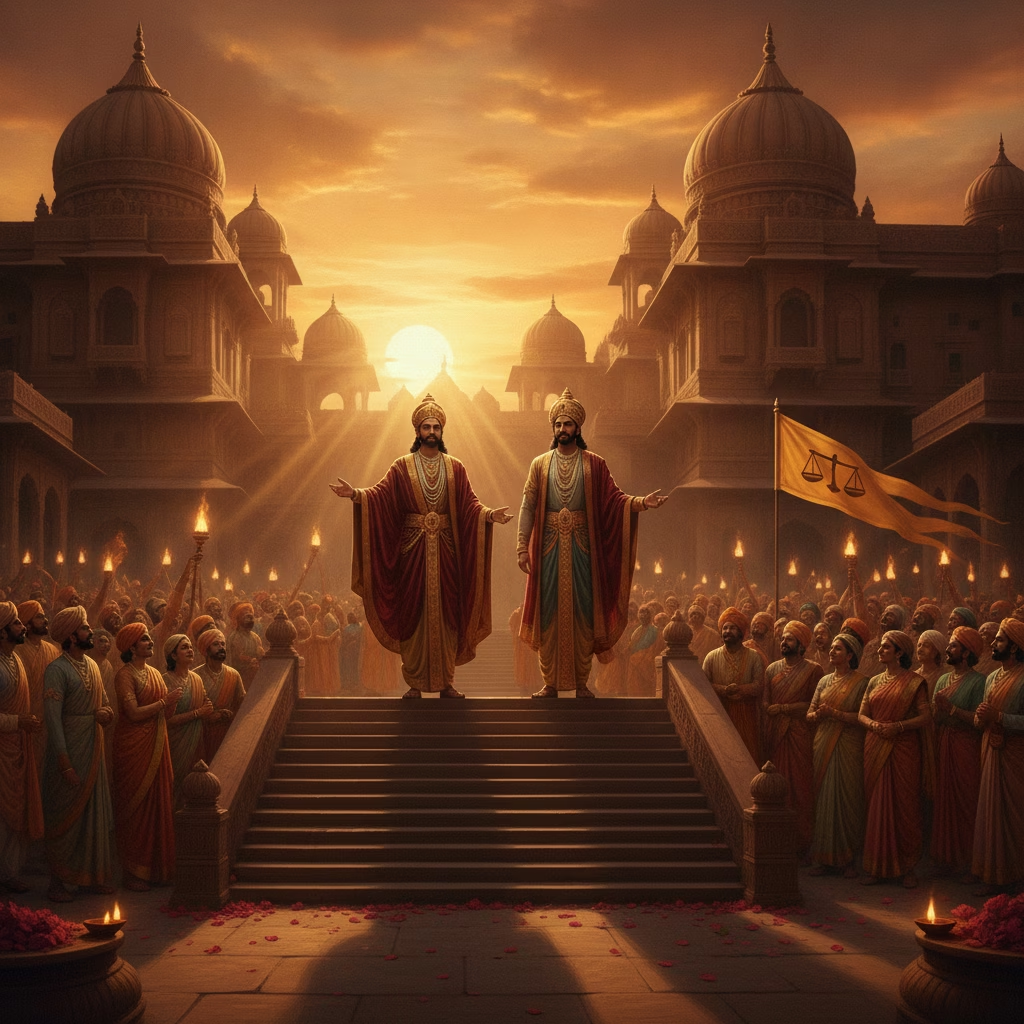
In the days that followed, the story spread throughout Vikramaditya's realm and beyond. It would be told and retold, eventually finding its way into the collections of legends that would preserve the king's name long after any historical certainty about his existence had faded into myth.
Some, in later generations, would debate whether the tale was literally true or merely allegorical—a story crafted to illustrate the principle that a ruler's word must be absolute, that justice must transcend convenience, and that truth must be honored even when it cannot be easily proven.
But for those who witnessed it in that golden court in Ujjain, there was no doubt. They had seen their king face a test that would have destroyed a lesser ruler's reputation, and emerge not merely unscathed but elevated. They had seen wisdom and courage combined with an openness to possibilities beyond the immediately visible.
The Brahmin, for his part, established a school that would flourish for generations, teaching not only the Vedas but also the story of how he had challenged a king and found not defensiveness or denial but a genuine search for truth.
And Vikramaditya? The legend tells us he never forgot the lesson of that day. In all the stories that would be told of him—in the Vetala Panchavimshati, where he would carry a vampire on his shoulders through twenty-five tales, and in the Singhasan Battisi, where thirty-two statues would recount his virtues—this theme would recur: that true greatness lies not in never being challenged, but in how one responds when the challenge comes.
For a king may rule by force or fear, but a legend is built on something more enduring: the willingness to honor truth even when it arrives at your gates in rags, demanding recognition of debts that span the very cycle of death and rebirth itself.