

When Avali's Hunger Spoke Louder Than Devotion: Tukaram's Domestic Crisis
The dust motes danced in the afternoon light filtering through the temple courtyard as Tukaram's voice rose in devotion. His eyes were closed, his body swaying gently as the abhanga poured from his lips—another offering to Vithoba, the dark-skinned god who stood with hands on hips in the sanctum of Pandharpur. The words came to him like rain after drought, each syllable a pearl of divine love.
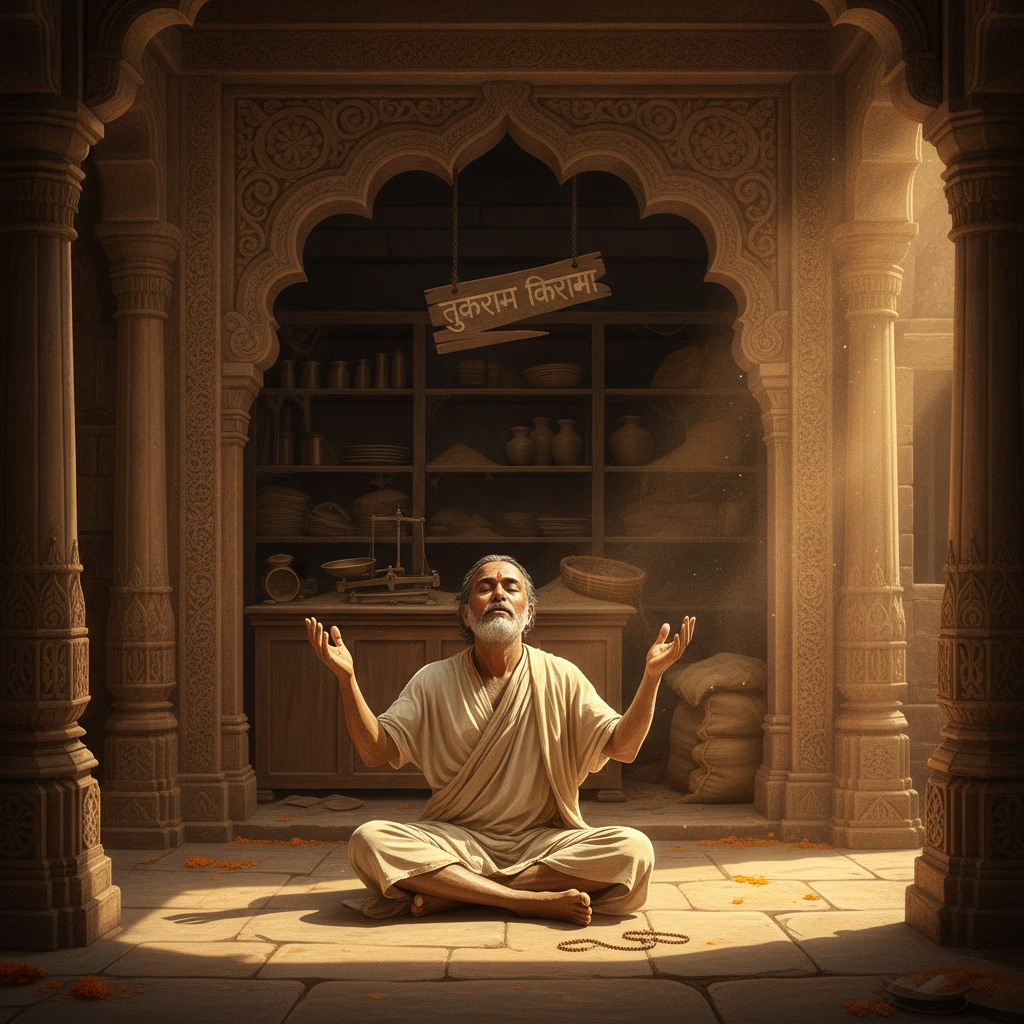
In the village of Dehu in 17th-century Maharashtra, Tukaram Bolhoba Ambile had become a familiar sight. The former grain merchant now spent his days composing devotional poetry in the vernacular Marathi tongue, leading community kirtans where villagers gathered to sing and dance in spiritual rapture. His abhangas—those distinctive devotional poems—flowed from him with such abundance that he could barely keep pace with writing them down on palm leaves.
But behind the temple, through the stone archway, his grain shop stood silent. The brass scales that once weighed out millet and rice gathered dust. The wooden bins that should have overflowed with the season's harvest gaped empty. The merchant's life Tukaram had once known—the weighing, the bargaining, the careful accounting—had been abandoned for something he considered infinitely more precious: the love of God.
According to Wikipedia, Tukaram "spent most of his later years in devotional worship, community kirtan (group prayers with singing) and composing abhanga poetry." What the historical records often gloss over is the human cost of this spiritual transformation. While Tukaram sang, his children grew thin. While he composed verses about divine love, his wife Avali watched their earthly life crumble.
The tension had been building for months. Avali had tried patience. She had tried gentle reminders. She had tried silent suffering. But hunger has a voice that eventually drowns out even the most determined silence.
The Breaking Point
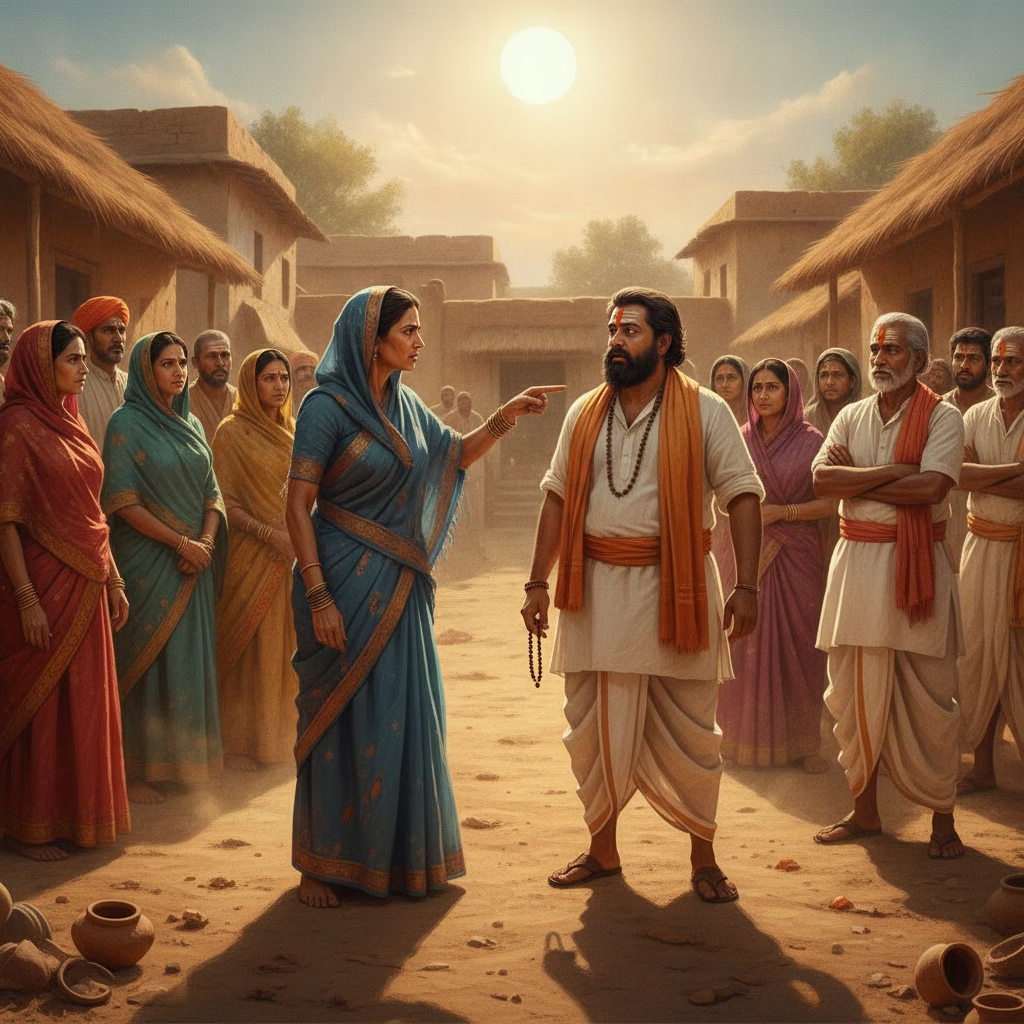
It happened on a market day, when the village square of Dehu bustled with activity. Farmers displayed their produce, merchants hawked their wares, and in the center of it all, Tukaram had gathered a small crowd for an impromptu kirtan. His voice carried across the square, singing of Vithoba's mercy, of divine grace that flowed like the Indrayani river through their village.
Then came another voice—sharp, breaking, desperate.
"Mercy? Grace? What mercy do your children know, Tukaram?"
The singing stopped. Heads turned. Avali stood at the edge of the crowd, her sari faded and torn, her face gaunt from sharing too many meager meals with her children. The words that had been choking her for months now burst forth like a dam breaking.
"You sing of God's love while your own children cry from hunger! You compose pretty verses while our shop stands empty! You call yourself a holy man, but what kind of father abandons his family to starve?"
The village square fell silent. In 17th-century Maharashtra, for a wife to publicly challenge her husband—especially one increasingly regarded as a holy man—was scandalous. Some villagers looked away, embarrassed. Others watched with barely concealed fascination. The orthodox among them bristled at such impropriety.
But Avali was beyond caring about propriety. Her voice cracked as she continued: "I have begged you to return to the shop. I have pleaded with you to think of your daughters. But you are lost in your songs, drunk on your devotion, while we fade away like shadows. Is this what your Vithoba teaches? To neglect those who depend on you?"
The historical record confirms that Tukaram "faced opposition from various sections of society" for his teachings and practices. But perhaps no opposition cut deeper than this—the accusation not from religious rivals or jealous priests, but from the woman who shared his home, who bore his children, who watched him choose heaven over earth.
The Weight of Silence
Tukaram stood frozen. The abhanga he had been singing died on his lips. Tears began to stream down his face, but he said nothing. What could he say? That God's call was more important than a father's duty? That spiritual hunger justified letting physical hunger go unfed? That his poetry would outlive them all, so the present suffering had meaning?
He remained silent, and in that silence, something broke.
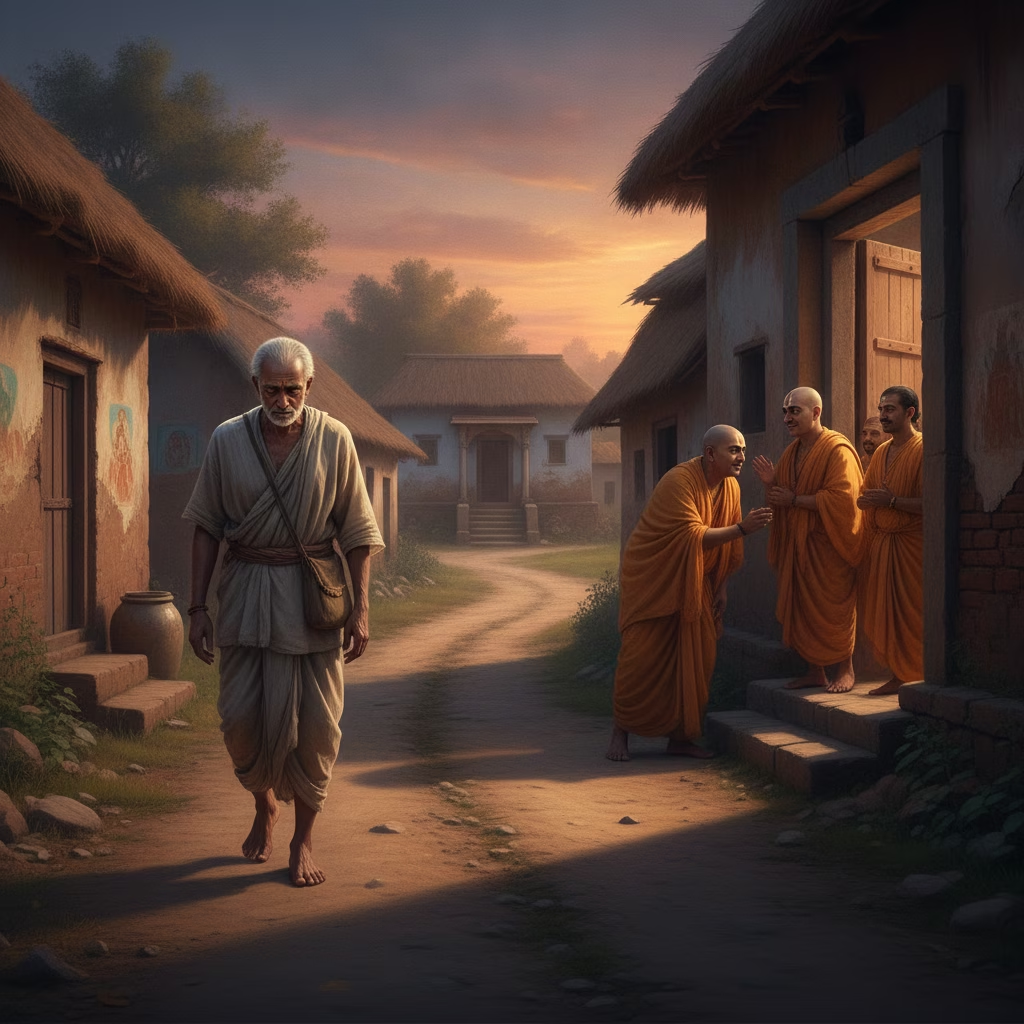
As Tukaram walked home through the narrow lanes of Dehu, head bowed in shame, another figure watched with satisfaction. Mambaji Gosavi, who ran the local matha (monastic establishment), had long been jealous of Tukaram's growing popularity among the villagers. According to Wikipedia, "Mambaji became increasingly jealous of Tukaram's growing popularity and respect among the villagers. At one point, he attacked Tukaram with a thorn stick and used abusive language against him."
Now, Mambaji saw opportunity in Tukaram's domestic crisis. He gathered his followers at the matha doorway and spoke loudly enough for passersby to hear: "You see? This is what happens when a grain merchant pretends to be a saint. He cannot even feed his own family, yet he presumes to teach us about God. His wife speaks the truth—he is a fraud, abandoning his dharma as a householder for empty songs."
The whispers spread through Dehu like smoke. The saint-poet who had been gaining followers now became the subject of gossip and derision. Some defended him, citing the spiritual power of his abhangas. Others nodded in agreement with Avali's accusations. The village was divided.
But the deepest division was in Tukaram's own heart.
Verses Born from Wounds
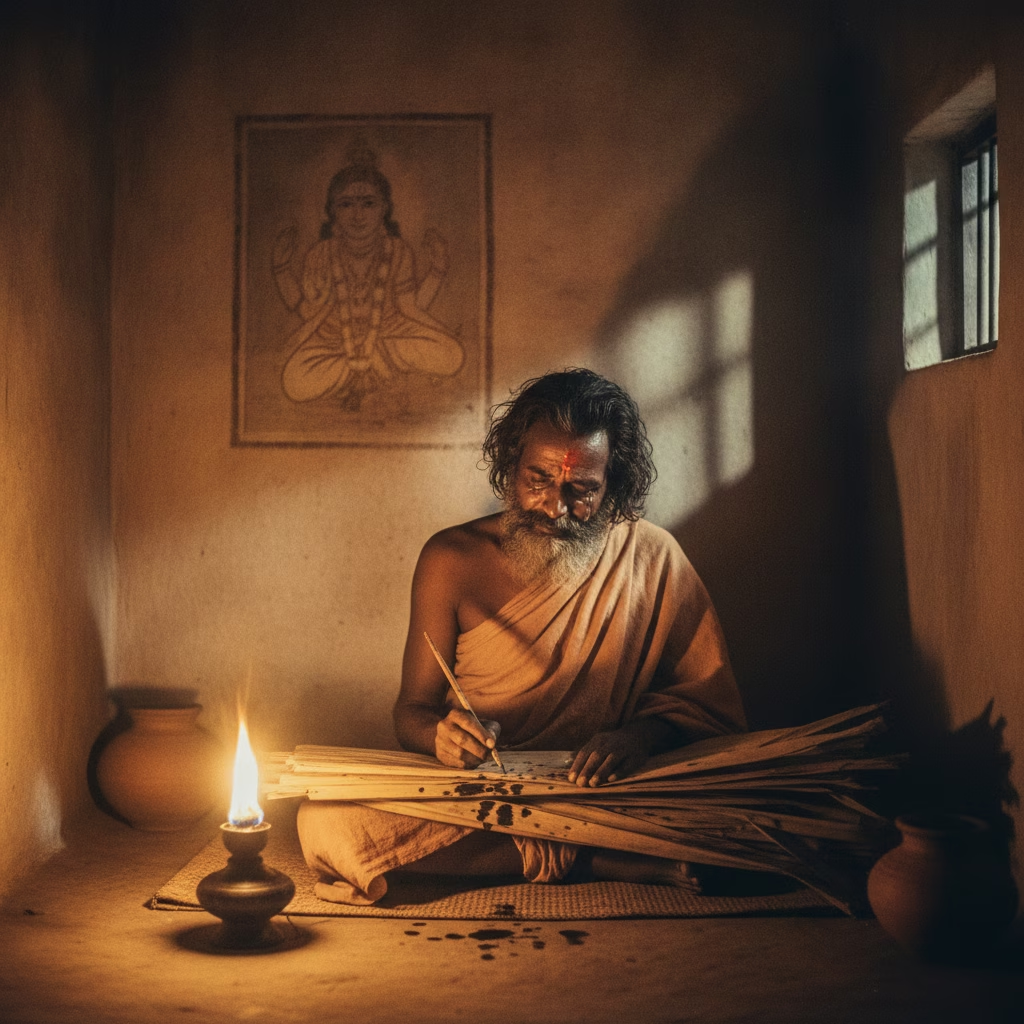
That night, alone by the light of a flickering oil lamp, Tukaram did what he had always done with pain—he transformed it into poetry. His hand moved across the palm leaves, writing abhangas that would become some of his most poignant works. These were not the simple devotional songs of earlier days. These were verses that bled.
The historical abhangas attributed to Tukaram reveal a man wrestling with profound internal conflict. Wikipedia notes that scholars found Tukaram "oscillates between a Dvaitist [Vedanta] and an Advaitist view of God and the world, leaning now to a pantheistic scheme of things, now to a distinctly Providential, and he does not harmonize them." Perhaps this philosophical oscillation reflected a deeper personal struggle—between the transcendent and the immediate, between divine calling and earthly duty, between being Tuka the devotee and Tukaram Bolhoba Ambile the father and husband.
His abhangas from this period speak of spiritual doubt, of feeling abandoned by the very God he served so devotedly. They speak of shame and failure. They speak of a man torn between two worlds, fully belonging to neither.
In the small room, with an image of Vithoba watching from the wall, Tukaram wrote through his tears. The verses that emerged would resonate through centuries precisely because they came from such authentic anguish. The saint who could not feed his family wrote poetry that would feed the souls of millions.
But that night, such future vindication was cold comfort.
The Distance Between Them
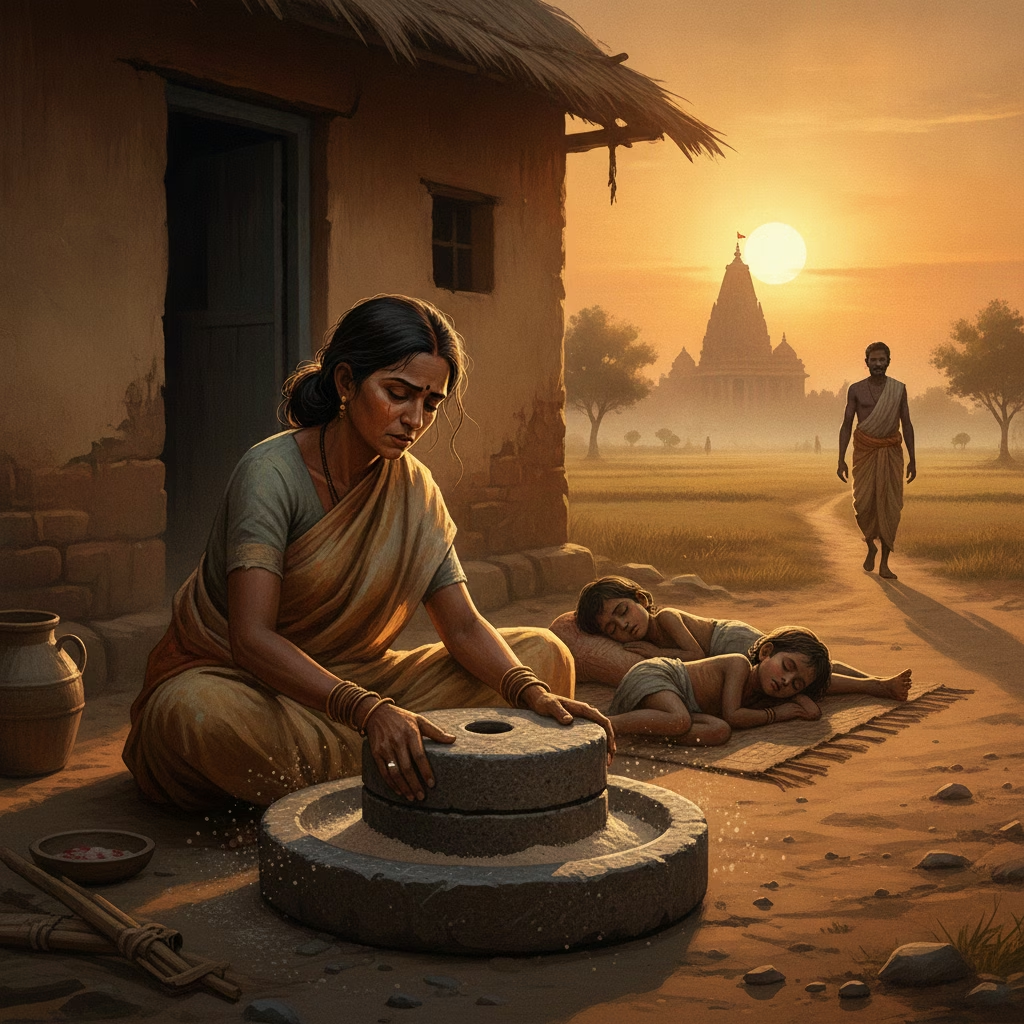
The days that followed were marked by a terrible silence between husband and wife. Avali rose before dawn to grind grain—when they had grain to grind—her movements mechanical, her face set in lines of exhausted resignation. Behind her, their children slept fitfully on thin mats, their hunger making even rest difficult.
Through the window, she could see Tukaram's silhouette in the pre-dawn darkness, already walking toward the Vithoba temple for morning prayers. The sight filled her with a complex knot of emotions she could not untangle—love for the man she had married, resentment at his choices, guilt for her public outburst, and beneath it all, a bone-deep weariness.
She had not meant to shame him publicly. Or perhaps she had. Perhaps after months of private pleading falling on ears deafened by divine ecstasy, public shame had been her only remaining weapon. But weapons wound both the target and the wielder, and Avali felt the cut of her own words.
The village had not forgotten. Women at the well gave her sympathetic looks mixed with scandal. Men debated in tea stalls whether a wife had the right to challenge her husband's spiritual calling. The orthodox condemned her. The practical-minded quietly agreed with her. Dehu had become a village divided.
And through it all, Tukaram sang.
The Kirtan Continues
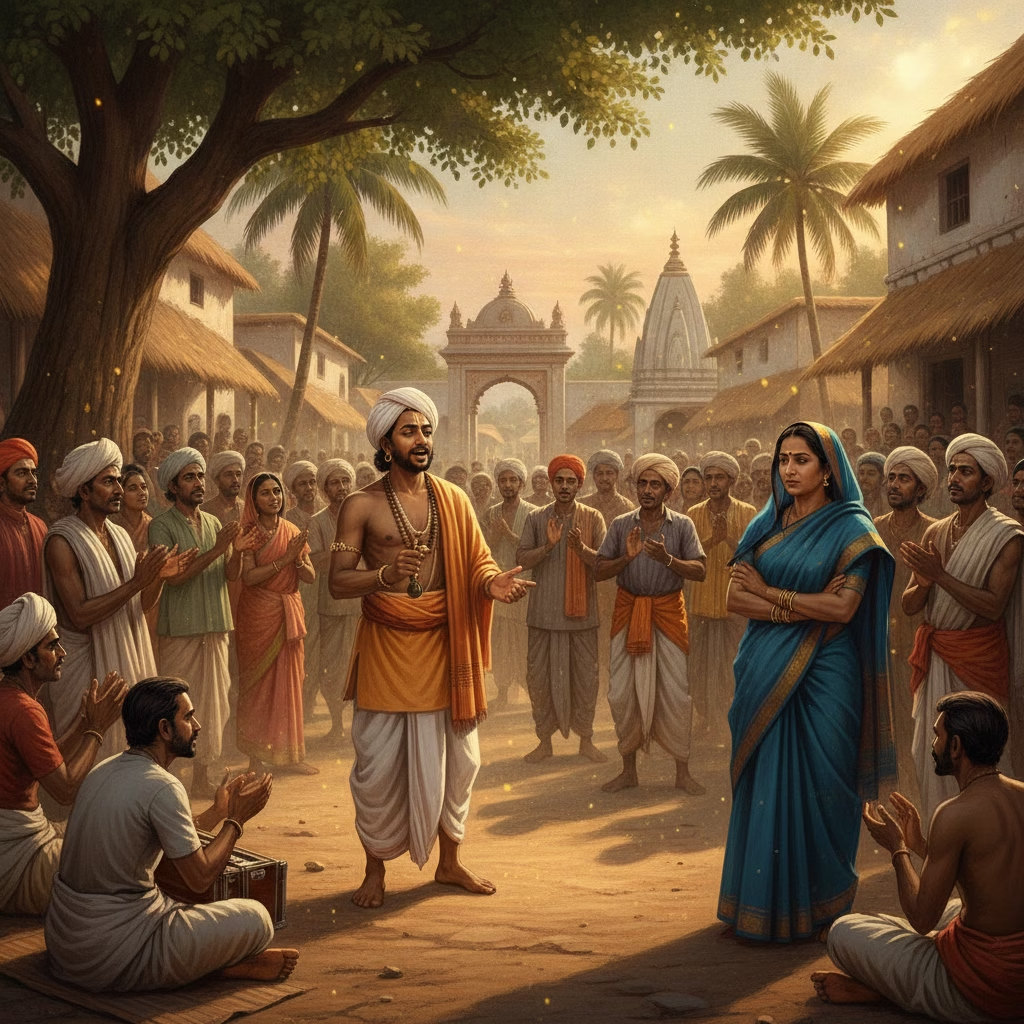
Weeks after the confrontation, Tukaram led another community kirtan in the village square. The crowd that gathered was smaller than before—some stayed away out of disapproval, others out of discomfort—but those who came sang with fervor. The kirtan, as Tukaram taught, was not just about learning bhakti (devotion) but was bhakti itself. The collective singing and dancing created a spiritual energy that lifted participants beyond their ordinary concerns.
At the edge of the crowd stood Avali, watching. She had not planned to come, but something had drawn her—perhaps the sound of her husband's voice carrying through the lanes, perhaps simple curiosity about what could inspire such devotion in him and others.
As she watched Tukaram lead the kirtan, his face radiant with spiritual joy, she saw what others saw—a man touched by the divine, a poet whose words opened doorways to transcendence. For a moment, she understood the pull he felt, the call he could not ignore.
But then she thought of their hungry children waiting at home, and the moment passed.
Tukaram's eyes met hers across the crowd. In that glance passed years of shared life, of love and disappointment, of promises kept and broken, of two people trying to walk paths that diverged. Neither looked away. Neither moved toward the other. They simply acknowledged across the distance what could not be bridged—that they both were right, and both were failing, and there was no easy resolution.
The kirtan continued. Avali turned and walked home.
The Legacy of Wounds
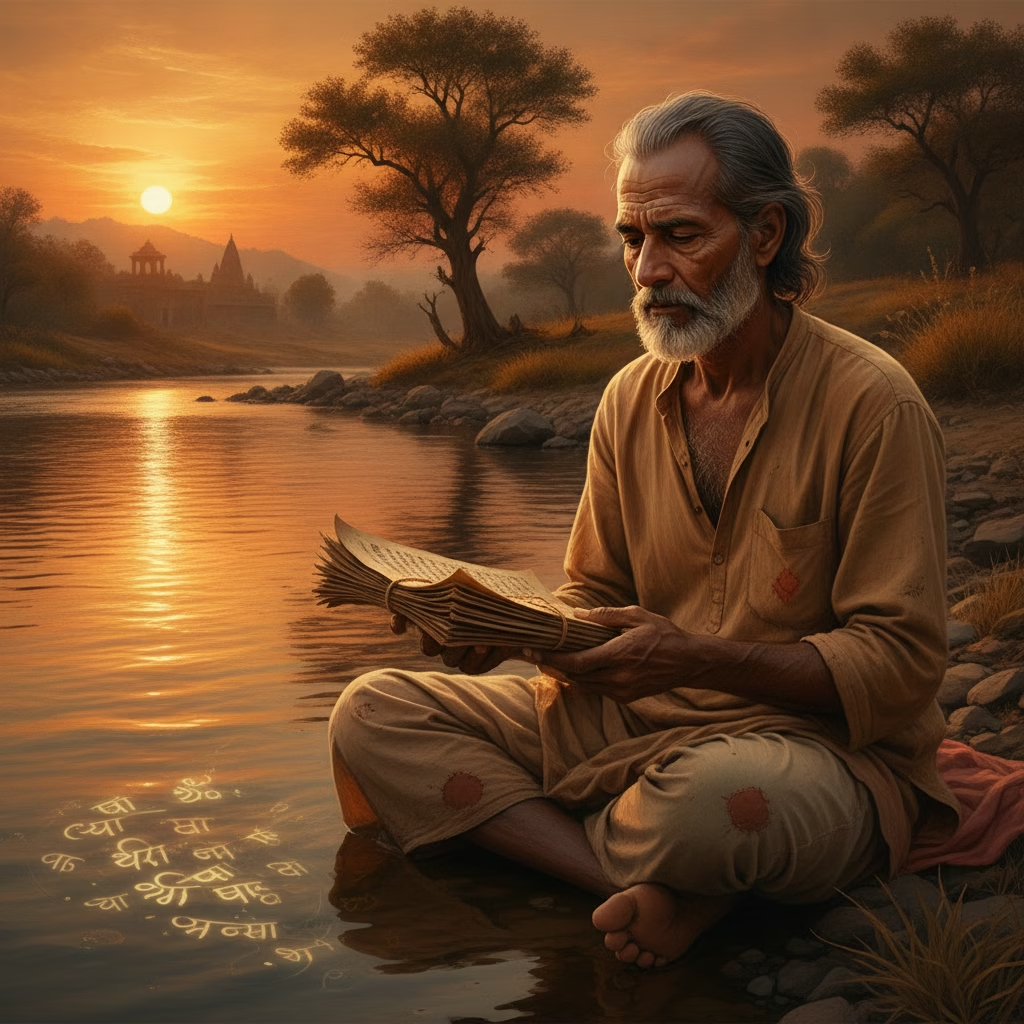
Years later, when Tukaram had become one of Maharashtra's most celebrated saints, when his abhangas were sung throughout the region, when even his former detractor Mambaji Gosavi had become his devotee ("though only after facing considerable personal humiliation," as Wikipedia notes), the saint-poet would sit by the Indrayani river and read through his old verses.
He died in 1650, leaving behind a body of work that would become "the cornerstone of the Varkari tradition and a pinnacle of Bhakti literature." His abhangas dealt with "social reform," challenging caste hierarchy and religious orthodoxy. He taught that "pride of caste never made any man holy" and accepted disciples "without discriminating on the basis of gender."
But among all his verses about social justice and spiritual devotion, some of the most powerful remained those born from his domestic crisis—the abhangas that wrestled with the impossible choice between heaven and earth, between serving God and serving family, between being a saint and being a man.
What became of Avali is less clear in the historical record, as is so often the case with women whose lives intersected with great men. Did she eventually accept his path? Did the resentment harden into permanent estrangement? Did she take pride in his growing fame, or did it only deepen her bitterness?
The sources are silent. But her voice echoes through Tukaram's poetry—the voice of hunger, of practical necessity, of earthly love demanding its due. In the verses of Maharashtra's beloved saint, we hear not just divine rapture but domestic anguish, not just spiritual triumph but human failure.
Tukaram's poetry endures precisely because it contains both—the ecstasy and the shame, the divine calling and the abandoned shop, the songs to God and the cries of hungry children. He did not resolve the contradiction. He lived it, suffered it, and transformed it into art.
And somewhere in those verses, if we listen carefully, we can still hear Avali's voice in the village square, speaking the truth that even saints need to hear: that heaven's demands do not erase earth's needs, that devotion to God does not absolve us from devotion to those who depend on us, that the greatest spiritual poetry sometimes emerges not from transcendence but from the wounds we cannot heal.
The abhanga continues, carrying both voices—the saint's ecstasy and the wife's anguish—forward through the centuries, a testament to the price of devotion and the cost of grace.