
When the Goddess Made a Poet: Kalidasa's Divine Transformation
In the rich tapestry of Indian oral tradition, few stories capture the imagination quite like the transformation of Kalidasa—the man whose very name means "servant of Kali." This is not merely a tale of personal redemption, but a legend that explains how divine grace can elevate the lowliest fool to become the greatest poet in Sanskrit literature. The story unfolds in the legendary court of Vikramaditya, the mythical king whose wisdom and patronage of scholars made Ujjain the cultural heart of ancient India.
The Fool's Reputation
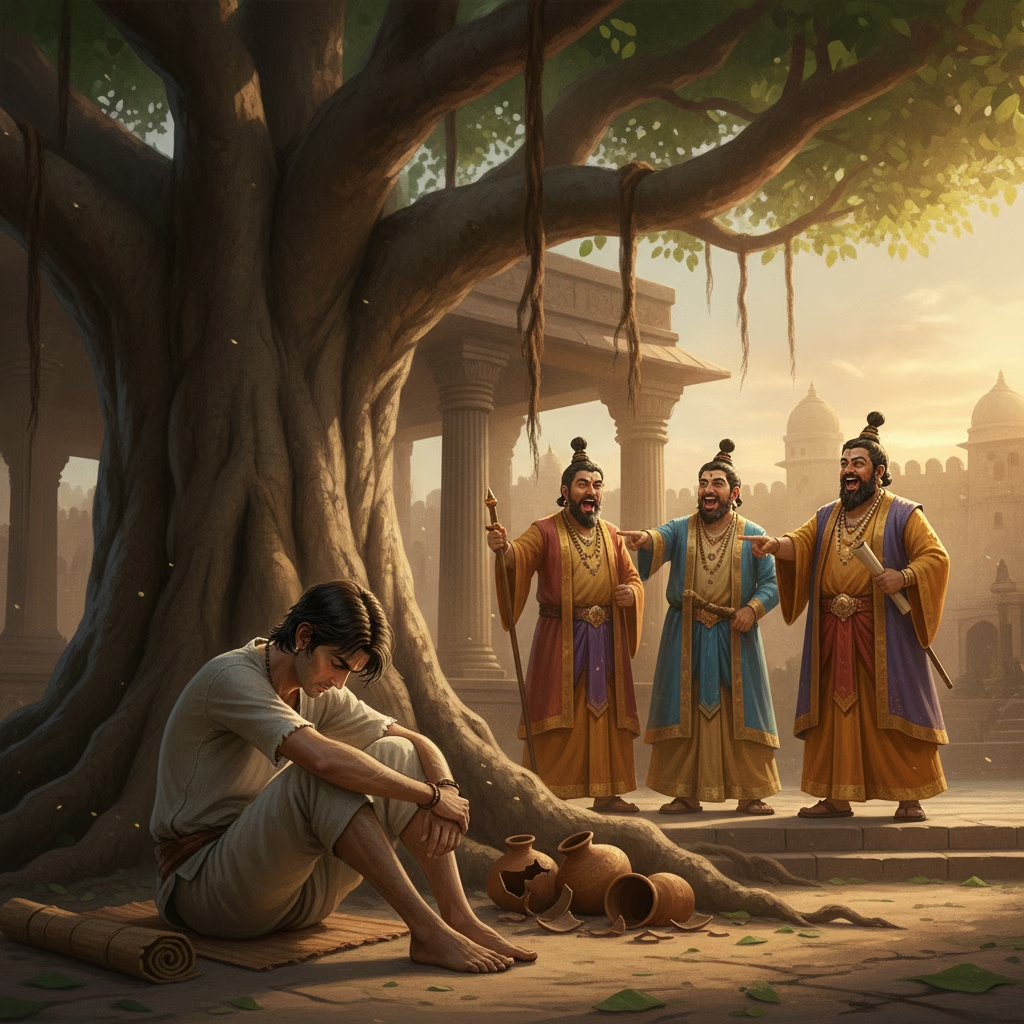
Before he became the voice of classical Sanskrit poetry, before his name became synonymous with literary brilliance, Kalidasa was known throughout the land as a simpleton—a man so lacking in wit and learning that even children would mock him as he passed through village squares.
The oral traditions paint a portrait of profound humiliation. Scholars would use his name as shorthand for ignorance. "As foolish as Kalidasa," they would say, shaking their heads with a mixture of pity and contempt. He could neither read nor write, could not engage in the philosophical debates that occupied the learned classes, and seemed destined to live out his days as an object of ridicule.
Yet even in his ignorance, there was something about him—a gentleness of spirit, perhaps, or an unconscious devotion—that would eventually draw the attention of forces beyond the mortal realm. The people who laughed at him could not have imagined that this same man would one day compose Meghaduta, Shakuntala, and Raghuvamsha—works that would define Sanskrit literature for millennia to come.
But transformation requires a catalyst, and for Kalidasa, that catalyst would come in the form of the most devastating humiliation of his life.
Journey to Ujjain
Through circumstances that vary depending on which version of the tale one hears—some say trickery by scheming brahmins, others claim it was fate itself—Kalidasa found himself on the road to Ujjain, the magnificent capital of King Vikramaditya.
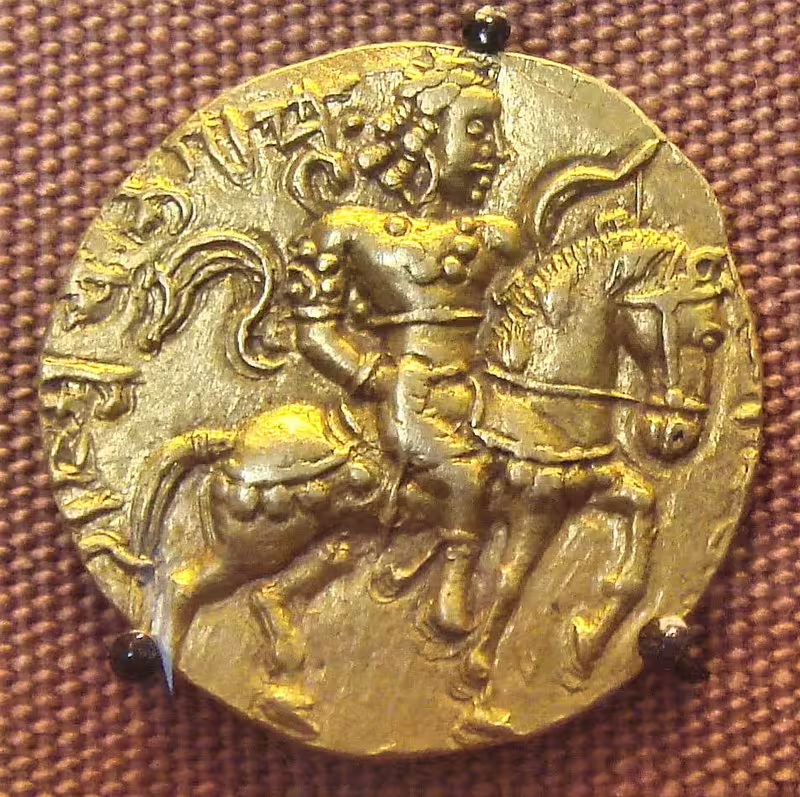
Ujjain in those days was no ordinary city. According to the traditional stories preserved in texts like Vetala Panchavimshati and Singhasan Battisi, it was the seat of a king whose justice was legendary, whose generosity knew no bounds, and whose court attracted the finest minds from across the subcontinent. Vikramaditya—whose name means "the sun of valour"—was said to distribute hundreds of thousands of gold coins to scholars and the poor alike, testing wisdom and rewarding brilliance wherever he found it.
The king's court was famous for hosting the Navaratnas, or Nine Gems—nine scholars of such exceptional talent that they illuminated the realm of knowledge like precious jewels. To be recognized by Vikramaditya was to achieve immortality in the annals of learning.
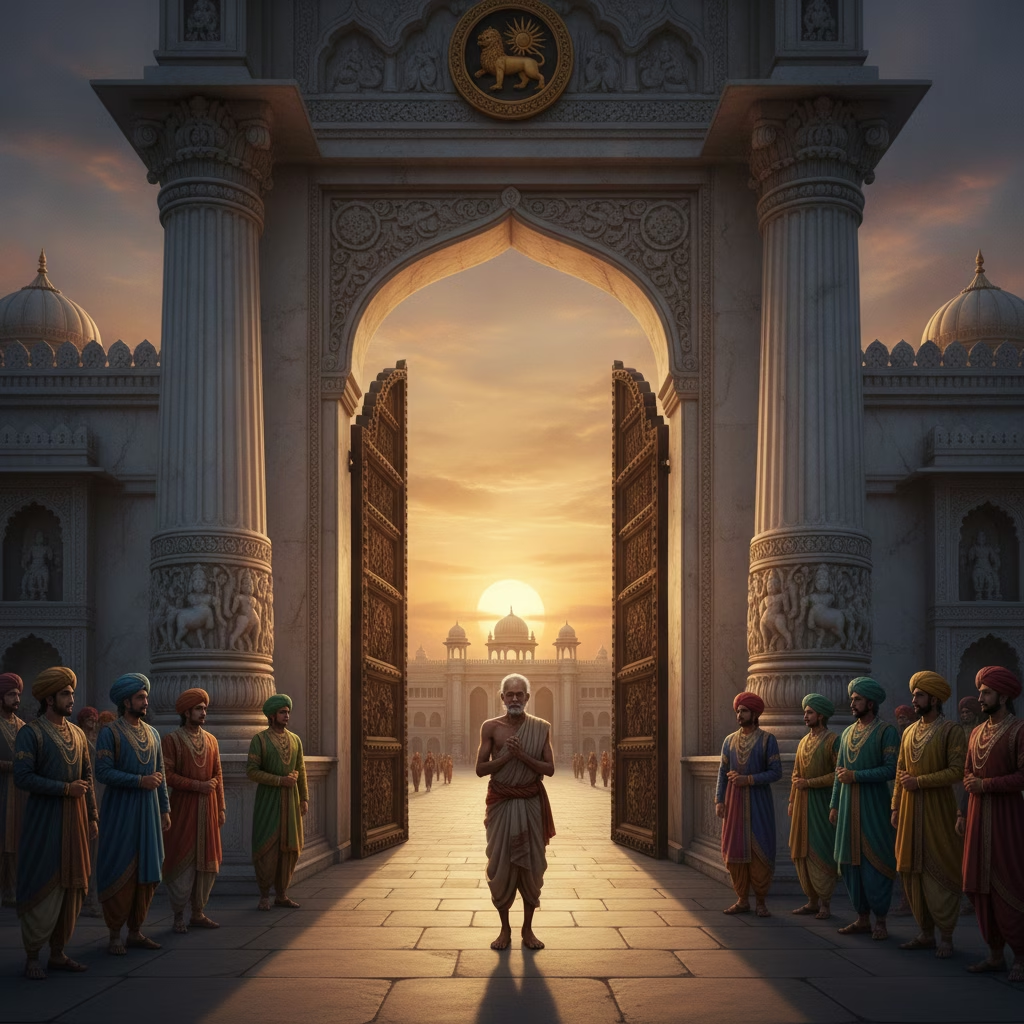
As Kalidasa approached the towering gates of the palace, with its marble pillars carved by master craftsmen and its courtyards bustling with learned men engaged in animated philosophical discussions, he must have felt the full weight of his inadequacy. Here, ignorance was not merely mocked—it was an affront to everything the court represented.
Yet something—destiny, divine will, or simple human momentum—carried him forward through those magnificent gates.
Humiliation at Court
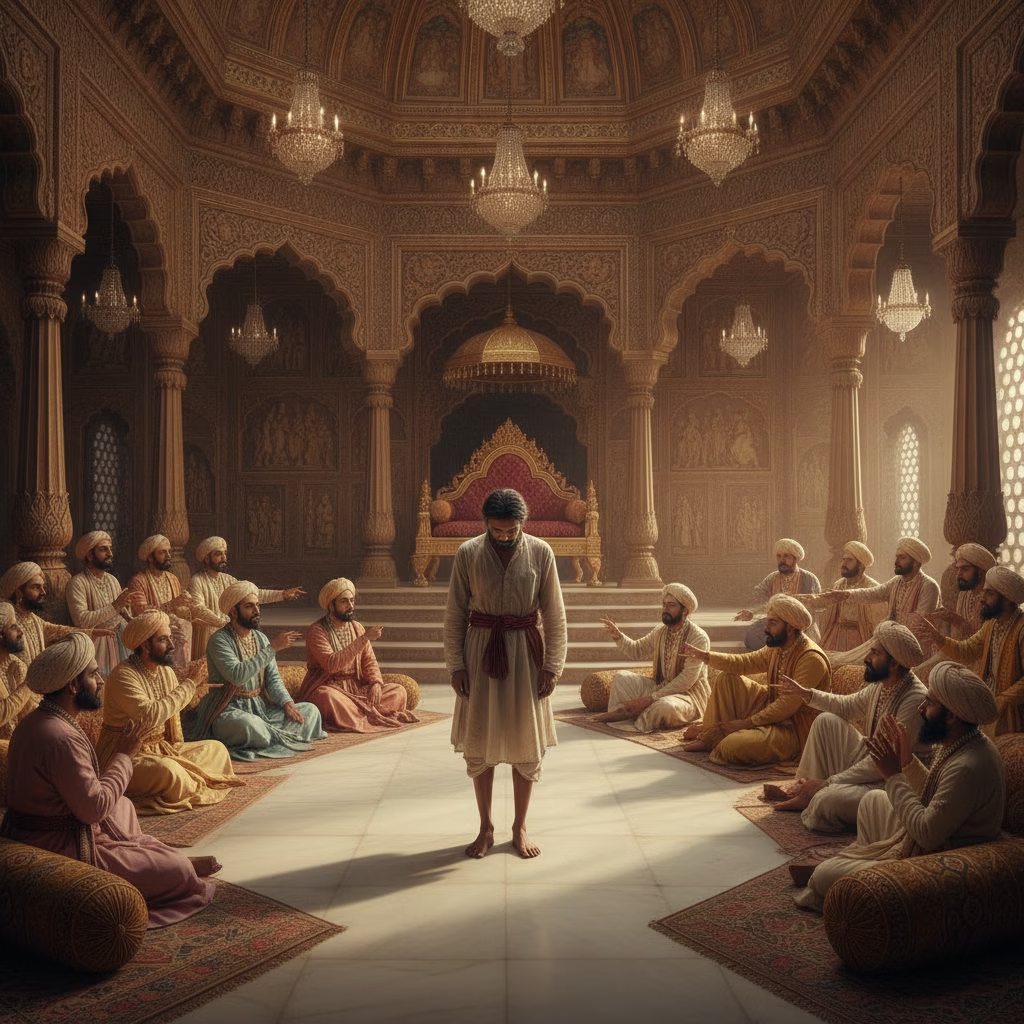
The royal court of Vikramaditya was in full session when Kalidasa was brought before the assembled scholars. The hall itself was a testament to the king's patronage of the arts—every pillar told a story in stone, every wall bore inscriptions of wisdom from ages past.
Seated on silk cushions arranged in a semicircle were the learned men of the court, their fine robes and elaborate turbans marking them as the intellectual elite of the age. They had gathered for what they did best: debate, discourse, and the examination of ideas that pushed the boundaries of human understanding.
Into this rarefied atmosphere stumbled Kalidasa, his simple clothes and unadorned appearance marking him immediately as an outsider.
The recognition was instant. "The fool!" someone whispered, and the whisper spread like wildfire through the assembly. "It's Kalidasa—the famous simpleton!" Laughter rippled through the court, growing from polite chuckles to open mockery.
The scholars, men who prided themselves on their wit, could not resist the opportunity. They posed questions to him—simple riddles that any educated person could answer—and watched with cruel amusement as he fumbled for responses. They asked him to recite basic verses from the Vedas, knowing he could not. They requested his opinion on philosophical matters far beyond his comprehension.
Even the king's advisors questioned aloud why such an ignorant man had been permitted to enter the royal presence. Was this some kind of joke? A test of the court's patience?
For Kalidasa, each moment was agony. The laughter echoed off the marble walls, seeming to multiply his shame. He stood there, unable to defend himself, unable to escape, experiencing a humiliation so complete that it would have broken most men entirely.
But in that darkest moment, something stirred within him—not pride, for he had none left, but desperation. And in his desperation, he turned to the only refuge he knew: prayer.
The Goddess's Blessing
What happened next has been told and retold across centuries, embellished and refined by countless storytellers, yet the core of the miracle remains constant.
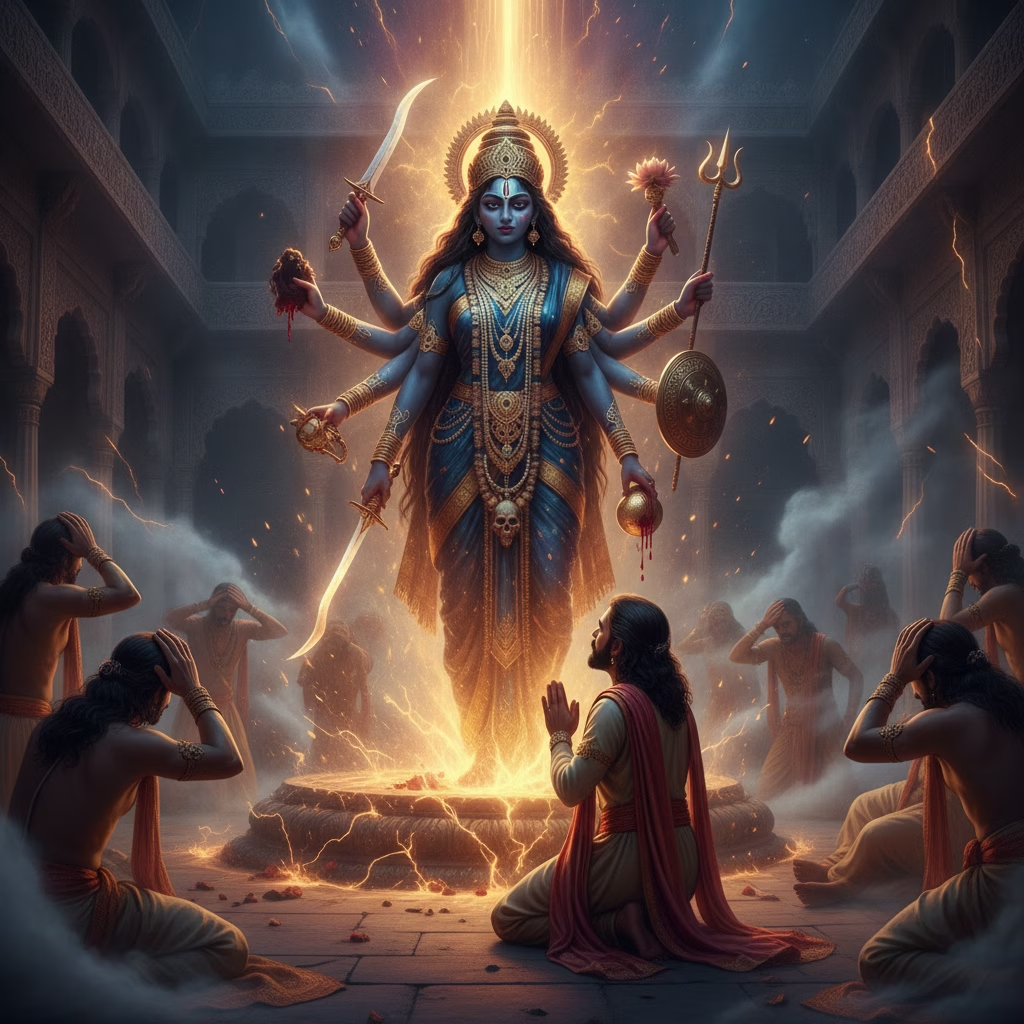
Kalidasa, in the depths of his humiliation, closed his eyes and prayed with a fervor born of absolute despair. He called upon the goddess Kali—the fierce divine mother, the destroyer of evil, the granter of boons to true devotees. His prayer was not sophisticated or learned; it came from the raw, unfiltered depths of a broken heart.
And the goddess answered.
According to the oral tradition, the very atmosphere of the court changed in an instant. A supernatural light filled the hall, causing the mocking scholars to fall silent and shield their eyes. The air itself seemed to vibrate with divine energy.
Before the astonished assembly, the goddess Kali appeared to her devotee—not in her terrible, destructive aspect, but as the compassionate mother who lifts up those who call upon her with sincere devotion. The vision was so powerful that even the skeptical scholars could not deny what they witnessed.
The goddess placed her hand upon Kalidasa's head in blessing. In that touch, everything changed. The ignorance that had clouded his mind dissolved like morning mist before the sun. Knowledge poured into him—not merely facts and figures, but true understanding. The structures of language, the rhythms of poetry, the depths of philosophy—all became clear to him in a single, transformative instant.
His very name took on new meaning in that moment. He was no longer just a man named Kalidasa; he had become, truly and completely, the servant of Kali, blessed by her divine grace.
The First Verse
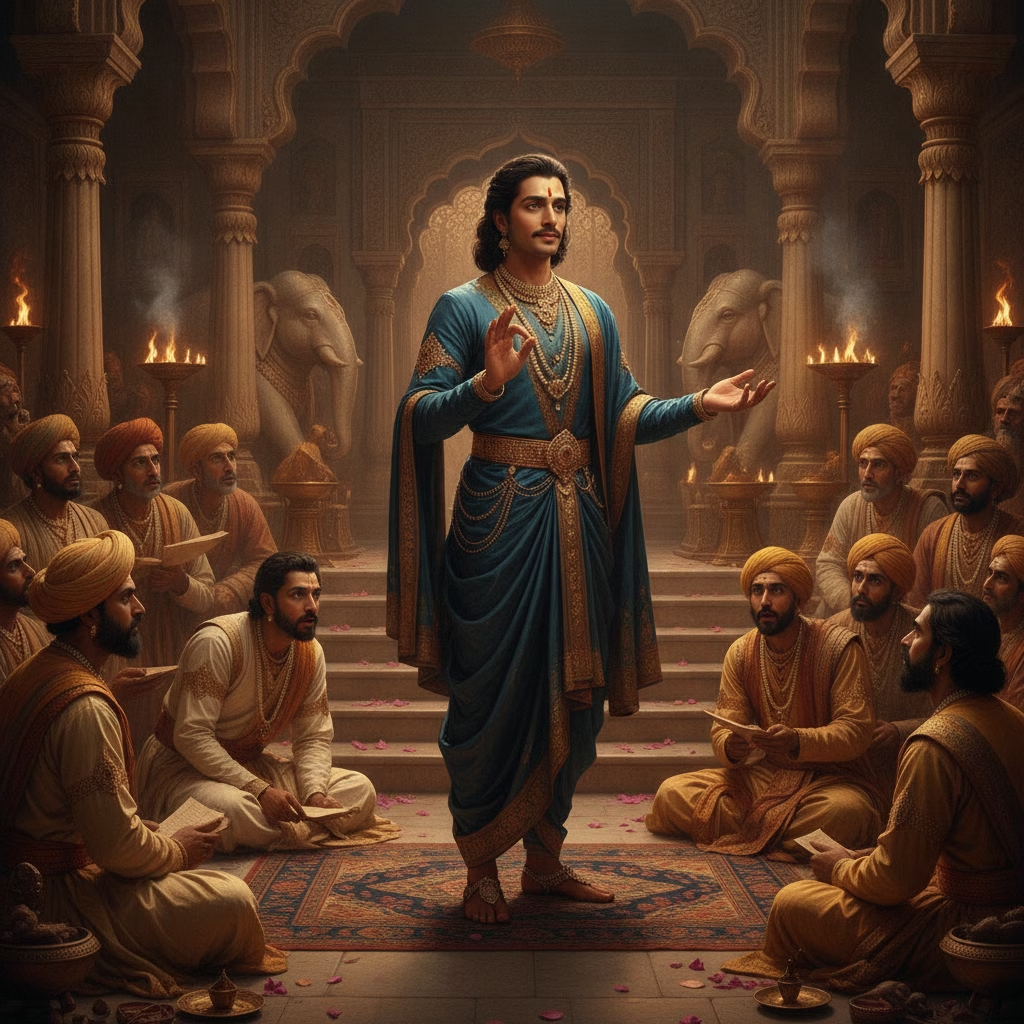
When Kalidasa opened his eyes, the vision had faded, but its effects remained. The man who stood in that court hall was fundamentally transformed. Where there had been confusion, there was now clarity. Where there had been ignorance, there was now wisdom. Where there had been silence, there would now be poetry.
The scholars, still reeling from what they had witnessed, watched in stunned silence as Kalidasa—the fool they had been mocking moments before—straightened his posture and opened his mouth to speak.
What emerged was not the stumbling speech of an ignorant man, but verse of such sublime beauty and technical perfection that it seemed impossible it could come from the same person. His words flowed like a river in full flood, each syllable perfectly placed, each metaphor illuminating profound truths.
The first verse he composed in that moment—the exact words vary in different tellings—demonstrated complete mastery of Sanskrit prosody, grammar, and poetic convention. More than technical skill, it showed genuine poetic genius: the ability to capture complex emotions and ideas in language that was simultaneously precise and evocative.
The scholars sat frozen, their earlier mockery forgotten, as they listened to this impossible transformation. Some later claimed they had always seen potential in the young man. Others openly wept at the beauty of the verses. All recognized that they were witnessing something unprecedented—a divine miracle manifested in human language.
The transformation was so complete, so undeniable, that no one could question its source. This was not learning acquired through study, but wisdom granted through grace.
Recognition by the King
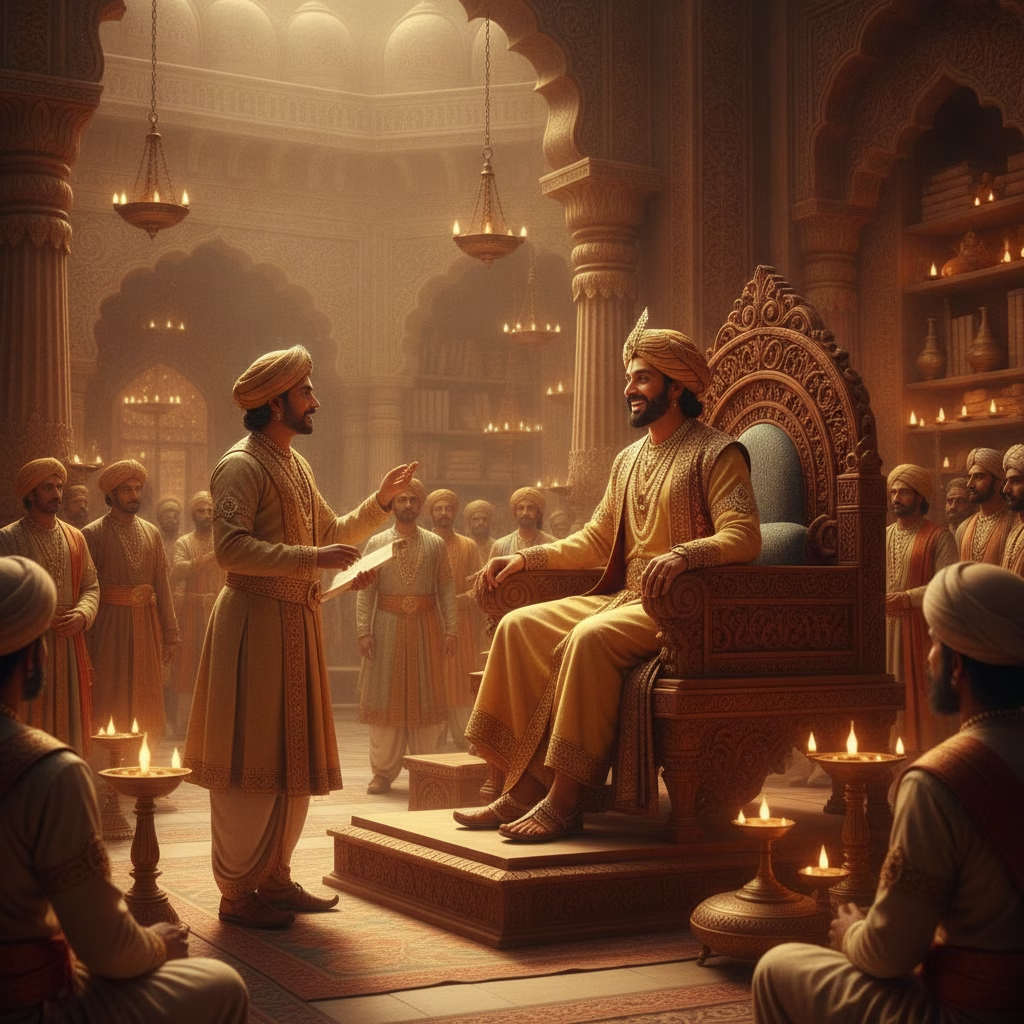
King Vikramaditya, who had observed the entire episode from his throne, now leaned forward with an expression of wonder and delight. The king who had patronized countless scholars, who had witnessed innumerable displays of learning and wit, recognized immediately that something extraordinary had occurred.
As Kalidasa continued to speak, composing verse after verse with effortless mastery, the king's delight grew. Here was not merely another learned scholar to add to his court, but a poet of transcendent genius—someone whose work would outlive kingdoms and dynasties.
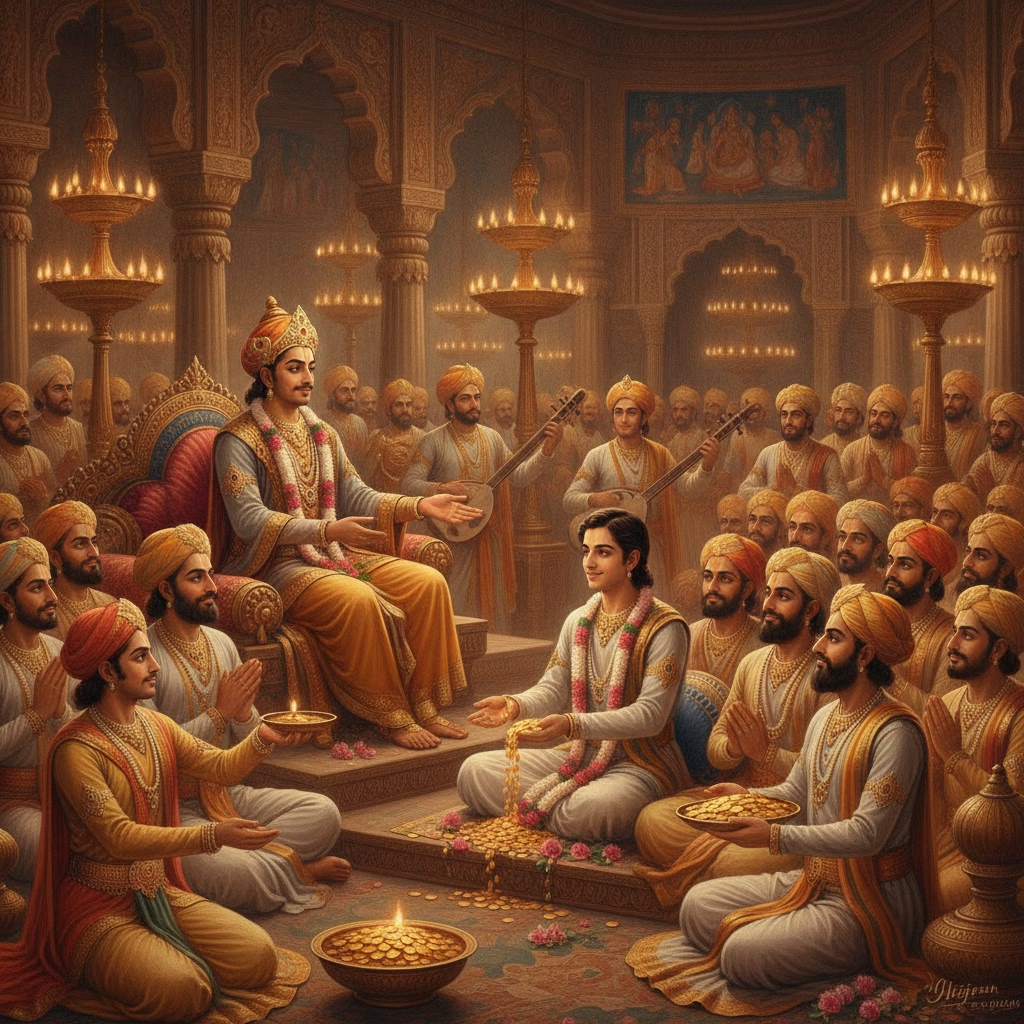
Vikramaditya, known in the legends for his generosity, had given away hundreds of thousands of gold coins to reward wisdom and talent. According to some versions of the story, he had once given 300,000 gold coins to a scholar named Vindhyavasa, and an equal sum to the Buddhist philosopher Vasubandhu. But what he witnessed in Kalidasa was worth more than gold—it was a gift to all of humanity.
The king rose from his throne and approached the transformed poet. In front of the entire assembly, he honored Kalidasa, recognizing him not as the fool who had entered the court, but as a master poet whose genius had been awakened by divine intervention.
The scholars of the court, including the Navaratnas themselves, bowed to the new poet. They had witnessed a miracle, and they knew that the verses they had just heard were only the beginning. This man would go on to create works that would define Sanskrit literature.
The Birth of a Legend
From that day forward, Kalidasa took his place among the greatest scholars of Vikramaditya's court. Some traditions count him among the Nine Gems themselves, though the exact composition of this legendary group varies in different tellings.
What is certain in the oral tradition is that Kalidasa went on to compose some of the most celebrated works in Sanskrit literature. His plays, poems, and epics would be studied, performed, and admired for thousands of years. Abhijnanasakuntalam (The Recognition of Shakuntala) would be translated into dozens of languages and influence poets and playwrights across the world. Meghaduta (The Cloud Messenger) would establish new standards for lyric poetry. Raghuvamsha would chronicle the dynasty of Rama with such skill that it became the model for courtly epic poetry.
Yet the oral tradition never forgot the origin of his genius. Every telling of Kalidasa's story returns to that moment of transformation in Vikramaditya's court—the moment when a goddess looked upon her devotee with compassion and granted him a gift that would enrich human culture for millennia.
The story serves multiple purposes in Indian tradition. It is a testament to the power of divine grace, showing that the gods can elevate anyone, regardless of their circumstances. It is a reminder that true wisdom comes not from human pride but from humility and devotion. And it is an explanation for the seemingly impossible: how could one man possess such complete mastery of language and poetic form? The answer, according to the oral tradition, is that his genius was not entirely human—it was a divine gift, granted in a moment of supreme grace.
Today, when scholars study Kalidasa's works and marvel at their technical perfection and emotional depth, they are examining the fruits of that legendary transformation. Whether one believes the story literally or sees it as a beautiful metaphor for the mystery of artistic genius, it remains an integral part of how India understands its greatest poet.
The fool who entered Vikramaditya's court that day left as a legend. And the legend lives on, told and retold, reminding us that transformation is always possible, that divine grace can find us in our darkest moments, and that sometimes, the greatest gifts come to those who have nothing left but faith.