Overview
On 16–17 October 1942, a cyclone and three storm surges struck coastal Bengal. They destroyed homes, crops, livestock, transport, and food stocks across parts of Midnapore and 24 Parganas. In the months that followed, a food crisis spread through Bengal, then became a famine marked by starvation, disease, homelessness, and the collapse of ordinary social protections.
The Bengal Famine of 1943 occurred during the Second World War in Bengal Province and Orissa Province of British India. The region corresponds broadly to present-day Bangladesh and West Bengal, although the crisis also affected neighbouring areas. Estimates of the death toll range from 800,000 to 3.8 million. A scholarly estimate often cited is approximately 2.1 million, but the figure remains uncertain because rural registration systems were weak and many deaths were not recorded accurately.
The famine was not caused by a single event. Bengal already had a large population living close to subsistence. Agricultural productivity had stagnated, landlessness and debt had grown, and many families had little ability to withstand a rise in food prices or a failed harvest. The Japanese occupation of Burma removed an important source of rice imports. Wartime inflation reduced real wages, while military construction and the arrival of soldiers and refugees increased demand for food and other necessities.
Government decisions intensified these pressures. Rice-denial and boat-denial policies were introduced to prevent a possible Japanese invasion from gaining access to supplies and transport. Inter-provincial trade barriers restricted the movement of rice. Food distribution favoured workers and institutions considered essential to the war effort. Price controls encouraged some sellers to withhold stocks, and the later removal of those controls was followed by further price increases.
Starvation was most severe in 1943, but disease caused an even larger share of deaths in 1944. Malaria, cholera, smallpox, dysentery, and diarrhoea spread through populations weakened by hunger and displaced by the crisis. Relief expanded significantly after the British Indian Army assumed a central role in October 1943. A large rice harvest in December brought further improvement, but by then families had been broken apart, land had changed hands, and millions had been impoverished.
Background
Bengal's agrarian economy
Rice dominated Bengal's agriculture and diet. It occupied nearly 88 percent of the province's arable land and accounted for about 75 percent of its crops. Bengal produced approximately one-third of India's rice, more than any other single province. Rice supplied between 75 and 85 percent of daily food consumption, while fish was the second major source of food.
Bengal grew three seasonal rice crops. The most important was the winter aman crop, sown in May and June and harvested in November and December. It normally produced about 70 percent of the annual rice harvest. Any damage to the aman crop therefore threatened the province's food supply at the most critical point of the agricultural year.
The province had approximately 60 million people in 1941, living across an area of about 77,442 square miles. Between 1901 and 1941, its population increased by about 43 percent, from 42.1 million to 60.3 million. Population growth was faster than the expansion of food production. Rice yields per acre had remained stagnant since the beginning of the twentieth century, and the supply of unused land that could once be brought under cultivation had largely disappeared by the early twentieth century.
Bengal changed from a net exporter of foodgrains to a net importer. Imports, however, were only a small part of the total food supply and did not eliminate the province's underlying vulnerability. In ordinary years, the margin between available food and bare subsistence was narrow. Large numbers of rural inhabitants lived in what the Famine Inquiry Commission later described as a “semi-starved condition.”
Agricultural technology was limited, credit was expensive, and government assistance was constrained by political and financial conditions. Land quality had deteriorated in several parts of Bengal. Deforestation and land reclamation damaged natural drainage channels, while railway construction divided parts of the landscape into poorly drained compartments. Silting reduced the capacity of rivers and channels to carry water. Flooding, stagnant water, and soil exhaustion all affected agricultural productivity.
Land, debt, and inequality
Bengal's rural society was divided among large landowners, wealthy peasants and grain traders, smallholders, sharecroppers, and agricultural labourers. Rights over land were unequally distributed. Traditional zamindars retained legal and customary protections, while jotedars increased their influence during the late nineteenth and early twentieth centuries.
Jotedars often acted as grain traders and moneylenders. They provided loans to smallholders, sharecroppers, agricultural labourers, and ryots. When a family suffered a poor harvest or needed money during the months before the next crop, it often had to borrow at high rates of interest. Consumer debt, seasonal loans, and emergency borrowing could accumulate into a permanent burden.
A debtor might eventually lose land through a mortgage, litigation, forced sale, or auction. The former landholder could then continue working the same fields as a sharecropper or labourer. Since debts were often controlled by one local creditor, the debtor's relationship with the creditor could become nearly impossible to escape.
This system meant that a harvest failure affected social groups differently. A wealthy landowner might possess grain reserves or access to credit. A landless worker had neither land nor stored food and often received wages in cash or in a portion of the crop. When rice prices rose, a worker whose income remained fixed could no longer purchase enough food.
Muslim inheritance practices, which divided land among several siblings, also contributed to the fragmentation of holdings. By the time of the famine, millions of Bengali agriculturalists possessed little or no land. Landless agricultural labourers suffered the greatest levels of impoverishment and mortality.
Transport and public health
Water transport was essential to Bengal's economy. Rivers and waterways carried rice, labourers, fishing equipment, and other goods. In the rainy season, boats were often the most practical means of movement. Roads were scarce or poorly maintained, while railways were increasingly used for military purposes during the war.
The region's water and drainage systems also affected public health. East Bengal's sandy soils and the lighter sediments of the Sundarbans tended to drain more quickly after the monsoon. Western and central Bengal contained heavier clay and laterite soils that retained water for longer. Partially drained tanks and stagnant water provided breeding grounds for mosquitoes carrying malaria.
Rural access to safe water was limited. People relied on earthen tanks, rivers, and tube wells. Tank and river water could be contaminated with cholera, while many tube wells were unusable. During the war, as many as one-third of existing wells were reported to be in disrepair.
These conditions did not by themselves create the famine, but they determined how severely hunger would interact with disease. A malnourished population living amid contaminated water, stagnant pools, overcrowding, and limited medical care was highly vulnerable to epidemic mortality.
Prelude
The Japanese conquest of Burma
The Japanese campaign in Burma transformed Bengal's position in the war. The fall of Rangoon in March 1942 ended the flow of Burmese rice imports to India and Ceylon. More than one million Indians fled Burma, with many attempting to reach India through Bengal and Assam. At least 500,000 refugees successfully reached India, while many others died during the journey.
The retreat took place under extremely difficult conditions. Allied military transport was reserved for military purposes, and the monsoon made movement through the hills more dangerous. Among refugees who reached India, between 70 and 80 percent were later affected by diseases such as dysentery, smallpox, malaria, or cholera. The refugee movement increased demand for food, clothing, housing, and medical care in Bengal.
The arrival of refugees also affected public confidence. Reports of disease and hardship created fears of epidemics. Anxiety encouraged panic buying and hoarding, which may have contributed to rising prices and the withdrawal of grain from ordinary markets.
The fall of Burma also exposed shipping and transport networks to Japanese attack. By April 1942, Japanese warships and aircraft had sunk approximately 100,000 tons of merchant shipping in the Bay of Bengal. Railways were required for military use, while flooding, malaria, and political unrest further impeded civilian transport.
The loss of Burmese rice was relatively modest when measured against total consumption, but its effect on prices was much larger. Bengal's market had little spare capacity. Rice prices had already risen by approximately 69 percent between August 1939 and September 1941. When imports stopped, buyers competed more aggressively for supplies from rice-producing areas. The Famine Inquiry Commission later described the resulting disruption as a “derangement” of rice markets.
Bengal continued exporting rice to Ceylon for months after the food crisis had begun. This did not determine the entire course of the famine, but it illustrated the tension between regional obligations, imperial wartime planning, and local food security.
Wartime inflation
The war brought soldiers, military contractors, refugees, and industrial workers into Bengal. Calcutta became a major centre of heavy industry, armaments production, textiles, and military supply. Hundreds of thousands of American, British, Indian, and Chinese troops arrived in the province. Military construction drew workers from rural areas, while the demand for housing and food increased.
The financing of military expansion produced inflation. Britain paid for expenditures above India's peacetime contribution through credit accumulated at the Bank of England. The Bank of India was allowed to treat these credits as assets against which additional currency could be issued. The growth of the money supply occurred while consumer goods were scarce.
The effects were uneven. Industrial workers and people employed in priority sectors could sometimes obtain subsidised food, regular wages, transport, housing, or ration cards. Rural labourers, however, often saw the purchasing power of their wages decline. Those who had previously received part of their compensation in grain were especially vulnerable when wages shifted toward cash and prices rose.
The military also absorbed much of India's industrial production. Almost all of the output of India's cloth, wool, leather, and silk industries was sold to the armed forces. Military procurement took place at fixed prices, but producers could charge high prices for goods that remained available in civilian markets. By the middle of 1943, cloth prices had more than quadrupled from their pre-war levels.
Military construction caused displacement as well. Land purchased for airfields and camps is estimated to have displaced between 30,000 and 36,000 families, or approximately 150,000 to 180,000 people. Compensation was paid, but the loss of land and employment left many families vulnerable.
Denial policies
In March 1942, anticipating a possible Japanese invasion through eastern Bengal, the British military introduced two connected policies: denial of rice and denial of boats.
The rice-denial policy applied primarily to coastal and southern districts including Bakarganj, Midnapore, and Khulna. Officials were instructed to remove or destroy rice stocks judged to be surplus. Officially recorded quantities were relatively small, but evidence indicates that purchasing agents may have removed more grain through coercive, corrupt, or unauthorised practices.
The policy damaged confidence in regional markets. Rice traders and cultivators depended on informal lending and credit relationships. When officials began removing stocks, sellers became less willing to release grain. Informal lending contracted, making it harder for small cultivators and traders to obtain seed, food, or working capital.
The boat-denial policy was introduced on 1 May 1942. It allowed the Army to confiscate, relocate, or destroy boats capable of carrying more than ten people. Other forms of transport, including bicycles, bullock carts, and elephants, could also be requisitioned. Approximately 45,000 rural boats were confiscated.
The policy was intended to prevent a Japanese army from using Bengal's waterways. Its economic effect was far wider. Boats carried food, labour, fishing equipment, and agricultural supplies. Boatmen and fishermen lost their livelihoods. Rice could not move easily from fields to market centres, and workers could not travel to areas where employment was available. The administration did not provide enough replacement transport, repair facilities, or food rations to compensate for the disruption.
In districts where the policy was enforced most heavily, it damaged the transport system that connected cultivators, traders, labourers, and consumers. The policy also intensified political resentment. Indian officials had not been adequately consulted, and nationalist groups protested that the measures placed extreme burdens on Bengali peasants.
Inter-provincial trade barriers
From the middle of 1942, Indian provinces and princely states erected barriers against the movement of rice and other foodgrains. These measures were intended to protect local populations and prevent provincial shortages. In practice, they divided the eastern Indian food market into restricted zones.
Punjab prohibited wheat exports in January 1942. The Central Provinces later restricted the export of foodgrains, while Madras prohibited rice exports in June. Bengal, Bihar, and Orissa introduced further restrictions in July.
The barriers meant that grain could not move freely to areas where prices were highest or where food was most urgently needed. Each province attempted to preserve its own supplies, but the collective result was the fragmentation of the regional market. The Famine Inquiry Commission later described this process as the strangling of the trade machinery for food distribution in eastern India.
Bengal's dependence on rice made the consequences especially serious. A shortage that might have been manageable through trade became much more dangerous when trade was blocked.
The Event
Natural disasters in October 1942
The cyclone of 16–17 October 1942 struck coastal Bengal with destructive winds, tidal surges, and flooding. Approximately 14,500 people and 190,000 cattle were killed. Rice stocks held by cultivators, consumers, and dealers were destroyed.
Three storm surges damaged seawalls and flooded parts of Contai and Tamluk. Waves swept across approximately 450 square miles, while flooding affected about 400 square miles. Wind and torrential rain damaged an area of approximately 3,200 square miles. Around 527,000 houses and 1,900 schools were lost. More than 1,000 square miles of fertile paddy land were entirely destroyed, while the standing crop on another 3,000 square miles was damaged.
The disaster also created ideal conditions for disease. Floodwater contaminated supplies and encouraged the spread of cholera and dysentery. Stagnant water increased the breeding grounds of malaria-carrying mosquitoes. The cyclone dispersed fungal spores across the region, contributing to the spread of brown-spot disease in rice.
The winter aman crop was therefore threatened by several connected forces: direct destruction by the cyclone, flooding, fungal disease, loss of livestock, disruption of labour, and the destruction of homes and food stocks.
The disputed crop shortfall
The scale of the 1942 rice shortfall remains debated. Official agricultural statistics were known to be unreliable. Local officials responsible for collecting information often lacked maps, training, or incentives to produce accurate estimates. Government administrators were therefore uncertain whether reports of a major shortfall were accurate.
The Famine Inquiry Commission concluded that the overall rice deficit in Bengal in 1943, after considering estimated carryover from the previous harvest, amounted to approximately three weeks of supply. This was a serious shortage, but not necessarily large enough on its own to produce mass starvation.
Other analysts have argued that the shortfall was much larger. Wallace Aykroyd later estimated a 25 percent decline in the winter 1942 harvest. L. G. Pinnell, who was responsible for food supplies in Bengal, estimated a loss of about 20 percent, with disease causing more damage than the cyclone. Other government estimates privately suggested a deficit of approximately two million tons.
The disagreement is important because it reflects two broad interpretations of the famine. One stresses food availability decline: the loss of Burmese imports, crop disease, flooding, and the cyclone reduced the actual food supply. The other stresses the failure of people to obtain food: inflation, market disruption, hoarding, transport restrictions, and unequal distribution made food unaffordable even where total supplies were not catastrophically low.
Both interpretations accept that Bengal experienced a real food shortage. They differ over whether the shortage itself was sufficient to explain the death toll.
Price controls and market failure
By April 1942, rice prices were already rising as refugees entered Bengal and Burmese imports disappeared. In June, the Bengal government introduced price controls, setting prices below the prevailing market level.
The policy had an immediate unintended effect. Sellers were reluctant to release rice at the controlled price. Stocks disappeared into private storage or the black market. In October, natural disasters caused another scramble for supplies. Between December 1942 and March 1943, the government attempted to bring rice from different districts into Calcutta, but these efforts did not successfully stabilise prices.
On 11 March 1943, the provincial government rescinded price controls. Rice prices rose dramatically, driven by speculation, panic, and the accumulated effects of shortage and restricted trade. May 1943 saw the first reports of deaths from starvation.
The government did not formally declare a famine. Its famine code would have required a significant expansion of aid, but officials feared that an official declaration would undermine confidence, encourage hoarding, or reveal that the administration lacked sufficient supplies to respond. The government continued to emphasise speculation and hoarding as the main causes of the crisis.
On 18 May, inter-provincial trade barriers were abolished. Prices temporarily fell in Calcutta but rose in neighbouring Bihar and Orissa as traders attempted to buy available stocks. The government struggled to identify and seize hoarded grain. In July, free trade was abandoned, and price controls were reintroduced in August. Rice prices nonetheless remained several times higher than they had been in late 1942.
Prioritised distribution
Wartime authorities classified people according to their importance to military production and administration. Priority groups included armed forces personnel, war-industry workers, civil servants, railway employees, coal miners, construction workers, and employees in paper, textile, and engineering industries.
The Bengal Chamber of Commerce devised a Foodstuffs Scheme to protect workers in industries considered essential to the war. The Government of Bengal approved the arrangement. By December 1942, approximately one million workers and family members were covered.
People in priority sectors could receive ration cards, subsidised rice, cheap-shop supplies, transport, housing, medical care, and antimalarial treatment. Some workers were paid partly in weekly rice allocations. These measures helped keep workers at their posts and protected the military and industrial system from labour shortages.
For rural workers outside the priority system, the consequences were severe. They competed for scarce food with workers whose access to supplies was protected. Medical resources were also directed toward military and priority populations. In large parts of rural eastern India, no enduring state-sponsored distribution system reached the people most at risk.
The policy did not create all the inequalities that shaped the famine, but it made them more visible and, in some areas, more severe. It established different levels of access to food, medicine, transport, and protection according to a person's usefulness to the wartime economy.
Political unrest and administrative distrust
The Quit India movement began on 8 August 1942. The British authorities arrested Congress leaders, and the movement developed into sabotage and attacks on factories, bridges, telegraph lines, railway infrastructure, and other government property in some areas.
The British government responded with mass arrests and force. More than 66,000 people were taken into custody, and more than 2,500 Indians were shot when police fired on protesters. In Bengal, rural discontent was particularly strong in parts of Midnapore, including Tamluk and Contai.
The political unrest affected food policy. Government officials feared that public disclosure of scarcity would provoke further disorder. British ministers regarded the movement as a threat to wartime production and communications. The denial policies, the destruction of boats, the seizure of homes, and the preferential distribution of food all became connected to the wider conflict between the colonial government and Indian nationalists.
The famine was therefore unfolding in an atmosphere of distrust. Rural communities often regarded official requisitions as hostile, while the administration viewed protest, criticism, and independent political organisation as threats to military security.
Key Phases
Phase One: Structural vulnerability and wartime shock
Before 1942, poverty, debt, land fragmentation, stagnant yields, and limited food reserves had left Bengal vulnerable. The rural poor could survive ordinary seasonal shortages, but many could not survive prolonged inflation or the loss of employment and assets.
The Japanese conquest of Burma, the arrival of refugees, and the military build-up then placed new pressure on supplies and transport.
Phase Two: Disruption of transport and markets
The denial policies removed boats and rice from parts of eastern and coastal Bengal. Inter-provincial trade barriers restricted grain movement. The loss of Burmese imports increased competition for domestic rice, while war financing pushed prices upward.
The crisis became more dangerous because food could not move easily from producing areas to deficit areas and because many families lacked the purchasing power to buy food at rising prices.
Phase Three: Starvation and migration
By early 1943, rice prices had risen sharply. After price controls were removed in March, the increase became more extreme. Reports of hunger and starvation multiplied from May.
Families sold jewellery, livestock, tools, and land. Men left villages to seek work or join the Army. Women and children migrated to Calcutta and other cities, often without shelter or reliable access to food.
Phase Four: Epidemic mortality
Starvation weakened resistance to disease. Malaria became the leading cause of famine-related death, while cholera, dysentery, diarrhoea, and smallpox spread through displaced and malnourished populations.
Hospitals, relief centres, cremation grounds, and burial places were overwhelmed. Corpses remained in streets, villages, canals, and open spaces. By the summer of 1943, some districts had taken on the appearance of vast charnel grounds.
Phase Five: Expanded relief and partial recovery
Relief increased after the Army assumed control of funding, transport, and distribution in October 1943. Grain was brought from Punjab and other regions. Military vehicles and personnel reached rural areas that civilian agencies had been unable to serve.
A record rice harvest in December 1943 helped reduce starvation, and rice prices began to fall. However, disease continued to cause deaths into 1944, and many survivors had already lost land, homes, family members, and livelihoods.
Turning Points
The fall of Rangoon
The fall of Rangoon in March 1942 severed Bengal's access to Burmese rice. It also brought Bengal closer to the military front and increased the movement of refugees and troops.
The denial of boats
The confiscation or destruction of approximately 45,000 rural boats disrupted one of the central transport systems of Bengal. The policy affected fishermen, boatmen, traders, farmers, and migrant workers, not only military logistics.
The October cyclone and brown-spot disease
The cyclone, storm surges, floods, and fungal disease damaged the aman crop and destroyed food stocks. Their combined effects transformed an already vulnerable food system.
The removal of price controls
The rescinding of price controls on 11 March 1943 was followed by a dramatic rise in rice prices. It became increasingly difficult for workers with fixed or slowly rising wages to purchase food.
The failure to declare famine
The provincial government never formally declared a state of famine. This decision limited the scale and urgency of official relief at the critical early stage of the disaster.
The military takeover of relief
When the Army took a leading role in relief distribution in October 1943, transport, grain movement, and medical assistance improved. This marked the beginning of a more effective response, although it came after the worst period of starvation.
The 1943 rice harvest
The December harvest was described as the largest rice crop seen in Bengal. Food availability improved and starvation deaths declined, but disease-related mortality remained high through 1944.
Participants
The Bengal Provincial Government
The provincial government was responsible for food controls, grain procurement, transport, and relief. It attempted to regulate prices, obtain grain, establish cheap shops and gruel kitchens, and maintain public confidence.
Its policies were repeatedly criticised as slow, contradictory, and poorly administered. Price controls encouraged some sellers to withhold supplies. Efforts to seize hoarded stocks often failed. Relief was initially concentrated in markets and urban areas rather than directed effectively toward the rural poor.
The government also delayed formally declaring a famine. It expected assistance from the central government and feared that acknowledging scarcity would worsen panic and inflation.
The Government of India and British wartime authorities
The central government controlled broader wartime finance, shipping, inter-provincial policy, and military priorities. Officials in India repeatedly requested food imports, but their requests were delayed, reduced, or rejected.
Aid from Britain was limited by shipping shortages and military planning. Requests for grain continued through 1943 and into 1944. The War Cabinet prioritised military needs, including preparations for operations in Europe and the wider war effort.
The degree of responsibility attributed to the central government remains contested. Some historians argue that British policy deliberately placed imperial military requirements above Indian civilian welfare. Others emphasise wartime shipping losses, competing military demands, provincial authority, and misinformation from officials in Bengal.
Winston Churchill and the War Cabinet
Winston Churchill has been strongly criticised for the famine. Critics argue that his government refused to divert food and shipping to Bengal even when officials warned of worsening conditions. They regard military priorities, imperial attitudes, and hostility toward Indian nationalism as major factors in the delay.
Other historians caution against attributing the entire disaster to Churchill personally. They stress that food administration was substantially controlled by the Government of Bengal, that officials in India provided incomplete or misleading information, and that Allied shipping faced serious losses and competing demands. Churchill's defenders also point to later orders for grain shipments, though those deliveries came after extensive delay.
The question is not simply whether one leader caused the famine. It concerns how responsibility should be divided among the provincial government, the Government of India, the War Cabinet, military authorities, traders, and local administrators.
The British Indian Army
The Army was involved in the denial policies and the requisitioning of transport. From October 1943, however, it became central to famine relief. Military lorries, personnel, and administrative capacity helped distribute grain and medical supplies in areas where civilian departments had failed.
The Army imported grain from Punjab and expanded access to medical resources. Soldiers were sometimes remembered favourably because they shared rations with starving civilians despite orders not to do so.
Rural communities
The people most affected were landless agricultural labourers, smallholders, sharecroppers, fishermen, boatmen, rural artisans, and households dependent on seasonal wages. They possessed the fewest assets and had the least access to priority distribution systems.
Many sold land, livestock, jewellery, tools, or household goods. Others migrated, entered debt bondage, abandoned dependents, or sought work in Calcutta and other cities. Women and children were particularly exposed to homelessness, exploitation, prostitution, trafficking, and forced domestic labour.
Traders and moneylenders
Grain traders, jotedars, moneylenders, and other local economic actors occupied an important position in the crisis. Some withheld stocks, speculated on rising prices, or profited from scarcity. Others were affected by official requisitioning, transport restrictions, and unstable prices.
The extent to which traders caused the famine remains disputed. Some contemporary and later accounts assign them major responsibility for hoarding and profiteering. Other analyses argue that speculation became powerful because government policy had already disrupted markets and reduced public confidence.
Voluntary and political organisations
Private charities, merchants, women's groups, communists, socialists, nationalist organisations, religious groups, and individuals organised relief. Their work included distributing food, clothing, and money, opening kitchens, and assisting migrants.
Relief efforts were sometimes affected by communal favouritism and political rivalry, but collectively they provided substantial assistance, particularly before government operations expanded.
Aftermath
Death from starvation and disease
The estimated death toll ranges from 800,000 to 3.8 million. The range is wide because mortality registration was incomplete, especially in rural districts. Migrants, abandoned people, and those who died outside hospitals or their home villages were often not recorded accurately.
Starvation was the principal cause of excess mortality during the first wave of the crisis, from approximately May to October 1943. Deaths from starvation peaked around November.
Disease became increasingly important from October 1943 and overtook starvation as the main cause of death around December. More than half of famine-related deaths occurred in 1944, after food security had begun to improve.
Malaria was the largest killer. From July 1943 to June 1944, monthly malaria deaths averaged 125 percent above the rates of the previous five years. In December 1943, they reached 203 percent above the earlier average. Malaria parasites were found in nearly 52 percent of blood samples examined at Calcutta hospitals during the peak period.
Cholera deaths peaked in October 1943 and declined sharply after vaccination campaigns overseen by military medical workers. Smallpox mortality rose later, reaching a peak in April 1944. Dysentery and diarrhoea were also major causes of death.
Displacement and family breakdown
Migration was one of the most visible consequences of the famine. Rural people travelled to Calcutta and other cities in search of food, employment, or organised relief. Estimates of the number of sick migrants who reached Calcutta range from 100,000 to 150,000.
Families frequently broke apart. Men abandoned farms to find work or enlist. Women and children migrated separately or were left behind. Elderly dependents were sometimes abandoned in villages. Children were left at roadsides, sent to orphanages, sold for rice, or taken into domestic or sexual exploitation.
A survey conducted in Calcutta during the latter half of 1943 found that some form of family separation had occurred in about half of the destitute population that reached the city.
Sanitation and the dead
Displacement overwhelmed sanitation systems. People lacked utensils, soap, clean clothing, and safe water. Many drank contaminated rainwater or water from streets and open spaces. Hospitals and temporary relief institutions were overcrowded and unsanitary.
The number of dead exceeded the capacity of burial grounds, cremation houses, and municipal workers. Bodies lay on streets and pavements. In rural areas, corpses were left in rivers, canals, and open spaces. Dogs, jackals, and vultures scavenged bodies, sometimes before death had occurred.
These conditions increased the spread of disease and deepened the psychological trauma of the famine.
The cloth famine
The crisis extended beyond food. India's textile production was heavily committed to the military. Cloth was used for uniforms, blankets, parachutes, boots, and other military supplies. Civilian supplies declined, while the price of remaining cloth rose sharply.
By May 1943, cloth prices were about 425 percent higher than in August 1939. The poorest people wore scraps or shared a single piece of cloth among several family members. Some avoided leaving their homes because they had nothing adequate to wear.
Reports described the theft of clothing from graves and the exploitation of people desperate for even a small amount of fabric. The cloth famine revealed that the emergency was not only a shortage of rice. Wartime priorities had reduced access to many basic necessities.
Exploitation of women and children
Women and children faced severe risks after the collapse of household economies. The loss of land, the death or departure of male relatives, and the absence of relief left many without protection or income.
Some women entered prostitution because regular meals were available there. Others were sold, kidnapped, or taken to brothels. Girls were reportedly exchanged for small amounts of money or rice. Women who had been sexually exploited often faced rejection from their families and communities.
Children were abandoned, sold, or taken into service. Some were purchased for household labour, where they lived little better than domestic slaves. The social consequences of this exploitation continued after food supplies improved.
Relief Efforts
Early relief
Humanitarian aid reached cyclone-affected areas around Midnapore relatively quickly in October 1942, but broader famine relief was slow. Private organisations began distributing food and money in early 1943. Government relief increased in April, but it was restricted and often misdirected.
Relief included agricultural loans, grain supplied as gratuitous aid, cheap grain shops, and “test works” that exchanged food or money for strenuous labour. Agricultural loans did little for landless labourers and people without collateral. Grain supplied through markets often placed the rural poor in competition with wealthier buyers.
Corruption and nepotism further reduced the value of relief. As much as half of some supplies was alleged to have disappeared into the black market or into the hands of officials' friends and relatives.
Gruel kitchens
The Government of Bengal began establishing gruel kitchens in August 1943. These kitchens became a major source of aid for rural poor people, although the food was sometimes contaminated, spoiled, or made from unfamiliar grains. Some recipients could not digest the substitutes, and weakened people died after consuming them.
The kitchens represented an expansion of relief, but they were not enough to meet the scale of the crisis.
Transport and military relief
Rail lines damaged by flooding were repaired in August. Supplies began reaching Calcutta in September, but the Civil Supplies Department lacked the staff and equipment to distribute them. Large quantities of grain accumulated in open spaces, including the Botanical Garden in Calcutta.
After Archibald Wavell became Viceroy in the latter half of 1943, he requested military assistance. Within two weeks, military lorries, personnel, and transport resources were being used to distribute food. Grain imported from Punjab reached rural areas, while medical supplies became more available.
Military intervention did not reverse the earlier losses, but it improved the reach and speed of relief. By December, food prices were falling and the rice harvest was being gathered. In some villages, however, so many people had died or migrated that few workers remained to bring in the crop.
Historical Significance
A famine of food availability or food access?
The central historical debate concerns whether the famine was primarily caused by a shortage of food or by the inability of particular groups to obtain food.
The food-availability interpretation emphasises the loss of Burmese imports, the cyclone and floods, brown-spot disease, and the possibility that the 1942 aman harvest fell far more sharply than official statistics indicated. Scholars who follow this approach argue that the supply shock was the decisive factor.
The food-entitlements interpretation, associated especially with Amartya Sen, argues that Bengal may have possessed enough total resources to avoid mass death. Inflation, speculation, panic buying, trade restrictions, and preferential distribution caused the real wages and purchasing power of poor workers to collapse. Food existed, but it became inaccessible to those who needed it most.
The two approaches are not mutually exclusive. Bengal experienced a genuine shortage, but market and policy failures determined which groups bore its costs. The same quantity of food could produce very different outcomes depending on prices, wages, transport, reserves, and access to relief.
Colonial responsibility
The famine intensified the political argument against British rule. Indians observed that the colonial administration could mobilise enormous resources for military production while failing to provide food, transport, medicine, and clothing to starving civilians.
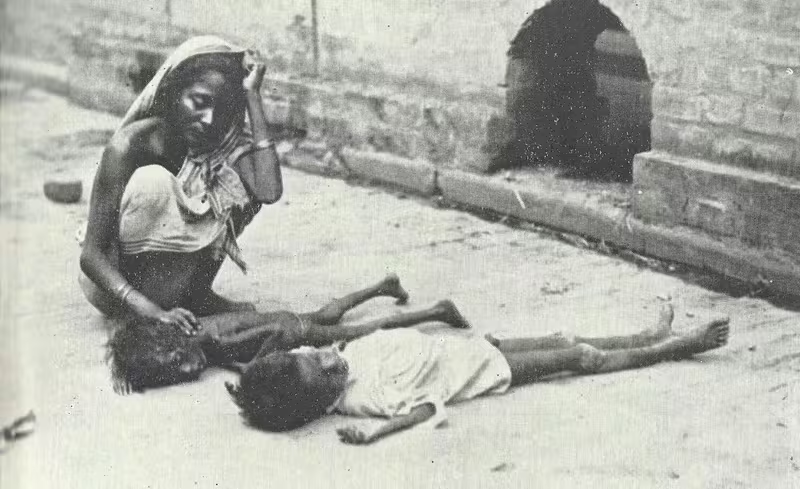
Photographs of famine victims circulated widely in 1943. The Statesman, under editor Ian Stephens, published graphic images on 22 August. These photographs reached audiences in India, Britain, the United States, and elsewhere. They helped expose the scale of the disaster and placed pressure on the British government.
The crisis also linked provincial suffering to national politics. The destruction of boats, the prioritisation of Calcutta's industries, and the refusal or delay of food imports became evidence that imperial policy valued military power and colonial order above Indian lives.
The famine did not by itself end British rule, but it contributed to a broader transformation in political opinion. The idea that famine prevention was a national responsibility became more powerful, and the disaster was remembered as a judgement on colonial government.
Economic transformation
The famine accelerated the transfer of land from smallholders to wealthier buyers and creditors. In one study of eastern Bengal, 54 of 168 families sold all or part of their land during the crisis. Across Bengal, around 1.6 million families—approximately one-quarter of all landholders—are estimated to have sold or mortgaged paddy land in whole or in part.
Approximately 260,000 families sold all their landholdings and became labourers. Land transfers increased in each successive year after 1940–41. The famine therefore converted many small landholders into tenants, sharecroppers, or landless workers.
The groups most affected in absolute terms were landless agricultural labourers. In relative terms, people engaged in rural trade, fishing, and transport suffered especially severe losses. The collapse of boats and fishing livelihoods was particularly damaging in eastern and coastal districts.
Public health and famine policy
The famine demonstrated that food security could not be separated from health care, sanitation, transport, wages, and social protection. Starvation weakened bodies, but mortality exploded because people were displaced, water systems were contaminated, medical supplies were scarce, and disease-control measures were distributed unequally.
Malaria treatment was often diverted to the black market or reserved for military and priority populations. DDT and pyrethrum were used mainly around military installations. This unequal access contributed to the persistence of disease after food supplies improved.
The experience also shaped later thinking about famine. Public distribution, rapid relief, reliable crop statistics, transport planning, and health services became central concerns in discussions of preventing future mass hunger.
Legacy
Journalism and photography
The publication of famine photographs in August 1943 changed public awareness. Earlier, wartime censorship and official pressure had discouraged newspapers from describing the crisis openly. The word “famine” was itself restricted in reporting.
The Statesman and Amrita Bazar Patrika later published increasingly detailed accounts. The images of starving people in Calcutta and rural Bengal made it difficult to maintain the official claim that the crisis was mainly a matter of speculation.
Photographers and artists including Sunil Janah, Chittaprosad Bhattacharya, and Zainul Abedin documented famine victims. Chittaprosad's sketchbook, Hungry Bengal: A Tour through Midnapur District in November, 1943, was banned by British authorities, and thousands of copies were seized and destroyed. One surviving copy was preserved by his family.
Literature and film
The famine has been represented in novels, films, sketches, and memoirs. Bibhutibhushan Bandyopadhyay's novel Ashani Sanket presents the crisis through the experience of a young doctor and his wife in rural Bengal. Satyajit Ray adapted it into the 1973 film Distant Thunder.
Bhabani Bhattacharya's So Many Hungers! and Mrinal Sen's 1980 film Akaler Shandhaney also explore the famine's effects. Ella Sen's Darkening Days recounts famine experiences from a woman's perspective.
These works helped preserve the human dimensions of the crisis: hunger, displacement, fear, exploitation, and the destruction of ordinary relationships.
Memory and political meaning
The famine is remembered differently across communities and historical traditions. For many Bengalis, it represents the failure of colonial government and the sacrifice of rural people for wartime priorities. For others, it demonstrates how local administration, market manipulation, natural disasters, and political conflict combined to create a catastrophe.
The memory of the famine became part of the political landscape surrounding the end of British rule. It strengthened the demand that an independent government should guarantee food security and protect vulnerable populations during crises.
Historiography
The Famine Inquiry Commission
The Famine Inquiry Commission, appointed in 1944 and reporting in 1945, examined the causes and administration of the famine. It acknowledged failures in price controls and transport but placed substantial responsibility on the Government of Bengal. It argued that bolder and better-coordinated provincial measures could have prevented much of the tragedy.
Critics have argued that the Commission minimised British responsibility or was shaped by colonial political interests. Others defend the report as a serious and detailed investigation conducted without a predetermined conclusion.
Amartya Sen and the entitlement approach
Amartya Sen's analysis describes the Bengal famine as an “entitlements famine.” In this view, the decisive issue was not merely the total amount of rice in Bengal but the ability of different groups to command food through wages, land, trade, or other resources.
Wartime inflation damaged the purchasing power of landless labourers. Their wages did not rise as quickly as rice prices, while military and industrial workers received preferential access to subsidised supplies. Food distribution therefore shifted toward groups with greater economic and political power.
Sen's analysis has influenced wider studies of famine by showing that mass starvation can occur without an absolute disappearance of food.
Food-availability arguments
Other scholars give greater weight to the 1942 crop shortfall and the effects of brown-spot disease. S. Y. Padmanabhan and Mark Tauger argue that the fungal epidemic was underestimated in official accounts and later scholarship. They hold that the crop loss was more severe than the figures used in some entitlement-based analyses.
Cormac Ó Gráda accepts the general importance of the entitlement approach but gives greater weight to the loss of food imports and the crop shortfall. He also emphasises political decisions, wartime priorities, denial policies, trade barriers, and the failure to declare famine.
Churchill and imperial policy
The role of Winston Churchill remains controversial. Critics argue that the War Cabinet knowingly refused food and shipping while prioritising military operations elsewhere. They point to the continued use of Indian supplies for imperial and Allied purposes and to Churchill's hostility toward Indian nationalism.
Other historians argue that the situation cannot be reduced to personal prejudice. They stress that shipping losses were severe, the war required enormous transport capacity, the Government of Bengal controlled many immediate food policies, and officials in India sometimes gave misleading assurances about supplies.
The debate also concerns moral responsibility. Even when a government faces real logistical constraints, the decision to prioritise some populations over others has consequences. In Bengal, those consequences fell disproportionately on rural Indians who had the least political influence.
Local administration, traders, and social structure
Some interpretations place responsibility on Bengal's provincial ministers, officials, and traders. Huseyn Shaheed Suhrawardy, the Minister of Civil Supplies, has been criticised for insisting that no genuine shortage existed. Local merchants have been accused of hoarding and speculation.
Other historians argue that traders responded to policies that had already undermined confidence and restricted movement. The breakdown of credit, transport, and inter-provincial trade made ordinary market behaviour increasingly unstable.
Paul Greenough places particular emphasis on social abandonment. In his interpretation, the famine became deadly when landowners, household heads, communities, and government institutions withdrew support from dependents. The crisis was therefore not only a failure of food supply but also a collapse of the relationships through which rural people had traditionally survived hardship.
Climate and later research
A 2019 study using weather data argued that the famine did not result primarily from an exceptional drought. Rainfall in late 1943 was above average. The study concluded that wartime inflation, speculation, hoarding, and British policy had exacerbated food insecurity.
This finding does not eliminate the importance of the cyclone, flooding, and rice disease in late 1942. It instead suggests that the famine's severity cannot be explained by drought alone and that economic and administrative decisions were central to the outcome.
The continuing disagreement reflects the difficulty of reconstructing a crisis from incomplete statistics, politicised reports, local testimony, and uneven mortality records. It also shows why the famine remains historically important: it raises questions about the relationship between natural disaster, markets, state power, war, and social inequality.
Timeline
Rising wartime pressure
Rice prices had already risen sharply from pre-war levels, while military mobilisation increased demand for food, labour, and transport.
Fall of Rangoon
The Japanese conquest of Burma cut off Burmese rice imports and sent large numbers of refugees toward India.
Denial policies introduced
The colonial administration removed rice judged to be surplus and authorised the confiscation or destruction of boats in vulnerable districts.
Cyclone, floods, and crop disease
A cyclone and storm surges struck coastal Bengal in October, while brown-spot disease damaged the important aman rice crop.
Price controls withdrawn
On 11 March, rice price controls were rescinded, followed by dramatic price rises and increasing reports of hunger.
Starvation deaths reported
By May, several Bengal districts were reporting deaths from starvation.
Famine images published
On 22 August, The Statesman published graphic photographs that brought the crisis to national and international attention.
Army takes major relief role
From October, the British Indian Army expanded the transport and distribution of grain and medical supplies.
Disease overtakes starvation
Around December, disease became the leading cause of famine-related mortality as malaria and other infections spread.
Large rice harvest
A record rice harvest helped reduce starvation and brought down rice prices.
Famine-related mortality continues
Malaria, smallpox, cholera, and other diseases continued to kill after food security had improved.
Famine Inquiry Commission reports
The Commission examined the crisis and assigned responsibility among provincial authorities, markets, transport failures, and wartime administration.