
The Twenty-One-Year Flame: Dnyaneshwar's Final Meditation
In the year 1296, in the small town of Alandi on the banks of the Indrayani River, a young man of twenty-one prepared to do something that would echo through centuries. Sant Dnyaneshwar—philosopher, poet, and spiritual revolutionary—had decided it was time to leave the world, but not through death as most understood it. He would enter samadhi, living meditation, by descending into an underground chamber and never emerging.
To understand why someone so young, with so much still to offer, would make such a choice, we must journey back to the beginning of his extraordinary life.
A Family Cursed by Heresy
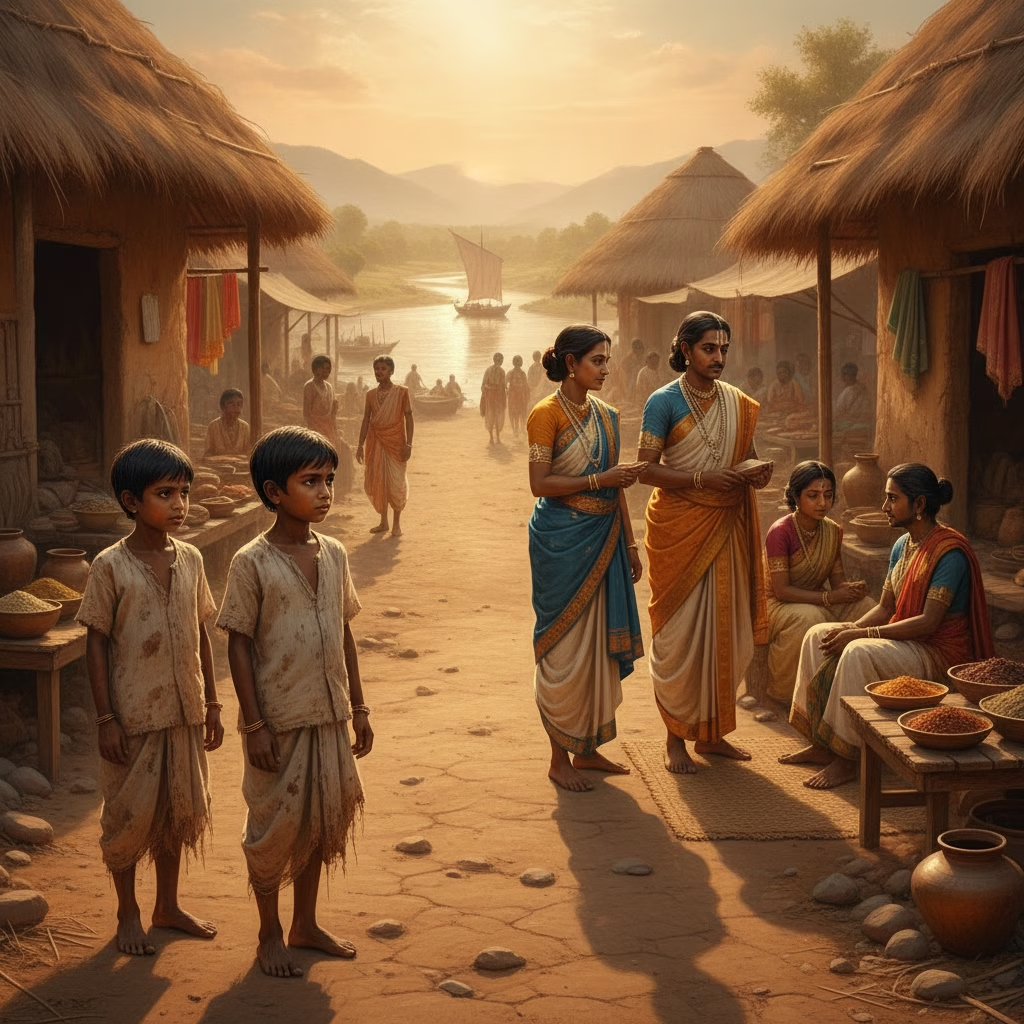
Dnyaneshwar was born in 1275 CE in Apegaon village, cradled by the banks of the Godavari River in Maharashtra. It should have been an auspicious birth—the day of Krishna Janmashtami, in a respectable Brahmin family. His father, Vitthal Pant, served as the village kulkarni, maintaining land and tax records, a position inherited through generations.
But by the time Dnyaneshwar could understand the world around him, he knew his family was different. Cursed. Untouchable, even among their own caste.
The story of their fall began with his father's spiritual yearning. Vitthal Pant, despite being married to Rakhumabai and holding a respectable position, felt hollow. When his father died and the couple remained childless, his disillusionment deepened. Eventually, with what he believed was his wife's consent, he left for Kashi to become a sannyasin—a renunciate who abandons worldly life.
In Kashi, he found a guru named Ramashram and took formal vows of renunciation. But fate had other plans. When Ramashram later visited Alandi and encountered Rakhumabai by chance, blessing her with the words "May you lead a happy married life," the truth emerged. Discovering that his disciple had abandoned his wife without proper consent, the guru was furious. He ordered Vitthal back to Alandi, back to married life.
Vitthal obeyed. He returned to his wife, and soon four children were born: Nivruttinath in 1273, Dnyaneshwar in 1275, Sopan in 1277, and Muktabai in 1279.
But the Brahmin community saw this return as unforgivable heresy. A renunciate returning to household life violated sacred law. The punishment was absolute: complete social excommunication. The Kulkarni family was denied work, forbidden from buying food in the market, barred from temple worship, and stripped of the right to even speak with other villagers. Dnyaneshwar and his brothers were refused the sacred thread ceremony that would have granted them full admission to the Brahmin caste.
The children grew up knowing hunger, isolation, and the weight of a sin they had never committed.
Orphaned by Penance
Vitthal Pant could not bear the suffering his choices had inflicted on his children. He sought a way out, a path to redemption that might free them from persecution. He approached the very Brahmins who had excommunicated his family and asked what penance might atone for his sins.
Their answer was merciless: death.
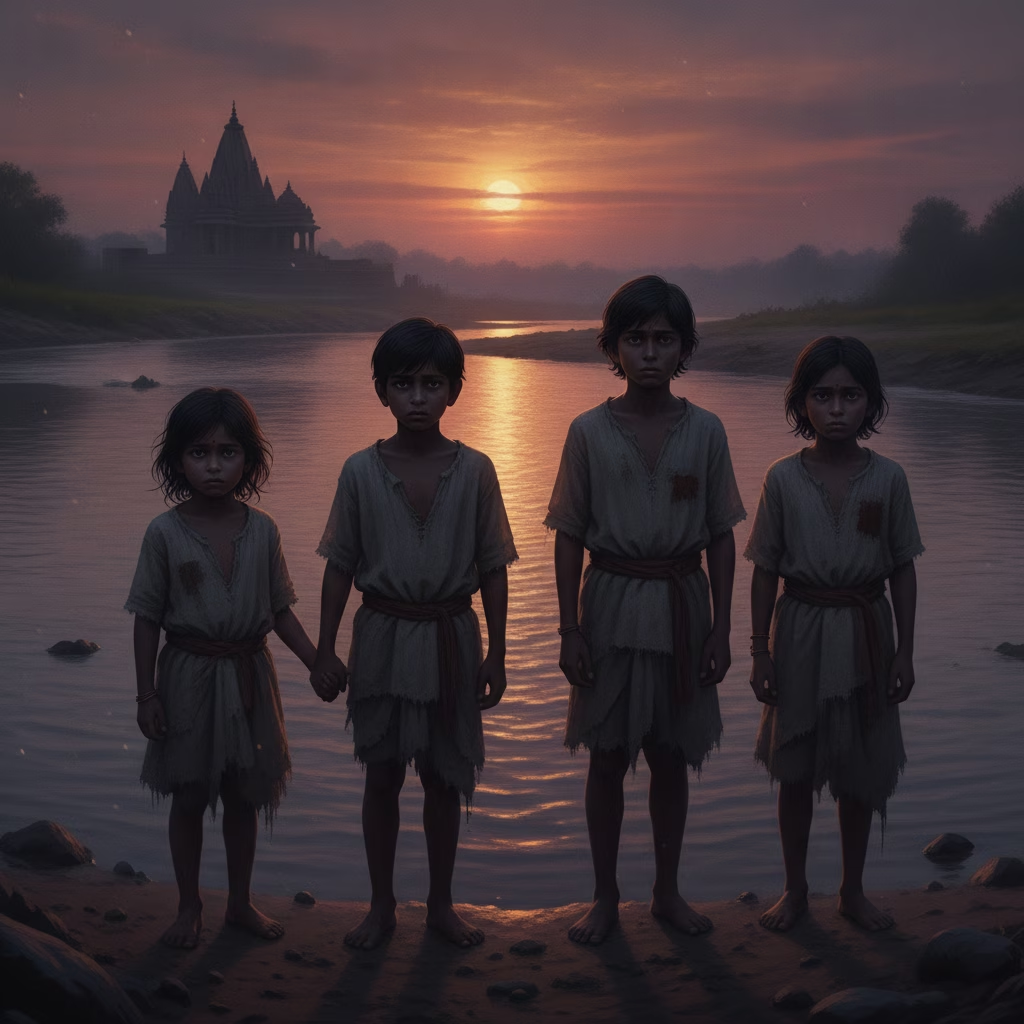
Within a year of each other, Vitthal and Rakhumabai walked to the banks of the Indrayani River in Alandi and jumped into its waters, offering their lives as sacrifice. They hoped their deaths would wash away the stain of heresy and allow their children to live freely.
But freedom did not come. The four siblings—the eldest Nivruttinath barely in his early twenties, the youngest Muktabai still a child—were now orphans bearing the same curse, only now without parents to shield them.
What saved them was the Nath tradition. Nivruttinath had already been initiated into the wisdom of the Nath yogis by Gahaninath, whom he'd met while hiding in a cave during a family journey to Nashik. The Nath tradition, with its emphasis on yoga, meditation, and direct spiritual experience, welcomed all four siblings. Here, caste mattered less than realization. Here, they found not just refuge but purpose.
Nivruttinath became the spiritual guide to his younger siblings, passing on the teachings he'd received. And in young Dnyaneshwar, he recognized something extraordinary—a mind that could grasp the deepest philosophical truths and a heart that could translate them into poetry.
The Young Philosopher's Voice
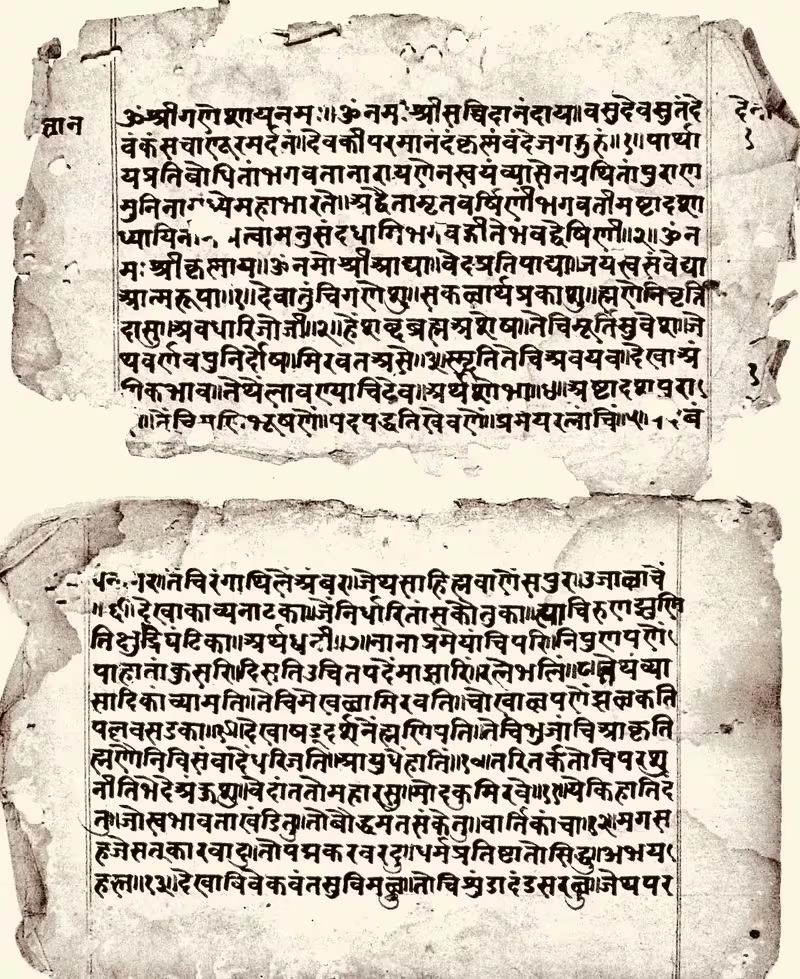
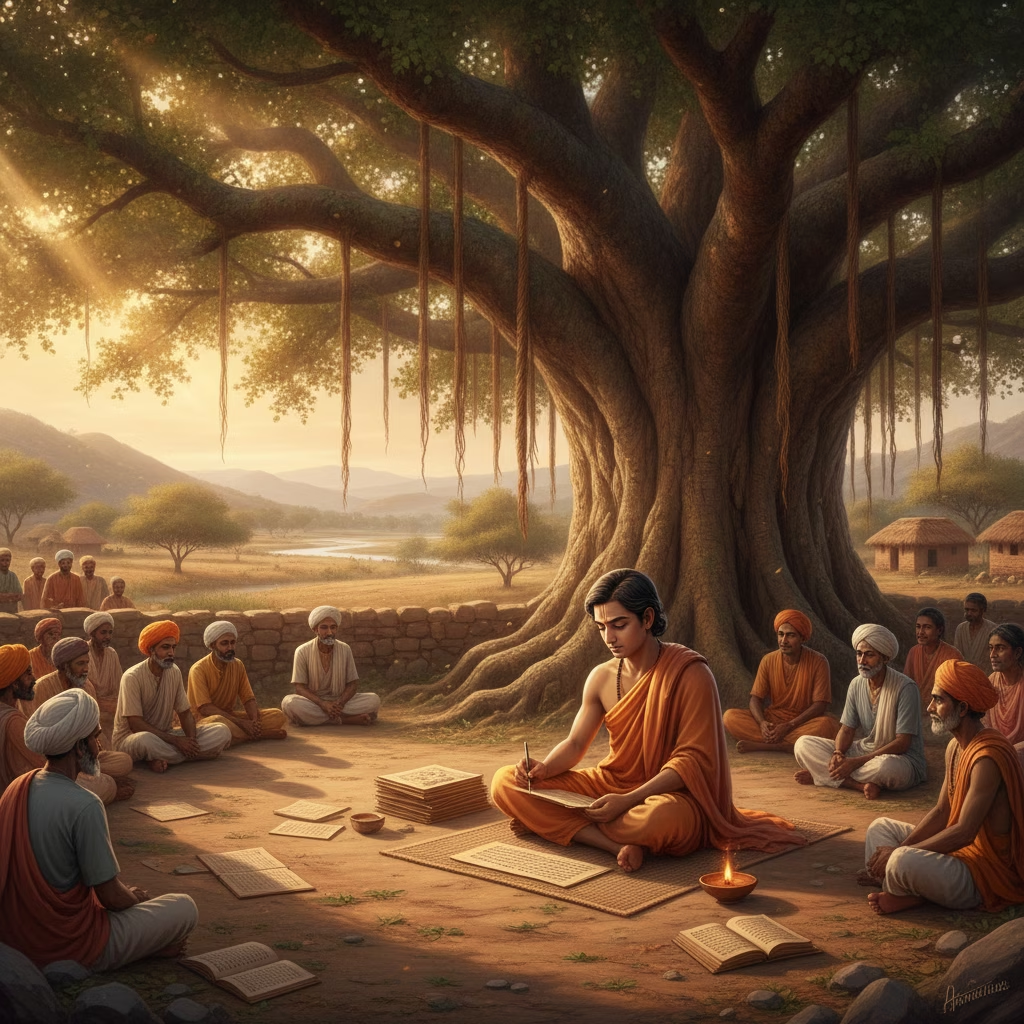
By the age of fifteen, Dnyaneshwar had accomplished what scholars twice his age could not. In 1290 CE, he completed the Dnyaneshwari—a commentary on the Bhagavad Gita written not in Sanskrit, the language of the elite, but in Marathi, the language of common people.
This was revolutionary. Sacred knowledge had always been guarded, accessible only to those who could read Sanskrit. Dnyaneshwar shattered that barrier. His commentary didn't merely translate; it illuminated, weaving together Advaita Vedanta philosophy, yogic practice, and devotional bhakti toward Vithoba, the beloved deity of Maharashtra.
According to Wikipedia, the Dnyaneshwari and his other major work, Amrutanubhav, are "the oldest surviving literary works in the Marathi language, and considered to be milestones in Marathi literature." But they were more than literary achievements—they were acts of spiritual democracy.
The young philosopher wrote with a clarity that made complex metaphysics accessible. He emphasized that liberation wasn't reserved for Brahmin scholars but available to anyone willing to walk the path of devotion and self-knowledge. His words sang with the rhythm of Marathi speech, making philosophy feel like conversation, like song.
People began to listen. Despite his youth, despite his family's stigma, Dnyaneshwar's wisdom commanded respect.
Founding a Movement
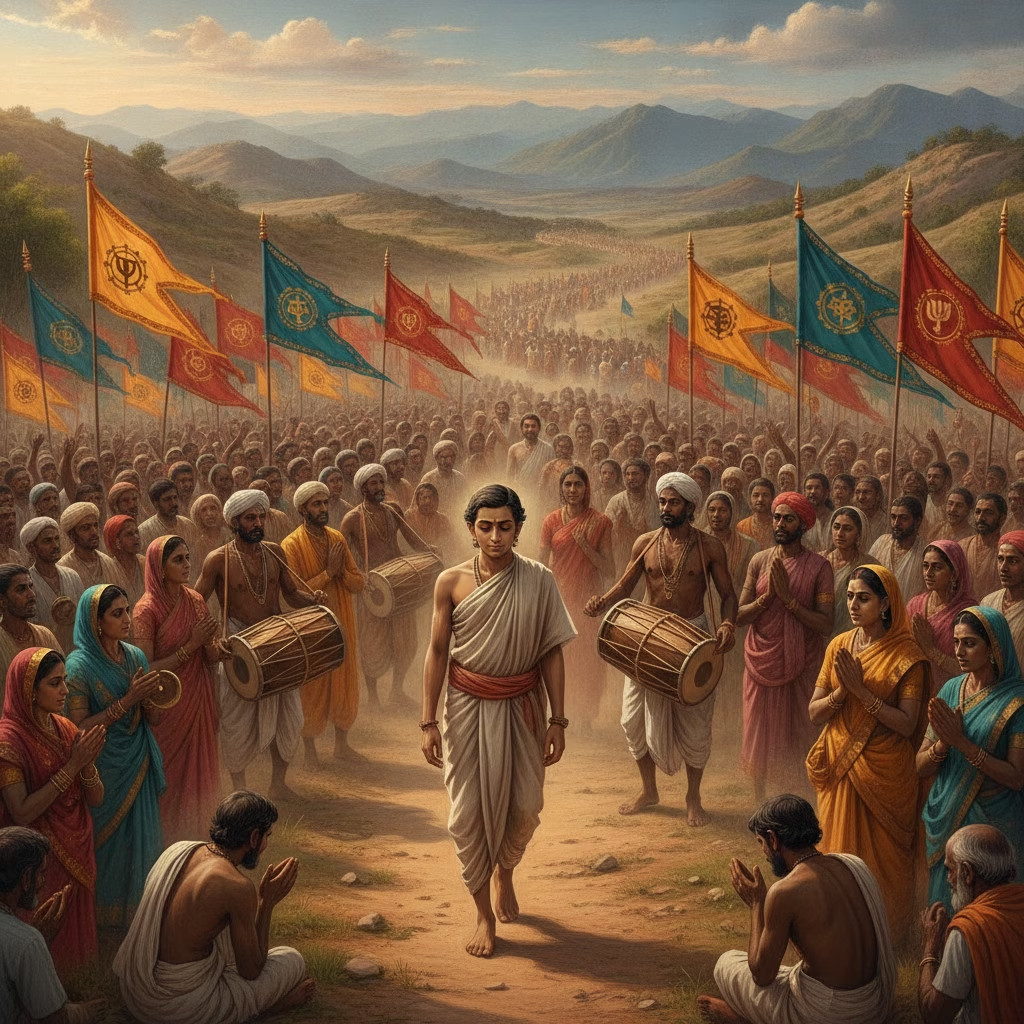
Dnyaneshwar didn't remain in isolation. He became one of the founders of the Varkari tradition, a devotional movement centered on pilgrimage to Pandharpur, the home of Vithoba. The Varkaris walked—thousands upon thousands of devotees traveling together, singing devotional songs called abhangas, dissolving caste distinctions in the shared rhythm of feet and faith.
This was Dnyaneshwar's vision made manifest: spirituality as accessible to all, regardless of birth or status. The movement he helped establish would inspire generations of saint-poets, including Eknath and Tukaram, who would carry forward his legacy of devotional literature in Marathi.
He traveled, taught, and wrote. Stories of his spiritual powers spread—hagiographic tales of miracles, like making a buffalo recite Vedic verses or riding a moving wall to humble the accomplished yogi Changdev. Whether literal truth or symbolic narrative, these stories reflected how people experienced him: as someone who had transcended ordinary limitations.
Yet even as his influence grew, Dnyaneshwar remained aware of time's passage. He had accomplished his life's work. The Dnyaneshwari was complete. The Varkari movement was thriving. His siblings had found their own paths.
The Weight of Twenty-One Years
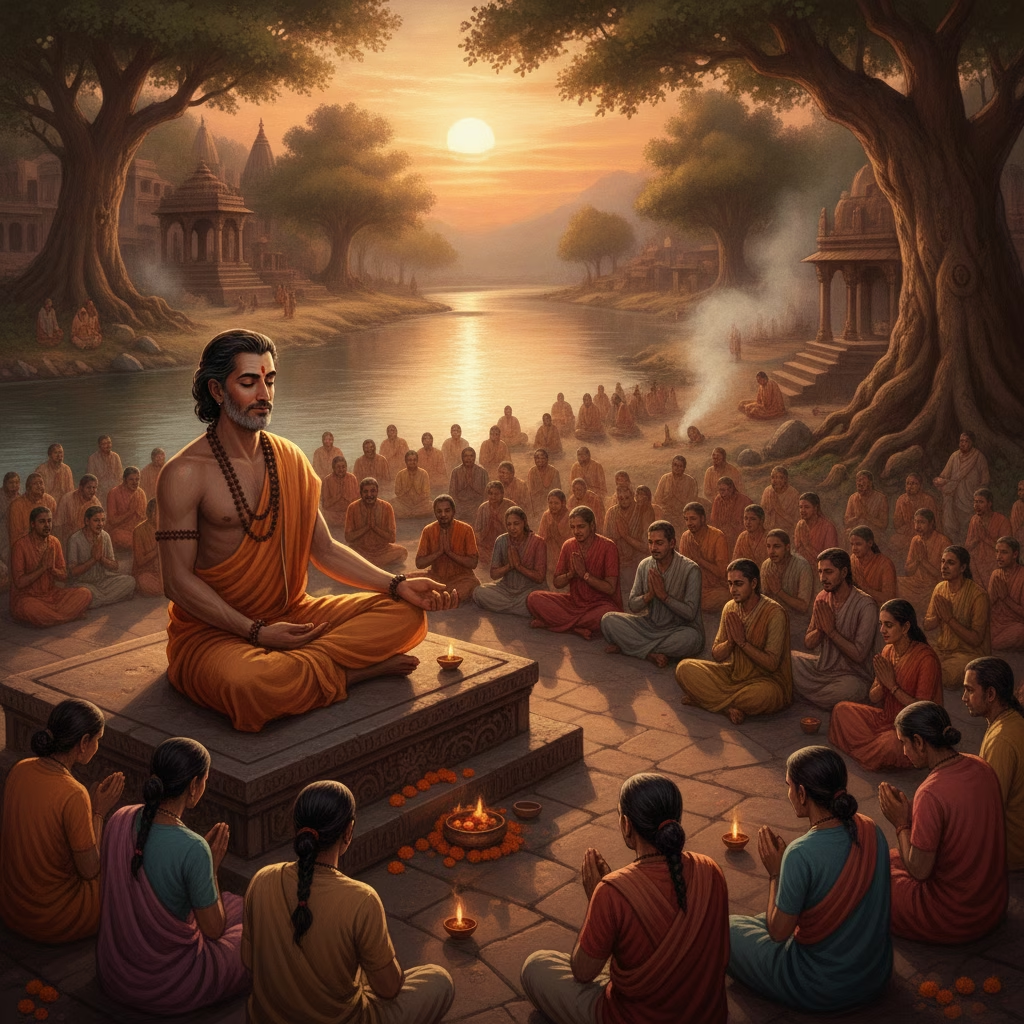
By 1296, Dnyaneshwar was twenty-one years old. In modern terms, he would be considered barely an adult. But he had lived lifetimes within those years—orphaned, ostracized, enlightened, celebrated. He had transformed Marathi literature and founded a spiritual movement that would endure for centuries.
And he was tired.
Not the exhaustion of the body, but the completion of the soul. In yogic tradition, there comes a moment when a practitioner recognizes that their work in the physical world is finished. The next step isn't more action but perfect stillness, the dissolution of individual consciousness into universal awareness.
Dnyaneshwar began speaking of samadhi—not the temporary meditative state, but the final samadhi, the conscious choice to leave the body while in deep meditation. It was the ultimate yogic accomplishment, reserved for those who had achieved complete mastery over mind and matter.
His devotees were devastated. How could someone so young, with so much wisdom still to share, choose to leave? But Dnyaneshwar was resolute. He had said what needed to be said. His words would continue teaching long after his body ceased.
Descent into Stillness
In Alandi, the town where his parents had sacrificed themselves in the Indrayani River, Dnyaneshwar chose the site of his final meditation. An underground chamber was prepared—small, simple, carved from earth and stone.
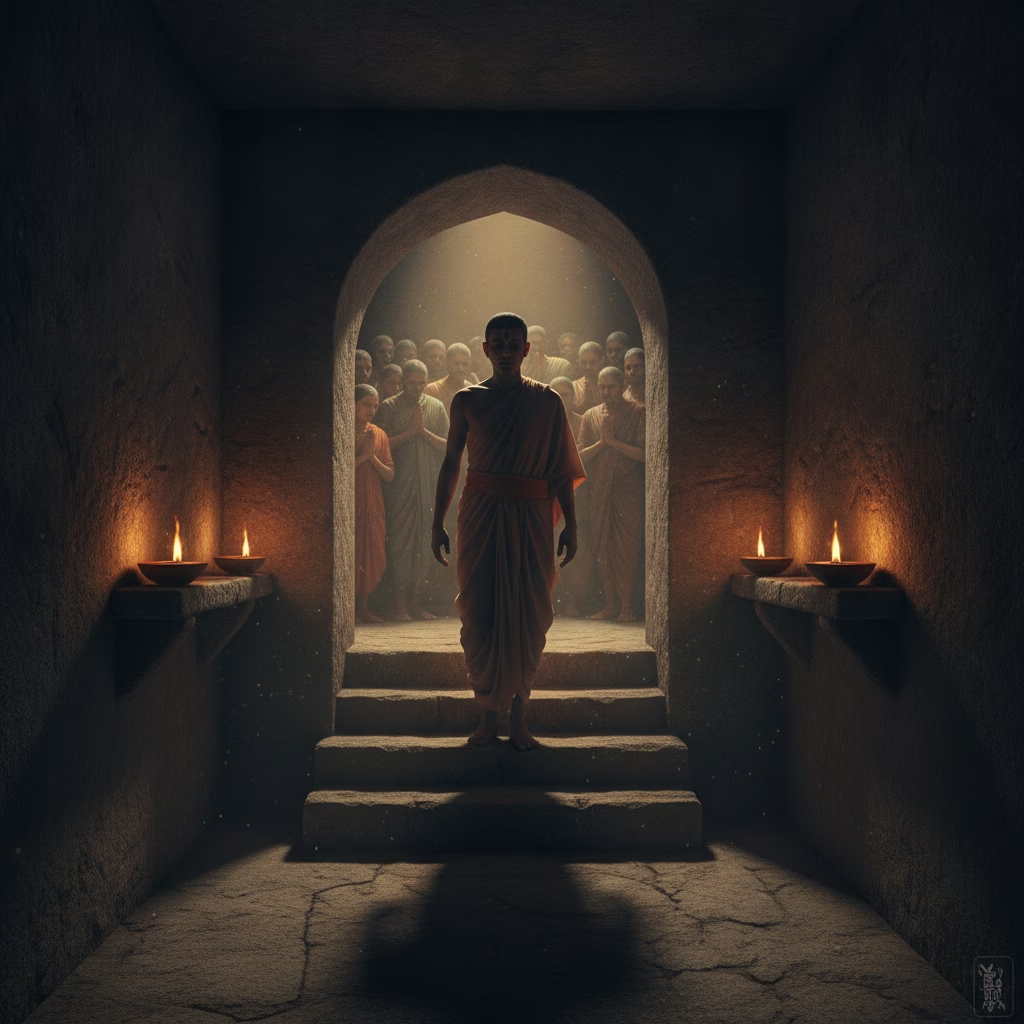
On the appointed day, devotees gathered. Some wept. Others sat in silent reverence, understanding that they were witnessing something sacred, something that transcended ordinary death.
Dnyaneshwar descended the stone steps slowly, deliberately. He wore simple robes. His face held no fear, no hesitation—only the profound peace of someone who had found what they were seeking.
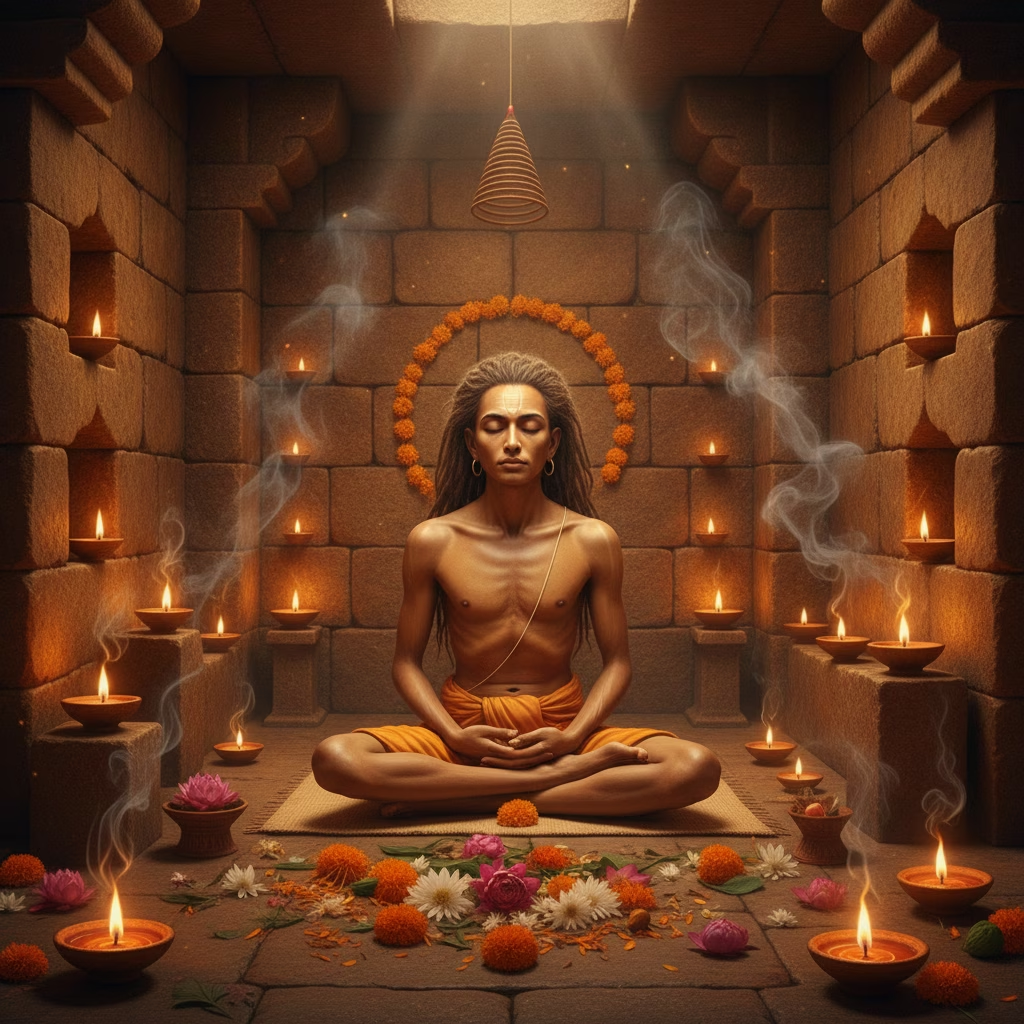
At the bottom of the chamber, he arranged himself in lotus position. Oil lamps flickered around him, casting dancing shadows on the walls. Above, at the entrance, his followers watched as he closed his eyes and entered meditation.
His breath slowed. His body became perfectly still. The boundary between the young saint and the eternal consciousness he had written about began to dissolve.
And then, according to tradition, the chamber was sealed.
The Eternal Flame
Sant Dnyaneshwar never emerged from that underground chamber in Alandi. According to the tradition recorded on Wikipedia, "Dnyaneshwar undertook samadhi at Alandi in 1296 by entombing himself in an underground chamber."
What happened in those final moments, in that sealed darkness lit only by oil lamps? Did he experience the dissolution of self he had written about so eloquently in his texts? Did individual consciousness merge with the infinite?
We cannot know. But we know what he left behind.
The Dnyaneshwari continues to be read, studied, and sung throughout Maharashtra. The Varkari tradition he helped found still brings hundreds of thousands of pilgrims to Pandharpur every year. His emphasis on accessible spirituality, on devotion over ritual, on realization over birth, fundamentally shaped Marathi culture and Hindu devotional practice.
A samadhi shrine was built over the chamber where he entered his final meditation. It became a pilgrimage site, a place where people come to feel close to the young saint who chose eternal stillness over continued life.
Sant Dnyaneshwar lived only twenty-one years, but in that brief span, he accomplished what most could not achieve in a hundred. Born into a cursed family, orphaned by his parents' desperate sacrifice, denied the basic rights of his caste, he transformed suffering into wisdom, exclusion into universal embrace, and personal realization into literary and spiritual revolution.
His choice to enter living samadhi at such a young age remains one of history's most profound mysteries. Was it spiritual completion? Physical exhaustion? A final act of devotion? Perhaps it was all of these, or something beyond our categories entirely.
What remains certain is that the flame he lit—in literature, in philosophy, in devotional practice—has never been extinguished. Eight centuries later, his words still sing in Marathi homes and temples. His vision of accessible spirituality still challenges hierarchies and opens doors.
The young man who walked into an underground chamber in 1296 left his body behind. But his voice—clear, compassionate, revolutionary—echoes still, a twenty-one-year flame that time cannot dim.