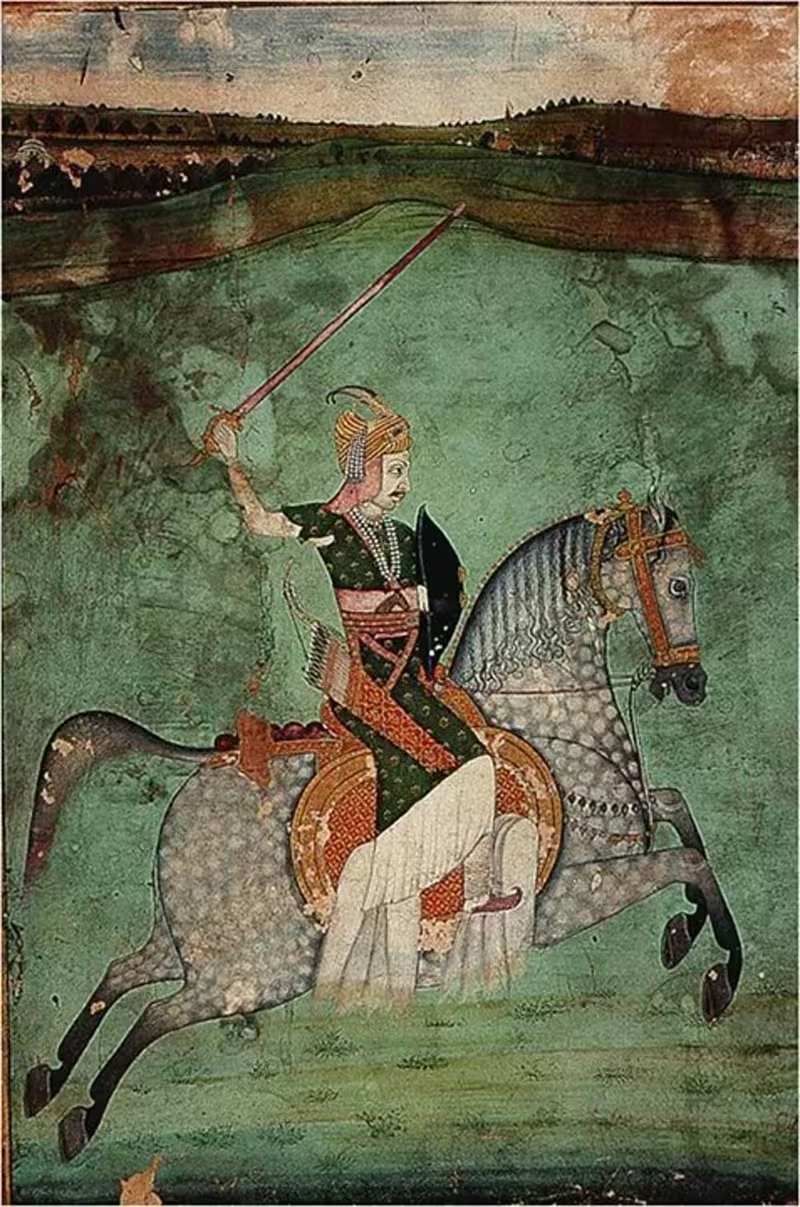

The Last March: Bajirao's Final Campaign
The dawn broke over Pune on a spring morning in 1740, painting the unfinished walls of Shaniwar Wada in shades of amber and gold. In the courtyard below, horses stamped and soldiers checked their weapons, preparing for yet another campaign. At forty years old, Bajirao I stood at the threshold of his palace, watching the preparations with the practiced eye of a commander who had never tasted defeat.
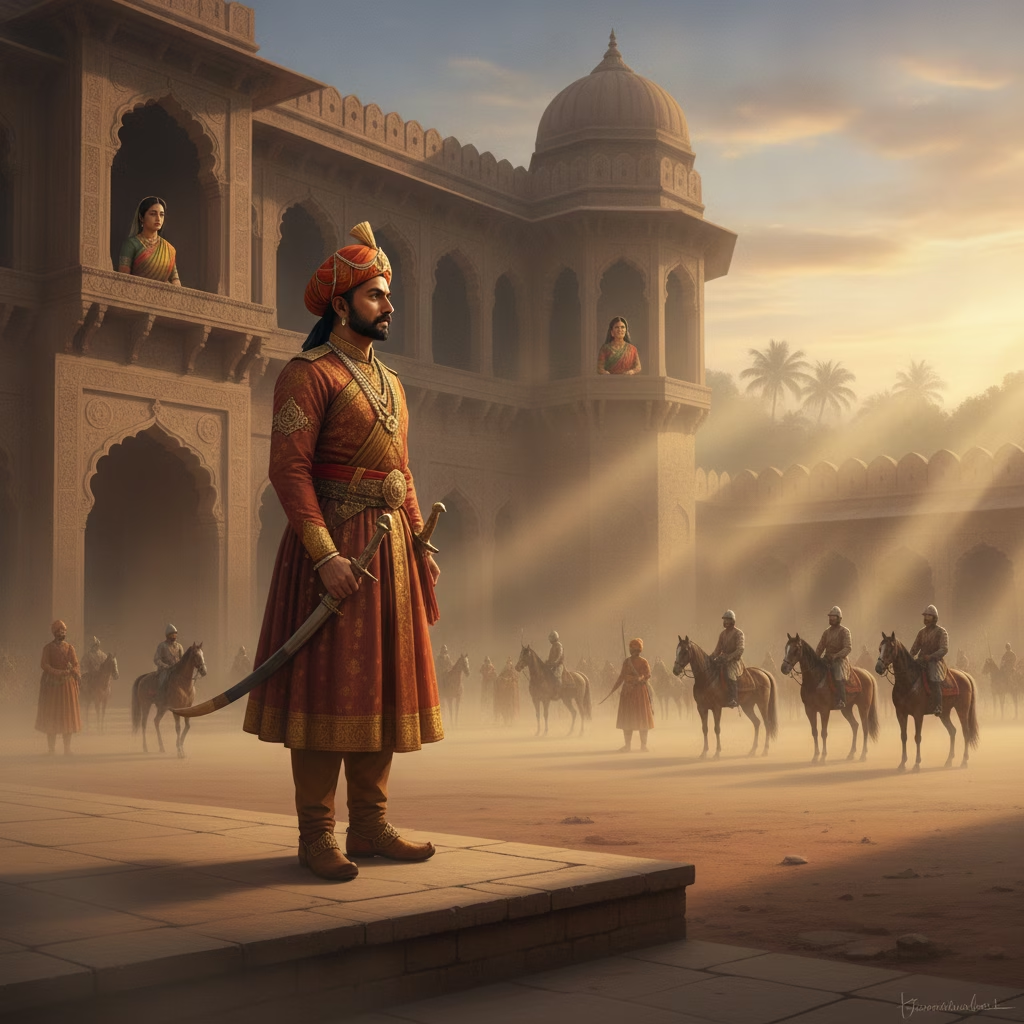
Twenty years. Two decades since Shahu had appointed him Peshwa at the improbable age of twenty, over the objections of older, more experienced chieftains. They had doubted then. No one doubted now. The boy who had accompanied his father Balaji Vishwanath on campaigns, who had been imprisoned alongside him by Damaji Thorat, who had marched to Delhi in 1719 and seen the Mughal Empire's weakness with his own eyes—that boy had become the architect of Maratha supremacy across the subcontinent.
Behind him, in the palace chambers, Kashibai prepared the ritual aarti for his departure. His first wife, the daughter of the wealthy Joshi banking family of Chas, had stood by him through every campaign, every absence, every triumph. Their sons—Balaji, Ramachandra, Raghunath—had grown into capable young men. Nanasaheb, the eldest, was already being groomed to succeed him as Peshwa.
In another wing of the palace, Mastani also prepared offerings. The daughter of Chhatrasal, born of his Rajput king father and Muslim mother, she had come into Bajirao's life as a political alliance—a reward for rescuing Chhatrasal from a Mughal siege in Bundelkhand. Their son, Krishna Rao, called Shamsher Bahadur because Hindu priests refused to perform his sacred thread ceremony, played with wooden swords in the courtyard, already dreaming of battles.
The Nizam of Hyderabad had emerged once again as a threat to Maratha authority in the Deccan. Bajirao had defeated him decisively at Palkheda years earlier, solidifying Maratha control over the region. But the Nizam was like a persistent fever—suppressed but never quite cured. Now intelligence suggested he was gathering forces again, testing the boundaries of Maratha patience.
Bajirao mounted his horse as the sun cleared the horizon. The Maratha standard unfurled in the morning breeze. He did not look back at the palace windows where he knew his wives watched. A commander who looked back invited doubt, and doubt was a luxury he had never been able to afford.
The army moved south, toward the Deccan, toward another confrontation, toward what Bajirao assumed would be another victory in an unbroken chain of triumphs.
The Weight of Empire
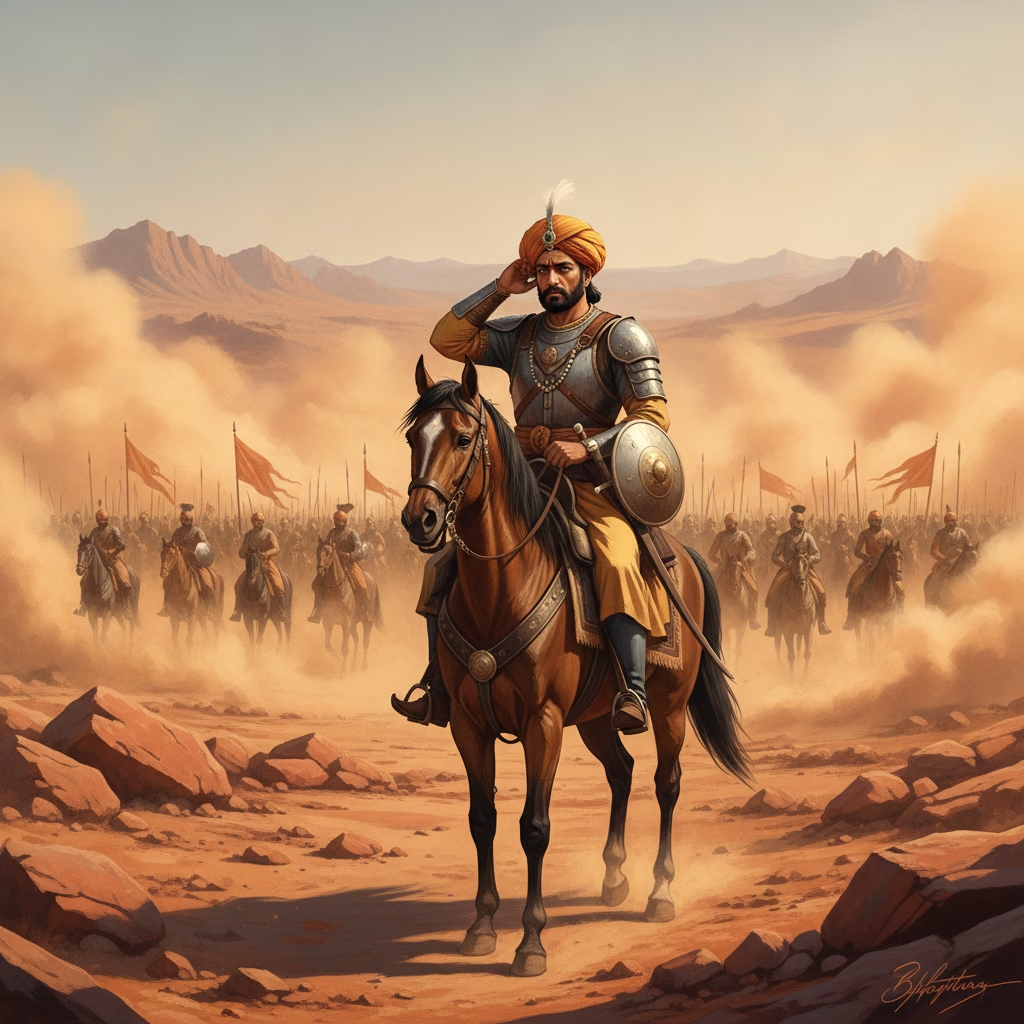
The Deccan plateau stretched endlessly before them, a landscape of rock and scrub baking under an April sun that seemed to press down like a physical weight. Bajirao rode at the head of his column, the dust of thousands of horses and marching soldiers rising behind him like the wake of a ship crossing a brown ocean.
His mind, as always during these long marches, wandered through the map of his achievements. The Battle of Delhi in 1737—that had been the pinnacle, the moment when he had demonstrated beyond all doubt that the Mughal Empire was a hollow shell. He had ridden to the very gates of the emperor's capital, extracted tribute, and ridden away untouched. The combined forces of the Mughal, the Nizam, and the Nawab of Awadh had tried to stop him at Bhopal that same year. He had crushed them, securing Malwa for the Marathas.
There had been internal challenges too. Trimbak Rao Dabhade's rebellion in Gujarat in 1731, crushed at the Battle of Dabhoi. The delicate diplomacy required to persuade Rajput courts to pay chauth—the tax that acknowledged Maratha supremacy. The constant balancing act of managing ambitious subordinates while channeling their energy toward expansion rather than internal conflict.
He had promoted young commanders based on merit rather than birth: Malhar Rao Holkar, Ranoji Shinde, the Pawar brothers. They had rewarded his faith with loyalty and victories. The Maratha Empire now stretched from coast to coast, from the Deccan to Delhi, a web of alliances and tributaries that made the Marathas the preeminent power in the subcontinent.
But there was always more. Always another campaign, another threat, another territory to secure. The work of empire-building was never finished. It was like constructing Shaniwar Wada—he had laid the foundation on January 10, 1730, but ten years later, the palace was still growing, still being refined, still incomplete.
The sun climbed higher. The heat became oppressive. Bajirao wiped sweat from his brow and took a drink from his water skin. The leather was warm to the touch, the water inside barely cooler than the air.
One of his commanders rode up alongside him. "Peshwa, perhaps we should rest during the hottest part of the day and resume the march in the evening?"
Bajirao shook his head. "The Nizam will not wait for comfortable weather. We press on."
He had never been one to remain confined to books, even as a Brahmin boy learning Sanskrit and scripture. His education had been the battlefield, the forced march, the night attack, the strategic feint. His body had been hardened by decades of campaigning, sleeping on the ground, riding for days without rest.
But bodies, like empires, had their limits.
The Body Betrays the Warrior
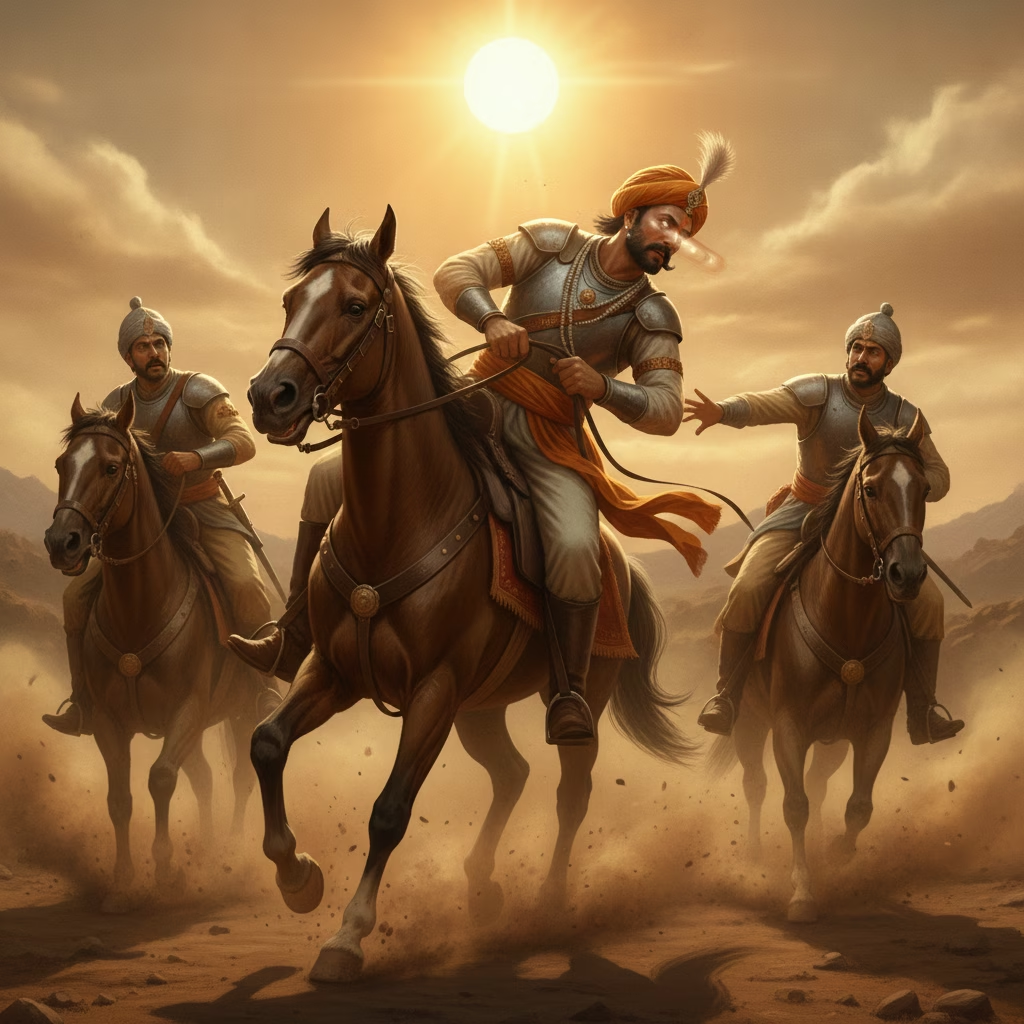
The dizziness came first, a subtle tilting of the horizon that Bajirao dismissed as a trick of the heat shimmer rising from the rocks. He blinked, refocused, urged his horse forward. The animal, sensing something wrong, moved reluctantly.
His vision blurred. The landscape seemed to pulse and waver. A weakness spread through his limbs that he had never felt before—not in battle, not in the longest marches, not even when he had been imprisoned with his father as a young man, uncertain whether they would see ransom or execution.
This was different. This was his body simply refusing to obey.
He swayed in the saddle. His hands, which had wielded sword and lance through countless engagements, struggled to maintain their grip on the reins. The heat was no longer just external—it seemed to burn from within, as if his blood itself had caught fire.
"Peshwa!" The cry came from multiple throats as commanders noticed his distress.
Bajirao tried to speak, to reassure them, to order them to continue the march. But his tongue was thick in his mouth, and the words that emerged were slurred and incomprehensible even to his own ears.
The ground rushed up to meet him. Or perhaps he fell toward it. The distinction seemed unimportant. Strong hands caught him before he struck the earth, lowering him with desperate care.
The undefeated commander, the Peshwa who had brought the Maratha Empire to heights his father could only have dreamed of, lay in the dust of the Deccan, his body finally betraying the warrior spirit that had driven it beyond all reasonable limits.
The Tent of Failing Light
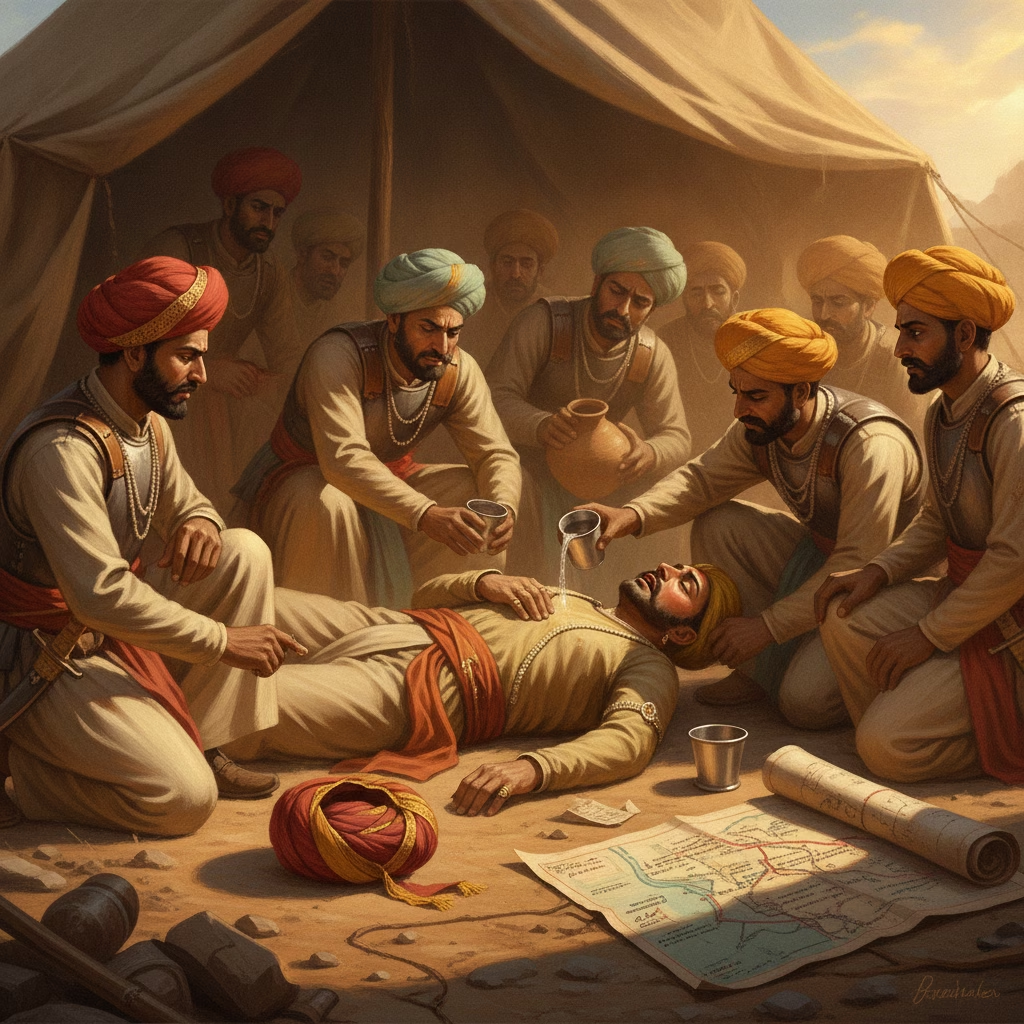
They erected a tent with frantic haste, creating a small island of shade in the merciless landscape. Water was brought, cloths soaked and placed on Bajirao's forehead and chest. His commanders knelt around him, their faces etched with concern that bordered on panic.
An empire, they were learning, could rest on surprisingly fragile foundations. One man's heartbeat. One man's breath.
Bajirao's eyes opened, but they seemed to look through the men around him rather than at them. His lips moved, forming words that made no sense, fragments of old campaigns and unfinished plans. "Delhi... the northern territories... Shamsher must be protected... Nanasaheb... the treasury at Pune..."
His mind, even as his body failed, raced through the incomplete business of empire. There were treaties unsigned, territories unsecured, rivals undefeated. The Nizam still stood. The Mughals, weakened but not destroyed, still occupied Delhi. The British and French were establishing their trading posts on the coasts, a threat he had noted but not yet addressed.
So much unfinished. So much undone.
His commanders sent riders racing back to Pune with news of the Peshwa's collapse. They debated whether to attempt to move him or let him rest. They argued about remedies and treatments, none of which seemed to have any effect.
The heat that had struck him down continued its assault. April in the Deccan showed no mercy, not even to legends.
Bajirao's breathing became labored. The flush on his face deepened. His body, which had carried him through two decades of constant warfare, through forced marches and desperate battles, through the physical demands of maintaining an empire through personal presence and military might, had finally reached the end of its endurance.
He was dying, and he knew it. The knowledge showed in his eyes during his brief moments of clarity—not fear, but a kind of frustrated disbelief. This was not how it was supposed to end. Not in a tent in the middle of nowhere, not from something as mundane as heat and exhaustion, not with so much work left undone.
The Grasping Hand
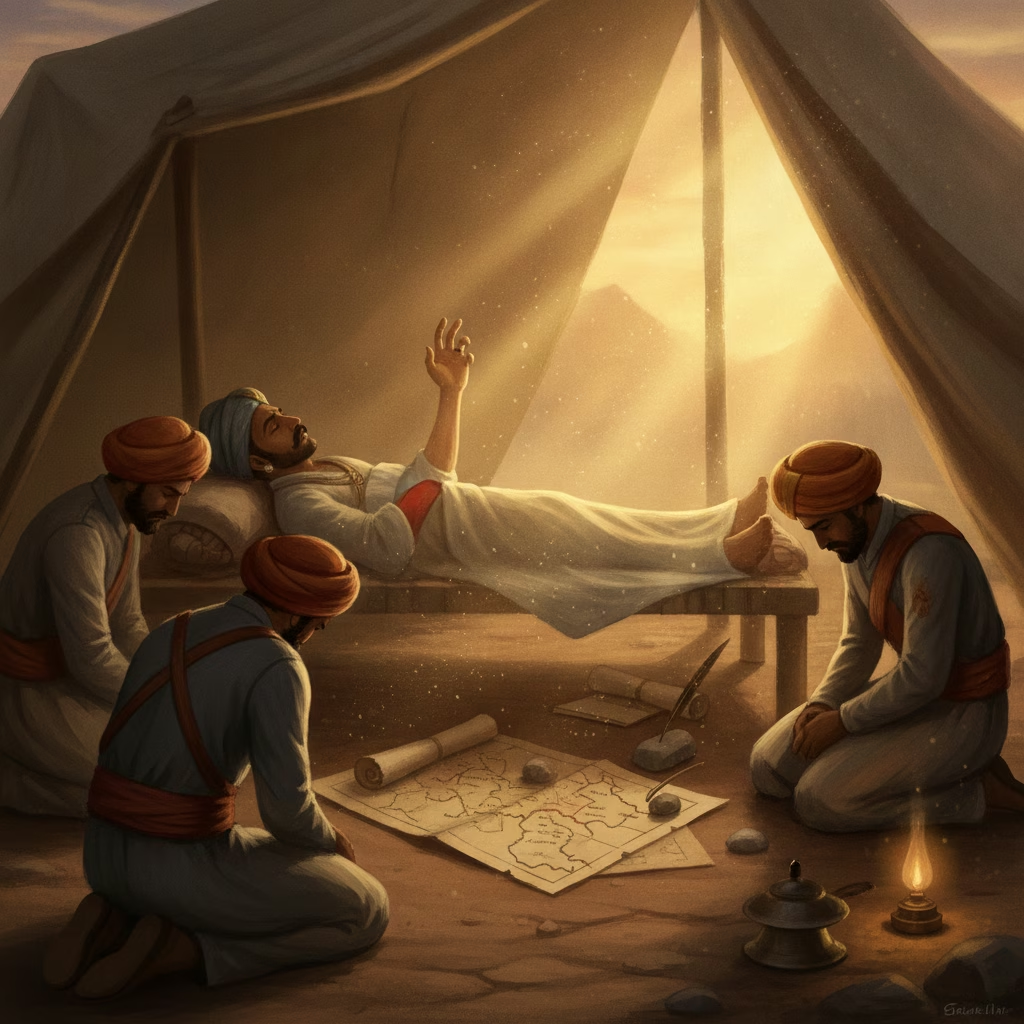
As dusk approached on April 28, 1740, Bajirao's hand reached upward, grasping at something only he could see. Maps lay scattered around him—the Deccan, Gujarat, Malwa, the territories he had conquered and those he had planned to conquer. His commanders had spread them out, perhaps hoping that the familiar sight of campaigns and strategies would somehow anchor him to life.
His lips moved, whispering names. Kashibai. Mastani. His sons. His brother Chimaji Appa. His father Balaji Vishwanath, long dead, perhaps waiting for him now in whatever realm awaited warriors and statesmen.
The young commanders he had promoted—Holkar, Shinde, the Pawars—would they continue his work? Would they maintain the empire he had built, or would they tear it apart in squabbles over succession and territory? Would Nanasaheb, his eldest son, prove capable of holding together what his father had created?
These questions haunted his fading consciousness more than any fear of death itself.
The sun set over the Deccan, painting the sky in shades of orange and red that matched the Maratha standard flying above the tent. As darkness fell, Bajirao I, the 7th Peshwa of the Maratha Empire, the commander who had never lost a battle, who had expanded Maratha power from coast to coast, who had humbled the Mughals and defeated the Nizam, drew his last breath.
He was forty years old. He had been Peshwa for exactly twenty years and eleven days.
The undefeated warrior had finally met an enemy he could not outmaneuver or overcome: the limits of human endurance, the betrayal of flesh and blood, the simple, brutal fact that even legends are mortal.
The Return
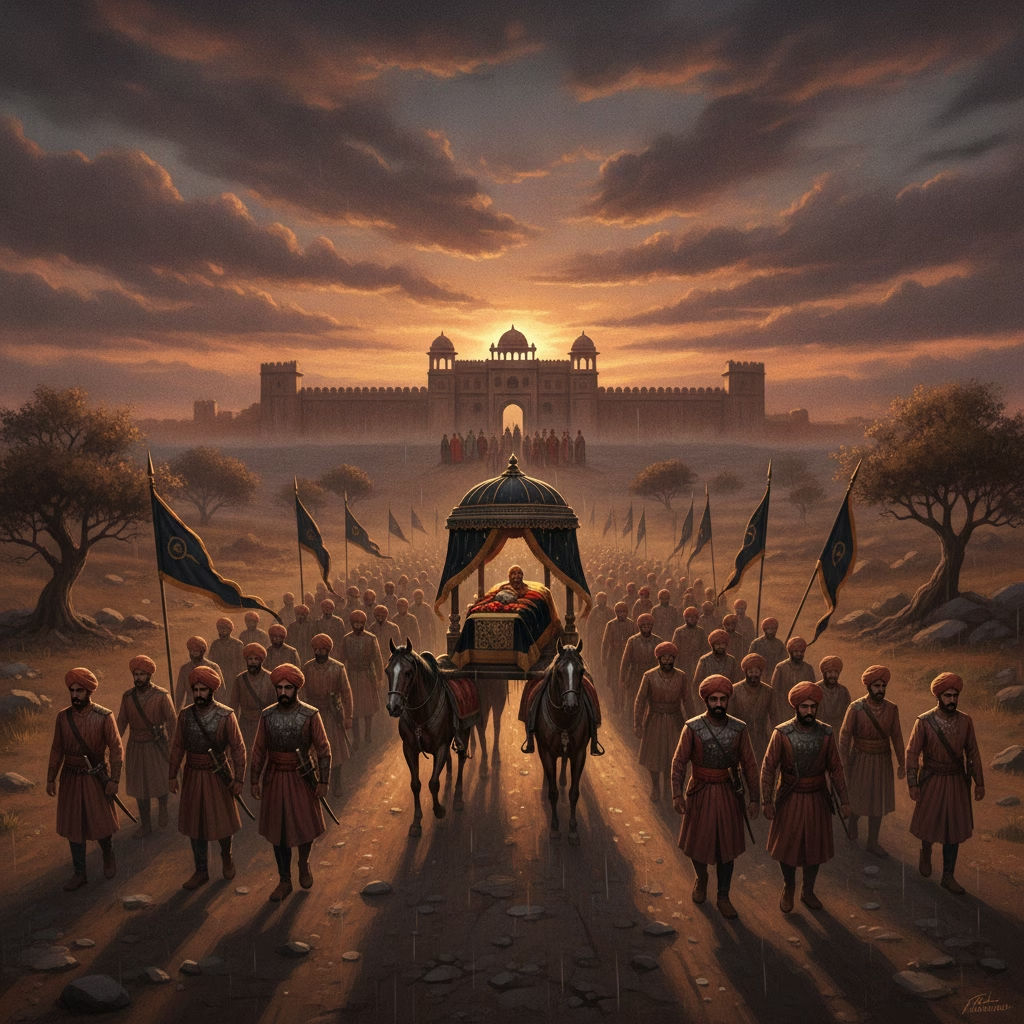
The procession that carried Bajirao's body back to Pune moved slowly through the landscape he had fought to control. Maratha soldiers marched with heads bowed, their standards lowered in mourning. The news had already reached the city by faster riders, and as the cortege approached, the gates of Shaniwar Wada stood open in grief.
Kashibai and Mastani, the two wives who had shared him in life, stood together in shared loss. Their sons—Nanasaheb, who would be appointed Peshwa by Shahu within days; young Shamsher Bahadur, who would be raised by Kashibai as her own after Mastani's death later that year—watched as their father returned home for the last time.
The palace he had begun building in 1730 still stood incomplete, like the empire he had left behind. Nanasaheb would continue the construction, just as he would continue his father's campaigns. In 1761, Shamsher Bahadur would fight alongside the Peshwa at the Third Battle of Panipat, wounded in service to the empire his father had built, dying days later in Deeg.
But that was all yet to come. On that evening in late April 1740, as Bajirao's body was carried through the gates of Pune, an era ended. The man who had transformed the Marathas from regional power to imperial force, who had demonstrated that the Mughal Empire was hollow and ripe for replacement, who had never lost a battle in twenty years of constant warfare, had been defeated by the sun and his own relentless drive.
According to Wikipedia, Bajirao I died on April 28, 1740, while marching to confront the Nizam. He left behind an empire that stretched across the Indian subcontinent, a military legacy that would inspire generations, and an unfinished palace that would stand as a monument to both his achievements and his mortality.
The warrior had fallen. The work continued. Such is the nature of empires and the men who build them.